A self-driving 2025 Tesla Model 3 Highland encountered oncoming traffic on a very narrow mountain road and its response was extraordinary
Published on Oct 01, 2026 at 4:09 PM (UTC-4)
by Ben Thompson
Last updated on Oct 02, 2026 at 11:33 AM (UTC-4)
Edited by
Mason Jones
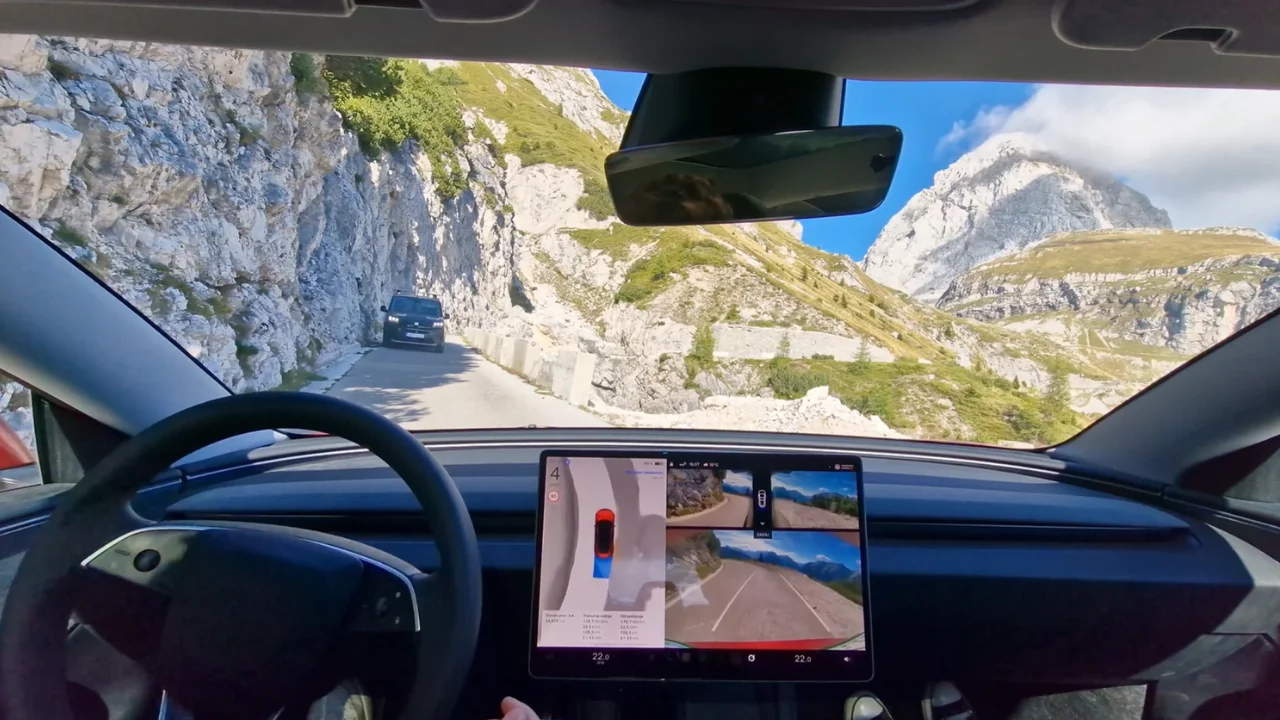

When this self-driving 2025 Tesla Model 3 Highland took a drive along a narrow mountain road, oncoming traffic made the situation particularly tense.
For a human driver, this is the stuff automotive nightmares are made of.
But how would a self-driving car fare in this kind of situation?
Let’s brace ourselves and take a closer look.
Self-driving cars have come a long way in recent years
The concept of autonomous cars has come on leaps and bounds in the last decade or so.
Once confined to pure hypotheticals and science fiction, self-driving cars are now a fixture on many American streets.
And the technology is remarkable.
One chip is capable of detecting dangers on the road four times faster than a human.
And believe us when we say people have done their best to push the technology to its limits.
One guy even went so far as to jump in front of a Tesla Cybercab to see if it would stop driving.
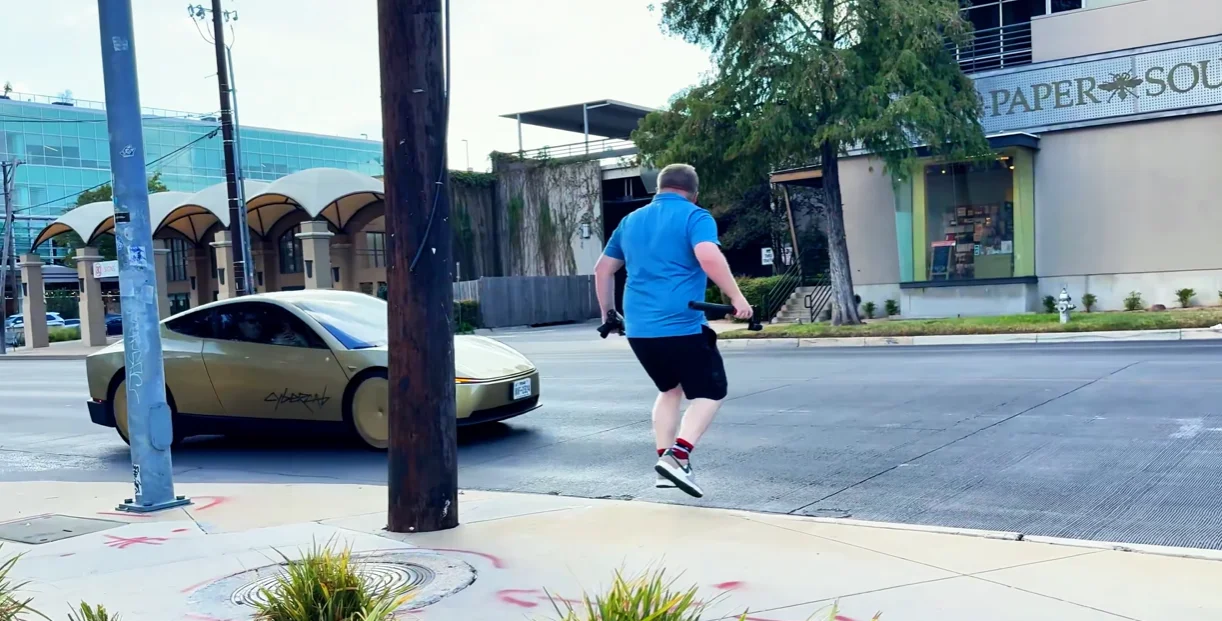
Fortunately for him, it did flawlessly.
But that challenge will look like small fries compared to what one Tesla Model 3 Highland had to go up against.
Related
This self-driving Tesla Model 3 Highland had quite the challenge
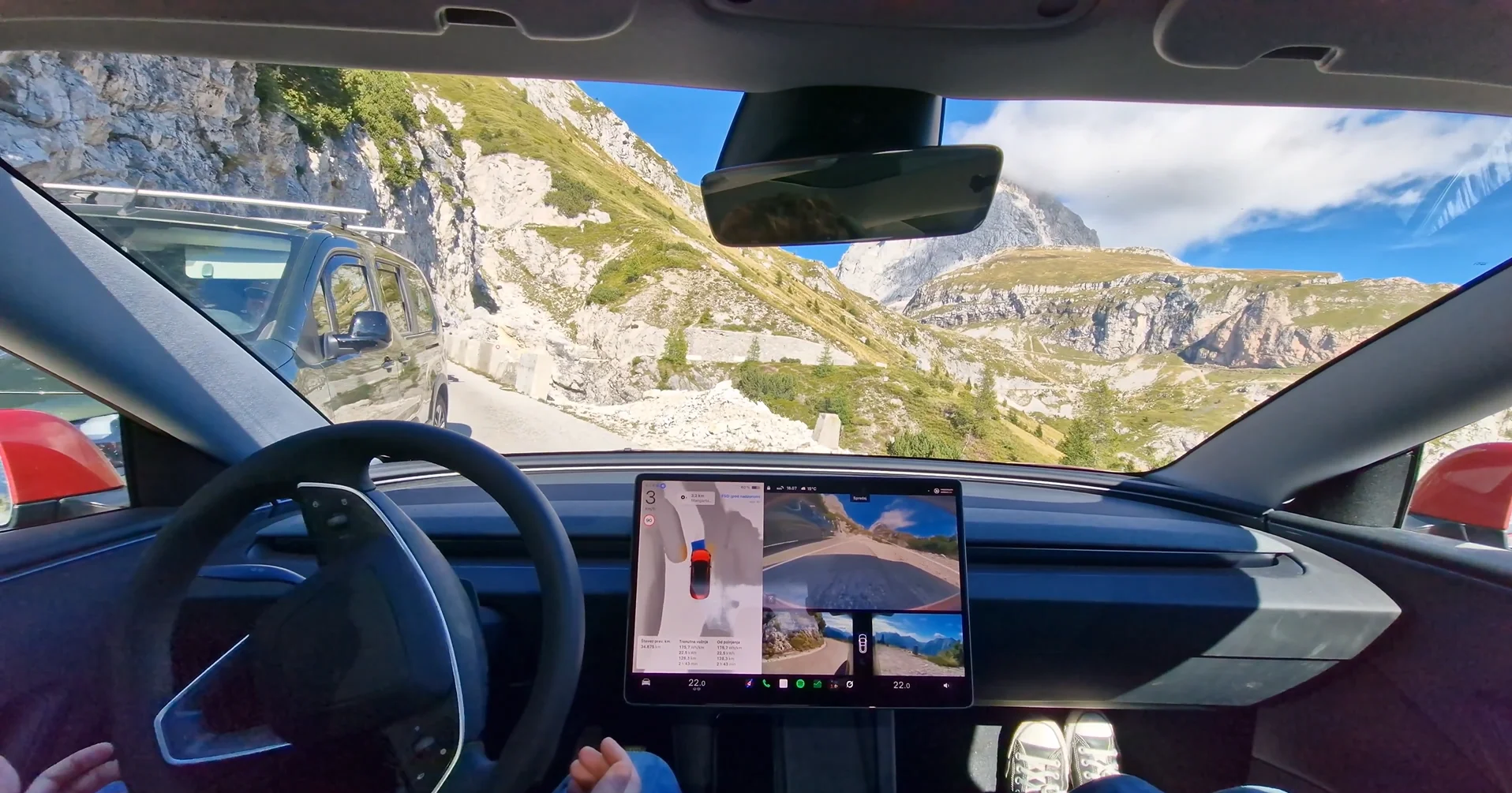
Jan Skočaj, a Slovenian man, shared a clip to X of a Tesla using FSD to reverse down a cramped mountain road.
That already sounds like a nightmarish situation for many drivers.
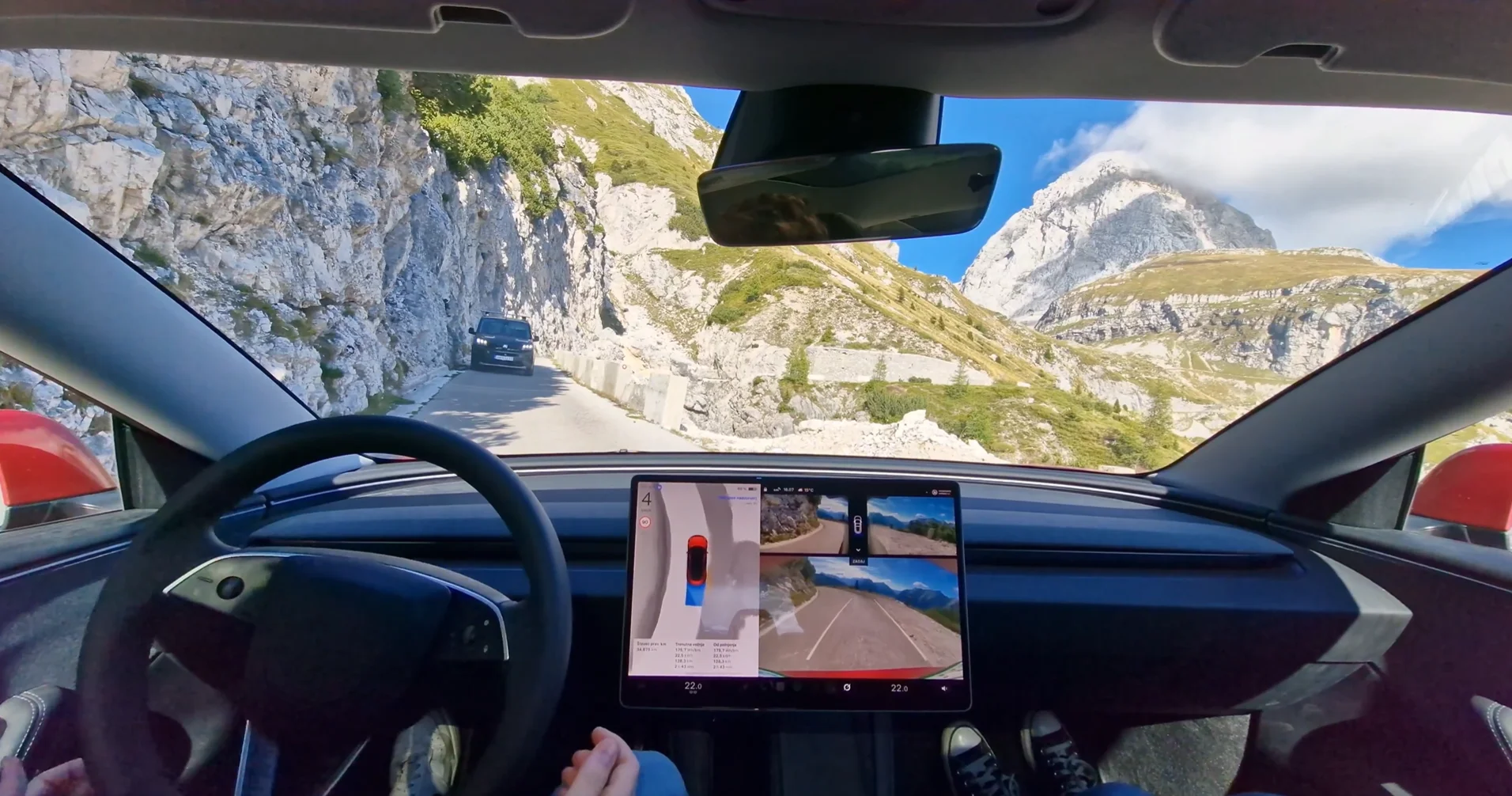
But imagine seeing an autonomous car take on this challenge – your nerves would be in pieces.
This particular road was Mangart Saddle Road, a route in Slovenia that rises to around 6,742 feet.
Impressive maneuvering by Tesla FSD (Supervised) on the picturesque Mangart Saddle Road, the highest road in Slovenia (2,055 m), in the heart of the Julian Alps. 🇸🇮
— Jan Skočaj (@JSkocaj) September 13, 2026
Full video coming soon on my YouTube channel (https://t.co/Y7GDT9N19C), with more FSD tests in interesting… pic.twitter.com/t1KZYWzWig
It’s a tough road to drive on, let alone when you have to reverse to allow cars to get past you.
But the FSD delivered.
People were very impressed with this Tesla Model 3 Highland
As you might expect, people were greatly impressed by what they saw.
“That road is a beautiful stress test—tight curves, elevation, and no room for sloppy planning. Would love to see how FSD handles the descent too,” one user wrote.
“It’s always fun watching FSD operate like this in other countries. Incredible video,” another said.
“This is the FSD test I waited to see. Impressive,” a third X user commented.
We dread to think of what nerve-wracking scenario we’ll see Tesla’s FSD in next.
Timeline of Self-Driving Cars
1925: Francis Houdina demonstrates the radio-controlled American Wonder on the streets of New York City. Operated remotely via radio signals from a trailing vehicle, it becomes one of the earliest public demonstrations of a driverless automobile.
1939: At the New York World’s Fair, industrial designer Norman Bel Geddes envisioned automated electric cars guided by electromagnetic fields embedded directly in smart highways.
1977: Japan’s Tsukuba Mechanical Engineering Laboratory builds the first standalone autonomous car. Using two onboard cameras to track street markings, it achieves speeds up to 20 mph (30 km/h) on a dedicated track.
1980s – 1990s: Ernst Dickmanns and his team at Bundeswehr University Munich pioneer computer vision in vehicles with the VaMoRs van. Off the back of this, the European Eureka PROMETHEUS Project tests autonomous Mercedes-Benz test cars on public highways.
2004 – 2007: The U.S. Defense Advanced Research Projects Agency hosts a series of autonomous vehicle competitions in the desert and in urban environments.
2009: Google launches ‘Project Chauffeur’, focusing on fully autonomous navigation, which would lead to Waymo in 2016.
2015 – 2020: Tesla introduces Autopilot in 2015, with Waymo launching Waymo One in 2018 – the first commercial driverless taxi service open to the public.
2021 – present: Robotaxi fleets from Waymo and Cruise expand paid driverless operations across major US cities.
Ben joined Supercar Blondie in February 2025 after being published by international organizations including LADbible, The Sun, the New York Post, and the Daily Mail. He covers supercars, rare and collectible vehicles, aviation, luxury assets, and the fascinating people behind them. His reporting has explored everything from seven-figure supercars and historic Ferrari collections to unusual aircraft adventures and extraordinary automotive discoveries from around the world. Ben has also gained first-hand insight into vehicle craftsmanship and customization, including visiting specialist workshops to see bespoke vehicles up close.