China's new 3D-printing method can get something printed in less than a second
Published on Apr 16, 2026 at 6:14 AM (UTC-4)
by Daisy Edwards
Last updated on Apr 20, 2026 at 2:56 PM (UTC-4)
Edited by
Emma Matthews


In a world of instant delivery, this new 3D-printing method out of China, which is almost immediate, sounds perfect.
Researchers at Tsinghua University have developed a system called DISH that can create tiny 3D objects in just 0.6 seconds, which is a huge jump from the slower printing methods we’re all familiar with.
Instead of building something layer by layer, this method forms the object all at once using precisely controlled light.
That means ultra-fast results, sharp detail, and a future where waiting hours for a print could feel ancient.
China’s new 3D-printing method can print in less than a second
Most traditional 3D printers work by stacking one thin layer after another until the final shape is complete.
But that means some prints can take hours, depending on the size and complexity of the item.
It works well, but speed has never exactly been the selling point; this new method from China’s Tsinghua University changes that completely.

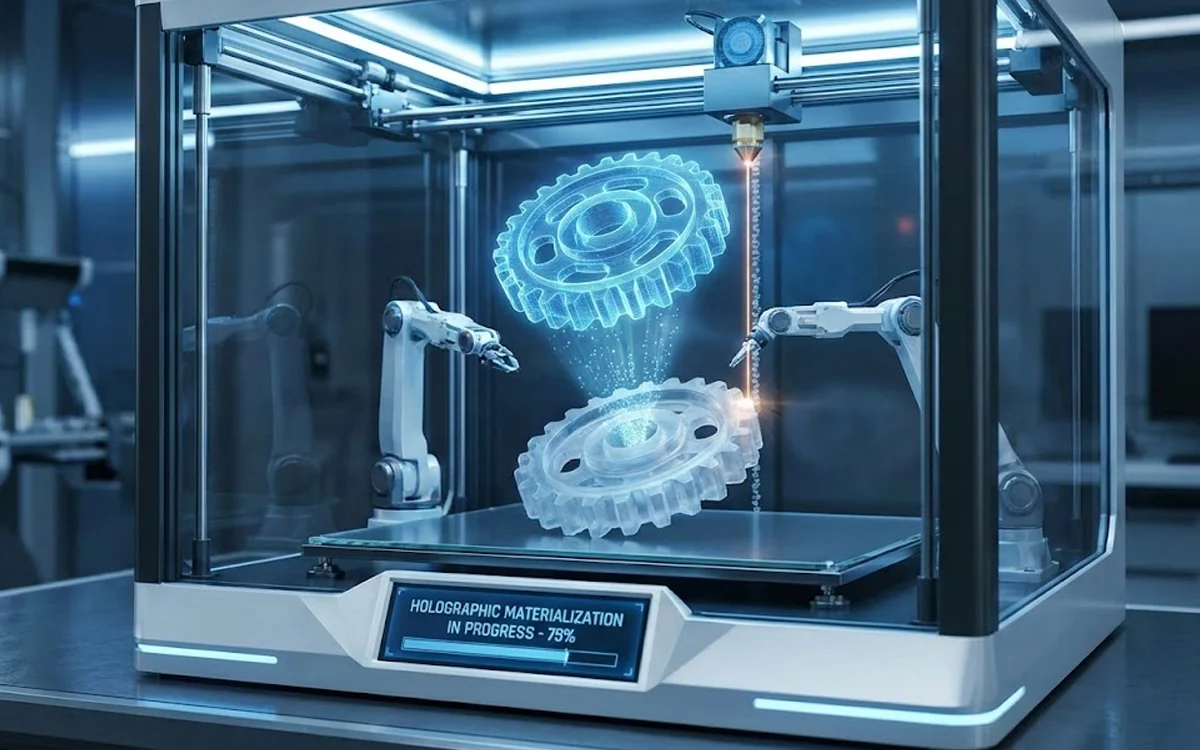
DISH, which stands for digital incoherent synthesis of holographic light fields, uses volumetric printing technology to create an object inside liquid resin in one go rather than slowly building it upwards.
That makes the process dramatically faster and avoids many of the delays that come with standard printers.
Researchers also say the system avoids one of the biggest problems with earlier experimental fast-printing methods, where parts of the machine had to move during production.
Less movement means fewer chances for mistakes and cleaner results.


Speed doesn’t mean it lacks in quality or accuracy
Speed usually comes with compromises, but this system still manages impressive accuracy.
Researchers say it can 3D print millimeter-sized objects with details as fine as 0.019 millimeters, which is teeny tiny.
That level of precision could make it useful for medical devices, electronics, and other products where tiny details really matter.
The setup also avoids moving the object during printing, which helps reduce vibrations and keeps everything aligned.

While it’s not about to replace the desktop printer sitting in someone’s garage, it shows just how quickly 3D printing is evolving.
Factories of the future could potentially make custom parts almost instantly instead of waiting for long production runs.
One minute, people are waiting all afternoon for a plastic gadget, the next, scientists are making objects appear almost instantly – witchcraft!
Daisy is a technology and automotive journalist covering artificial intelligence, consumer tech, Apple news, cryptocurrency, emerging technologies, and transportation innovation. Since joining the team in 2025, she has reported on everything from AI-powered startups and major iOS updates to viral car stories and the latest developments shaping transportation and the digital economy. Drawing on her background in automotive journalism and a degree in History and Journalism from Goldsmiths, University of London, Daisy specializes in breaking down complex topics into clear, engaging reporting for a global audience. Her work spans cutting-edge technology, innovative vehicles, and the people driving change across both industries. Daisy has gained first-hand access to some of the world's most talked-about technologies and innovators, including meeting Tesla's Optimus humanoid robot during its first European appearance in London. She has also discussed the future of space exploration with an astronaut, bringing unique insights and real-world perspectives to her coverage of emerging technology.




