Chinese satellite breaks all records and becomes direct threat to Starlink due to its secret technology
Published on Sep 14, 2025 at 9:38 AM (UTC-4)
by Daisy Edwards
Last updated on Sep 15, 2025 at 9:46 AM (UTC-4)
Edited by
Emma Matthews


A Chinese satellite is rumored to have been built that breaks all records and could become a direct threat to Starlink due to its secret technology.
Scientists from Peking University and the Chinese Academy of Sciences were observed testing a satellite in geostationary orbit, approximately 36,000km above Earth.
The alleged threat to Starlink comes from the fact that the satellite is allegedly very high-tech, as it is fitted with a two-watt laser that beams down to Earth.
That laser beam achieved a one gigabit per second downlink speed, far faster than any of Starlink’s real-user speeds under typical conditions.
EXPLORE SBX CARS – Supercar auctions starting soon powered by Supercar Blondie
The Chinese satellite could become a direct threat to Starlink
There’s kind of a reverse space race going on.
Instead of a race to get to space, many different scientists and developers are racing to get space to come to us in the form of satellites beaming back to Earth.
The position of the fastest and best satellite speeds has, up until recently, gone to Elon Musk’s Starlink. But it looks like Musk had better watch his back, as some Chinese scientists are coming for Starlink’s crown.
Allegedly, scientists from Peking University and the Chinese Academy of Sciences were known to be testing a new satellite, designed to be better than Musk’s in many different ways.
The satellite was being tested in geostationary orbit, which is approximately 36,000 km above Earth, which we can all agree is very far away.


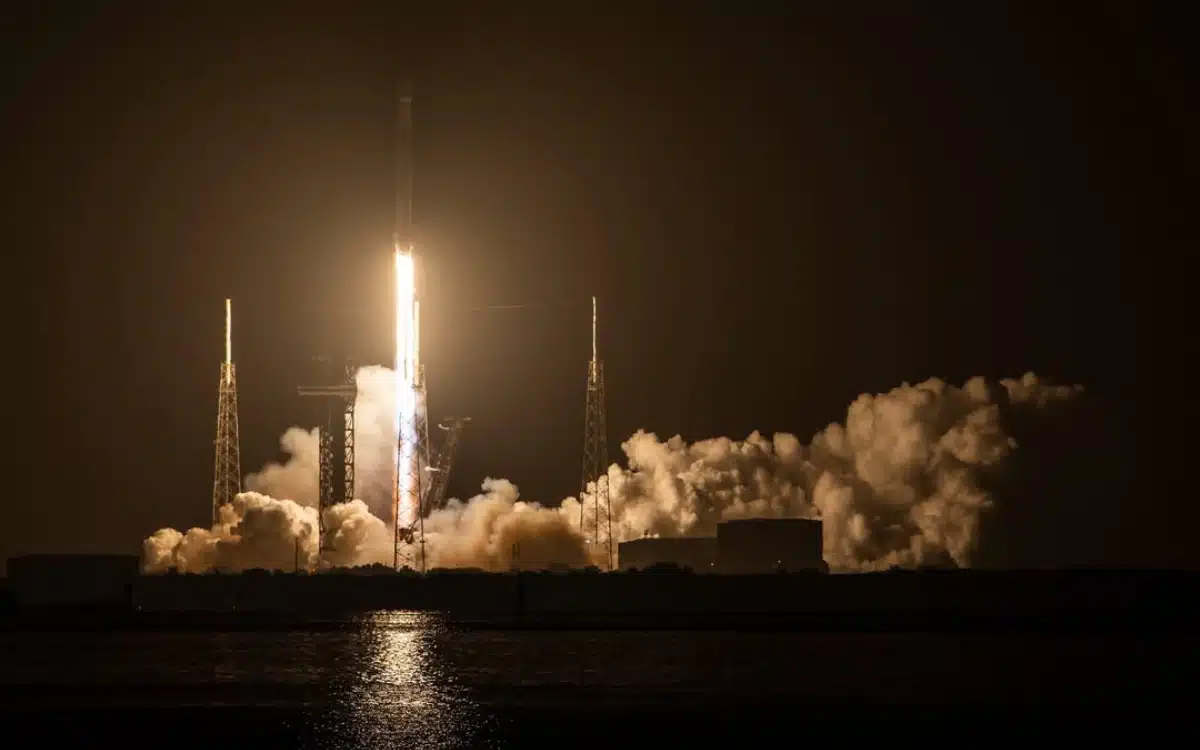

It’s breaking all records
The Chinese satellite is a direct threat to Starlink due to its high-tech laser technology.
Although the laser fitted onto the satellite only uses two watts, the fact that it’s getting the results it is from so far away is mind-blowing.
The results have been impressive: one gigabit per second downlink speed far surpasses any of Starlink’s real-user speeds under normal conditions.
The difference between the Chinese satellite and the SpaceX satellite is stark.
Starlink uses thousands of satellites in low Earth orbit, broadcasting via radio frequencies, so bandwidth and interference limits are always a possibility.
This Chinese satellite will not immediately replace Musk’s and very much still looks to be in the testing phase; however, it could pose a real threat to the billionaire’s space company if the scientists at SpaceX stop innovating.
Daisy is a technology and automotive journalist covering artificial intelligence, consumer tech, Apple news, cryptocurrency, emerging technologies, and transportation innovation. Since joining the team in 2025, she has reported on everything from AI-powered startups and major iOS updates to viral car stories and the latest developments shaping transportation and the digital economy. Drawing on her background in automotive journalism and a degree in History and Journalism from Goldsmiths, University of London, Daisy specializes in breaking down complex topics into clear, engaging reporting for a global audience. Her work spans cutting-edge technology, innovative vehicles, and the people driving change across both industries. Daisy has gained first-hand access to some of the world's most talked-about technologies and innovators, including meeting Tesla's Optimus humanoid robot during its first European appearance in London. She has also discussed the future of space exploration with an astronaut, bringing unique insights and real-world perspectives to her coverage of emerging technology.




