This is what it looks like to fly beyond the Earth's atmosphere in a vintage fighter jet
Published on Apr 02, 2026 at 8:13 PM (UTC-4)
by Daisy Edwards
Last updated on Apr 07, 2026 at 12:26 PM (UTC-4)
Edited by
Emma Matthews
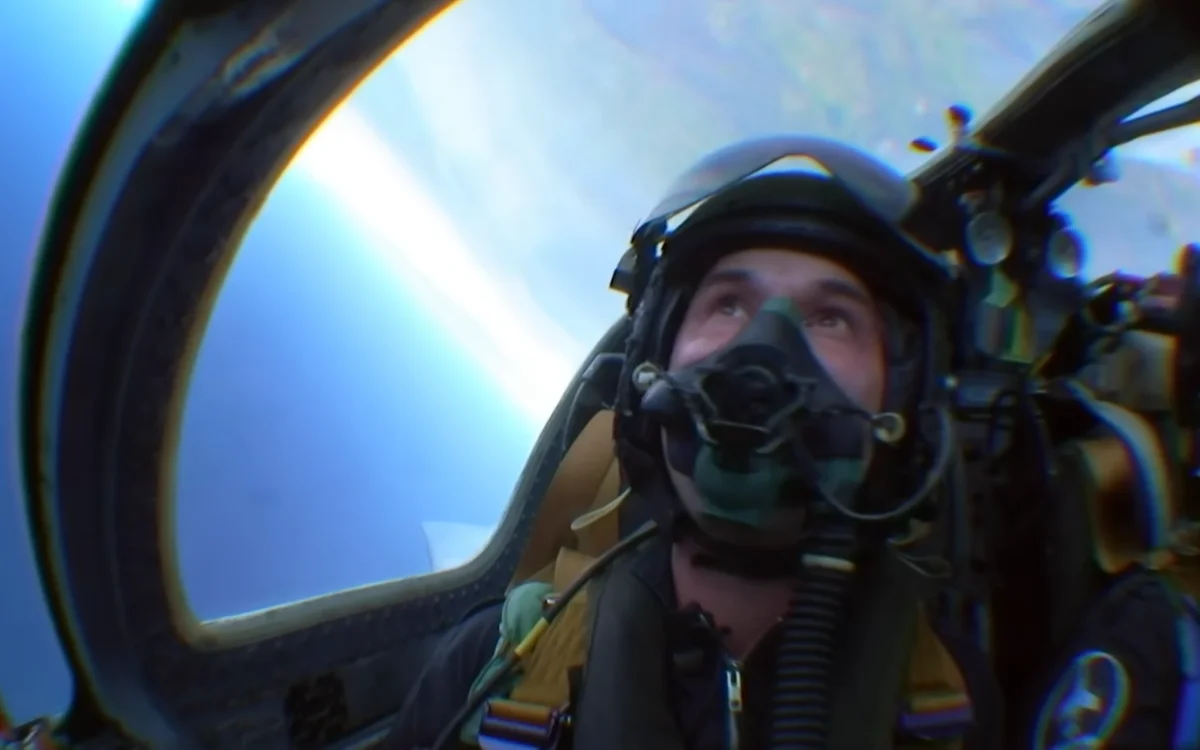

There is nothing cooler than the phrase ‘Flying beyond the Earth’s atmosphere in a vintage fighter jet’, and it sounds like something lifted straight from a space movie.
But that is exactly what happened when notable physicist Brian Cox climbed into an English Electric Lightning and blasted high above South Africa.
The incredible flight took him all the way up to around 60,000 feet, where the sky darkened, and the planet’s protective atmosphere appeared as a glowing strip around the Earth.
It was a stunning reminder that the barrier keeping life alive on our planet is far thinner than most of us ever imagine.
Click the star icon next to supercarblondie.com in Google Search to stay ahead of the curve on the latest and greatest supercars, hypercars, and ground-breaking technology
Flying beyond the Earth’s atmosphere in a vintage fighter jet
Famous physicist Brian Cox made the journey from Cape Town, South Africa, aboard an aircraft legendary in British aviation circles, and he almost reached space.
The English Electric Lightning fighter jet may no longer be in active service, but it still looks every bit like the kind of machine built for raw speed and serious altitude.
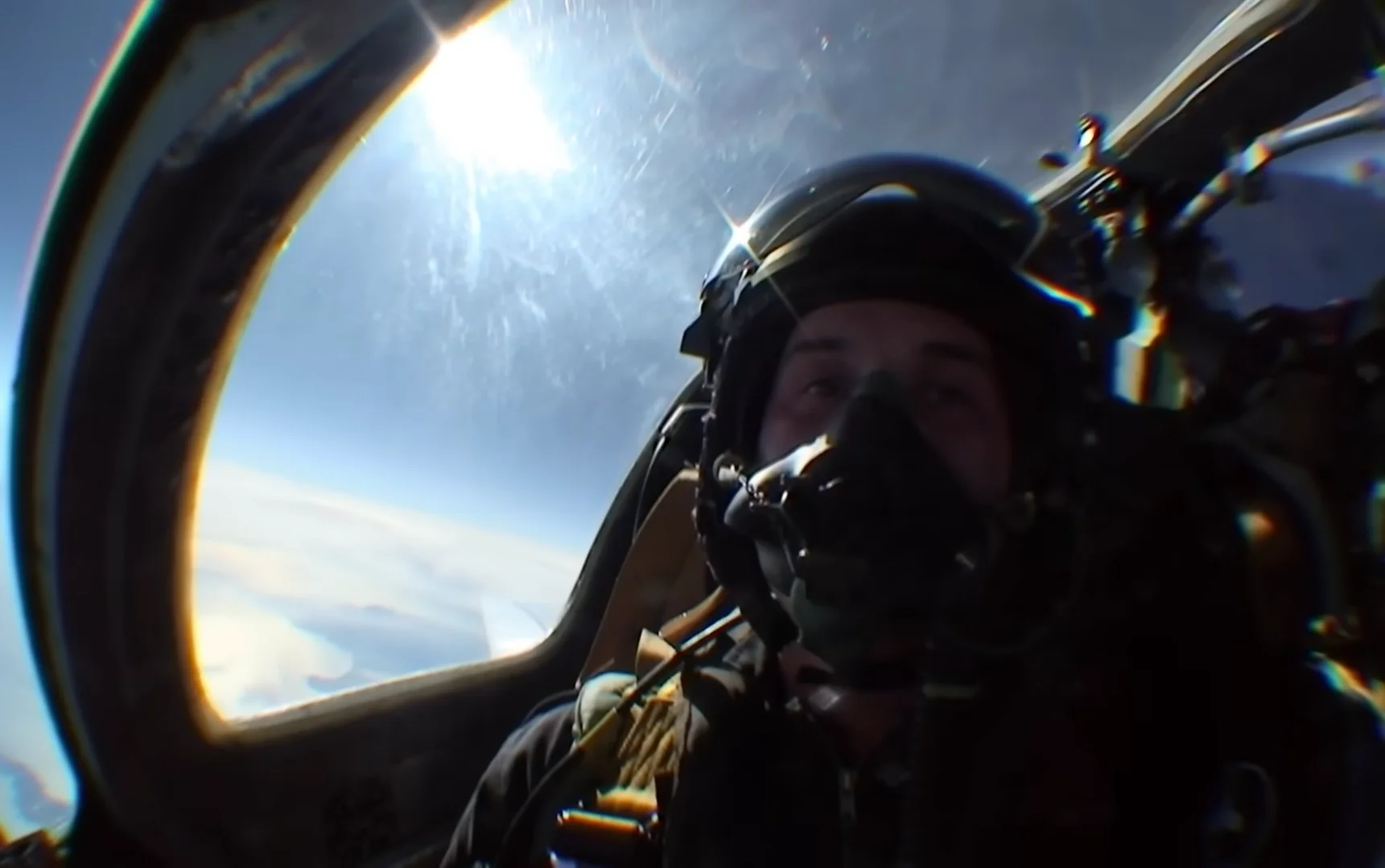
As the jet climbed, it reached around 9km in just seconds, still within the troposphere, the thickest and lowest part of the atmosphere.
But the higher it went, the more dramatic the view became, and by the time the aircraft hit 58,000 feet, around 90 percent of the atmosphere was already below him.

That left Cox staring out at a sky that had shifted from bright blue to a deep, dark shade that looked much closer to space than anything most of us ever get to experience.
Related
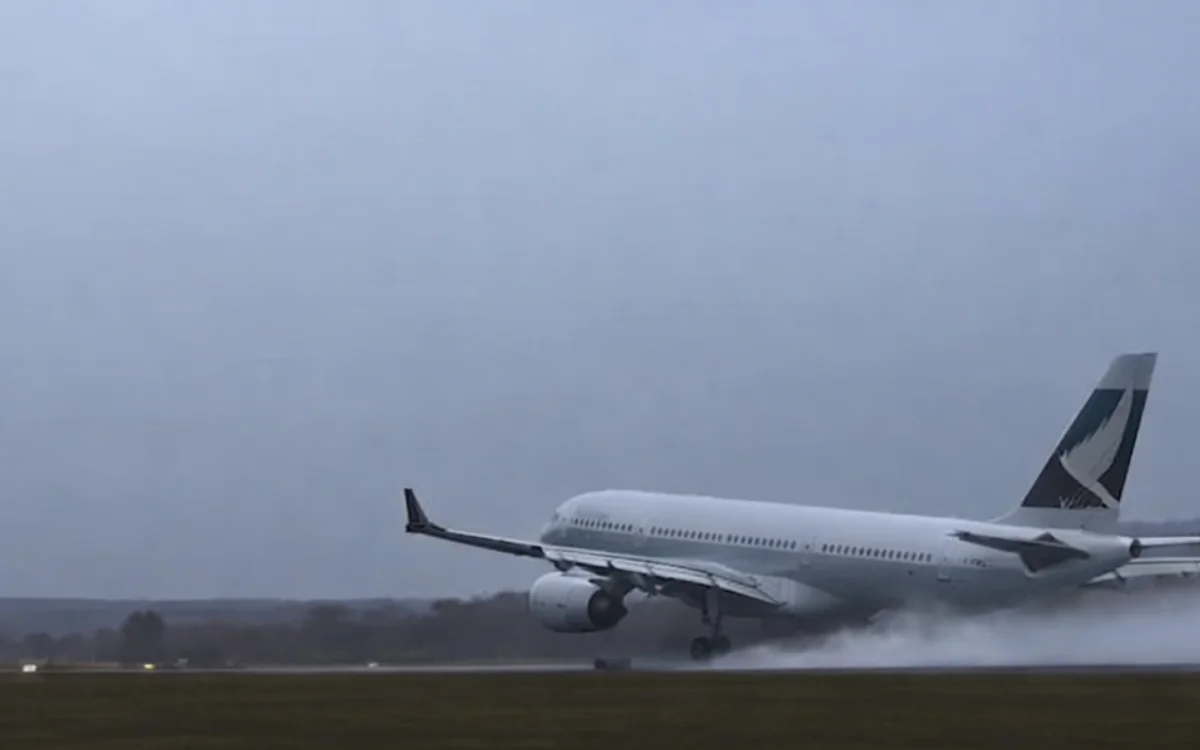

A vintage fighter jet can still shoot for the stars
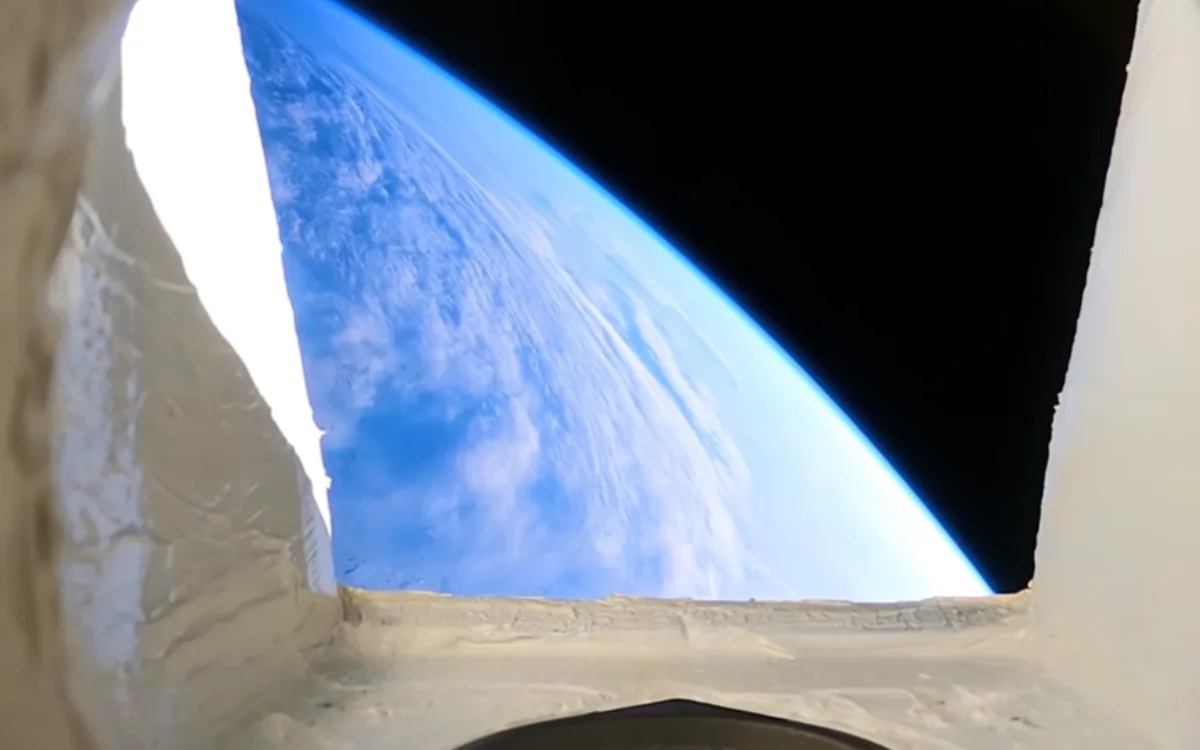
At roughly 60,000 feet, or 18km above Earth, Cox reached the highest point of the flight, and there it was: the famous thin blue line.
From that height, the atmosphere did not look vast or endless; it looked delicate, tiny, and almost impossibly fragile, just a sliver of blue wrapped around the planet’s curve.
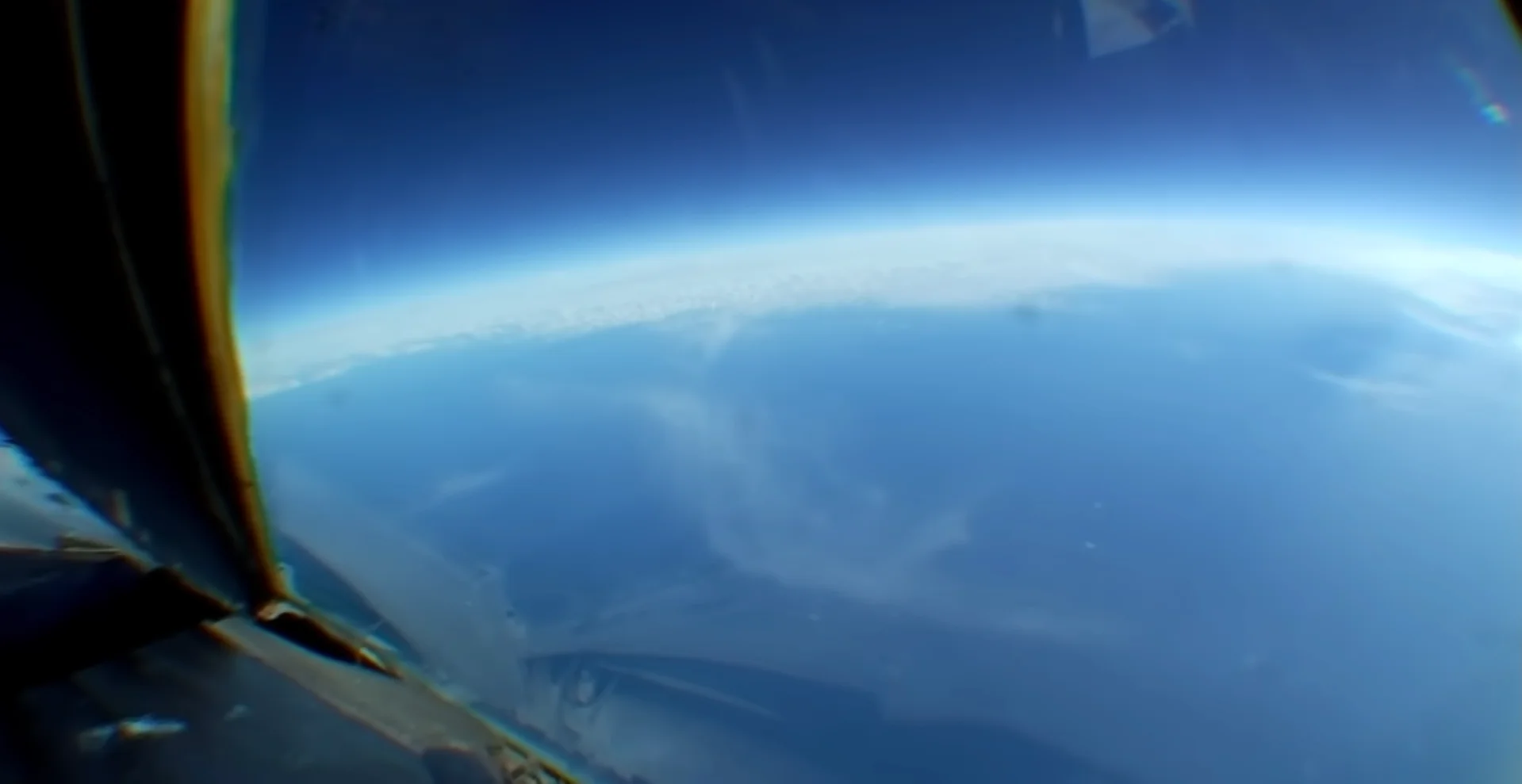
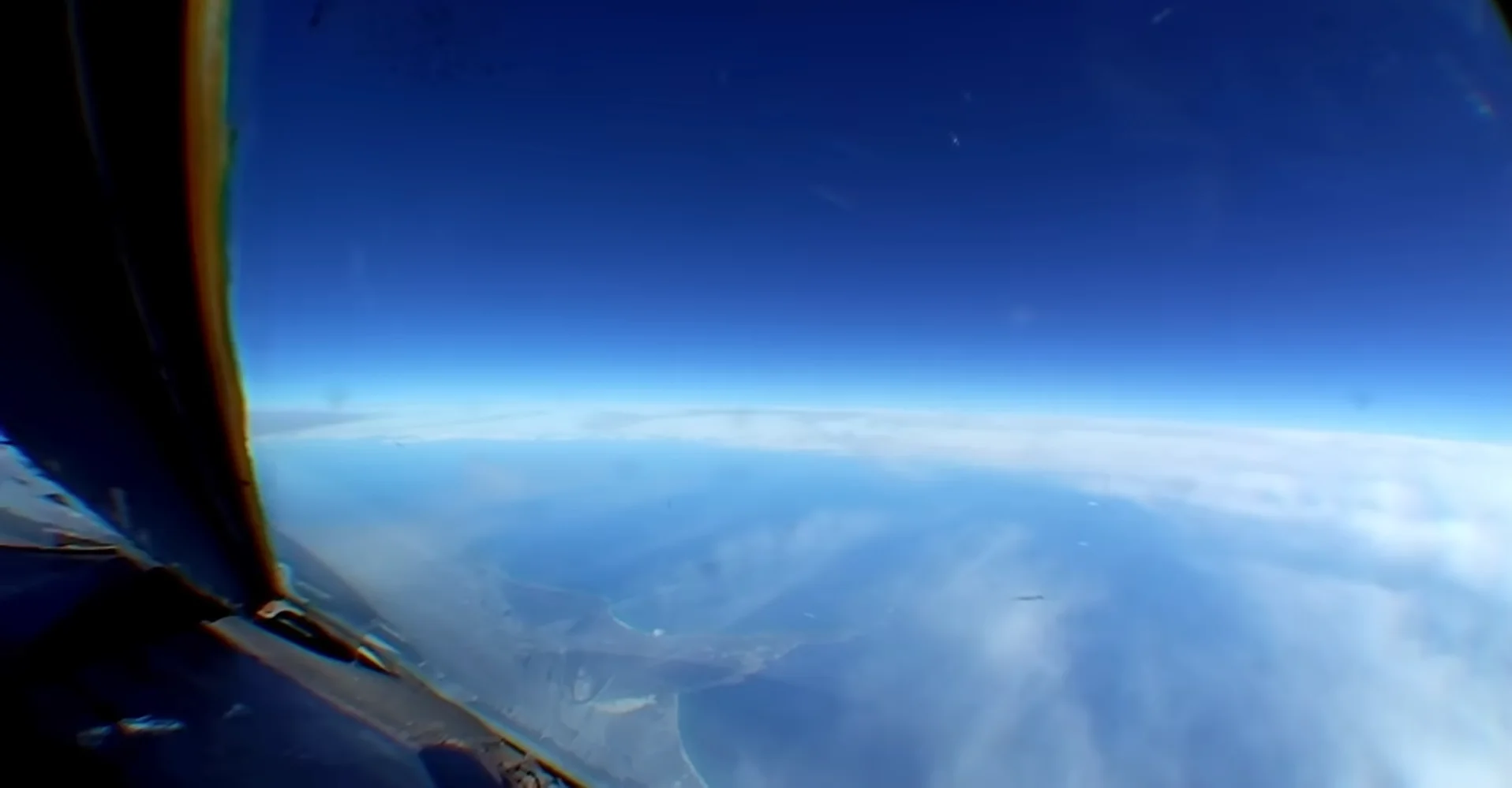
That view is what made the whole trip so powerful.
We talk about Earth’s atmosphere as though it is this huge shield stretching endlessly overhead, but from up there, it looked almost paper-thin.

For Cox, it was an amazing sight, and for everyone watching, it was also a brilliant reminder that the thing protecting every ocean, city, mountain, and living creature on Earth is astonishingly fragile.
And seeing it from a vintage fighter jet somehow made the whole thing even cooler.
Daisy is a technology and automotive journalist covering artificial intelligence, consumer tech, Apple news, cryptocurrency, emerging technologies, and transportation innovation. Since joining the team in 2025, she has reported on everything from AI-powered startups and major iOS updates to viral car stories and the latest developments shaping transportation and the digital economy. Drawing on her background in automotive journalism and a degree in History and Journalism from Goldsmiths, University of London, Daisy specializes in breaking down complex topics into clear, engaging reporting for a global audience. Her work spans cutting-edge technology, innovative vehicles, and the people driving change across both industries. Daisy has gained first-hand access to some of the world's most talked-about technologies and innovators, including meeting Tesla's Optimus humanoid robot during its first European appearance in London. She has also discussed the future of space exploration with an astronaut, bringing unique insights and real-world perspectives to her coverage of emerging technology.




