Man puts camera in river on one of the darkest places in the world to capture the full Earth rotation and it creates a stunning timelapse
Published on Mar 28, 2026 at 8:17 PM (UTC-4)
by Daisy Edwards
Last updated on Apr 02, 2026 at 12:21 PM (UTC-4)
Edited by
Emma Matthews


A photographer traveled to the world’s darkest place and managed to capture the full Earth rotation in a stunning timelapse after he decided that he would put his camera in a river.
It sounded completely mad, but that was exactly the point.
One man left his camera sitting in a river all night in one of the darkest places on Earth, hoping to capture the stars before nature ruined the shot.
What he ended up with was a stunning time-lapse that made the planet’s movement feel almost unreal.
Click the star icon next to supercarblondie.com in Google Search to stay ahead of the curve on the latest and greatest supercars, hypercars, and ground-breaking technology
Man puts camera in river in one of the darkest places in the world
This awesome space display began with the creator explaining that his camera had spent the entire night in the river.
That alone would have made most people panic, but things looked even worse by morning.
When he checked on it, the lens had fogged up completely, and it seemed like the whole experiment might have been a total failure.

But there was one huge stroke of luck.
He explained that the fog had only rolled in at around six o’clock that morning, which meant the camera had already captured the stars and galaxies before the shot was spoiled.
So while it looked like the river, the cold, and the moisture had beaten him, the footage had actually survived in its entirety.

The timelapse of the full Earth rotation looks almost magical
That was where the video really delivered.
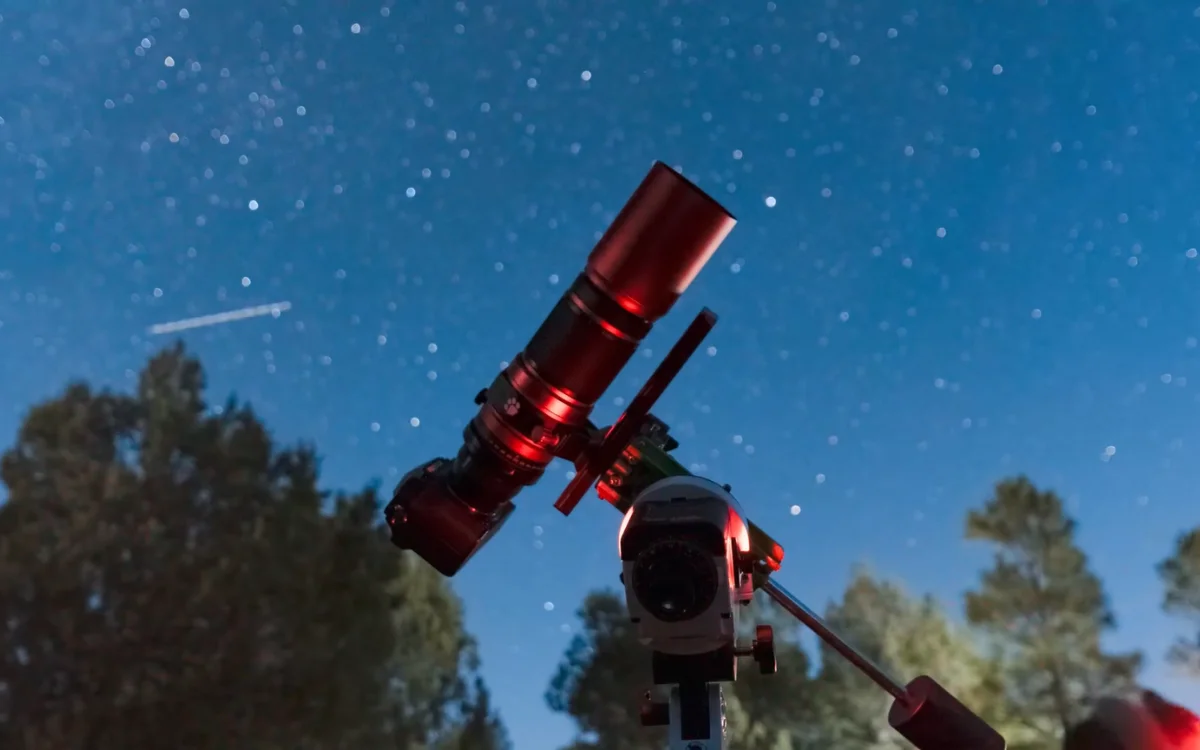
Once the timelapse began, the night sky glowed above the dark landscape, starting with a lovely pink that quickly faded into the stars, creating a mesmerizing scene that felt bigger than life.
It was one of those clips that instantly reminded viewers how dramatic the sky could look when there was barely any light pollution.

What made it even better was knowing how close it had come to being ruined because it had not been some perfectly controlled studio setup or a polished space agency production.
It had simply been one camera, one river, one freezing overnight wait, and a race against the fog.
The movement of the stars showed the full Earth rotation in the best way.
And when the stars and galaxies stretched across the frame, it turned a simple scientific fact about Earth rotating into something that looked genuinely spellbinding.
Daisy is a technology and automotive journalist covering artificial intelligence, consumer tech, Apple news, cryptocurrency, emerging technologies, and transportation innovation. Since joining the team in 2025, she has reported on everything from AI-powered startups and major iOS updates to viral car stories and the latest developments shaping transportation and the digital economy. Drawing on her background in automotive journalism and a degree in History and Journalism from Goldsmiths, University of London, Daisy specializes in breaking down complex topics into clear, engaging reporting for a global audience. Her work spans cutting-edge technology, innovative vehicles, and the people driving change across both industries. Daisy has gained first-hand access to some of the world's most talked-about technologies and innovators, including meeting Tesla's Optimus humanoid robot during its first European appearance in London. She has also discussed the future of space exploration with an astronaut, bringing unique insights and real-world perspectives to her coverage of emerging technology.




