Neil DeGrasse Tyson thinks our universe is a computer simulation and a science professor claims to have evidence it is true
Published on Mar 09, 2026 at 12:41 PM (UTC-4)
by Daisy Edwards
Last updated on Mar 10, 2026 at 1:29 PM (UTC-4)
Edited by
Mason Jones
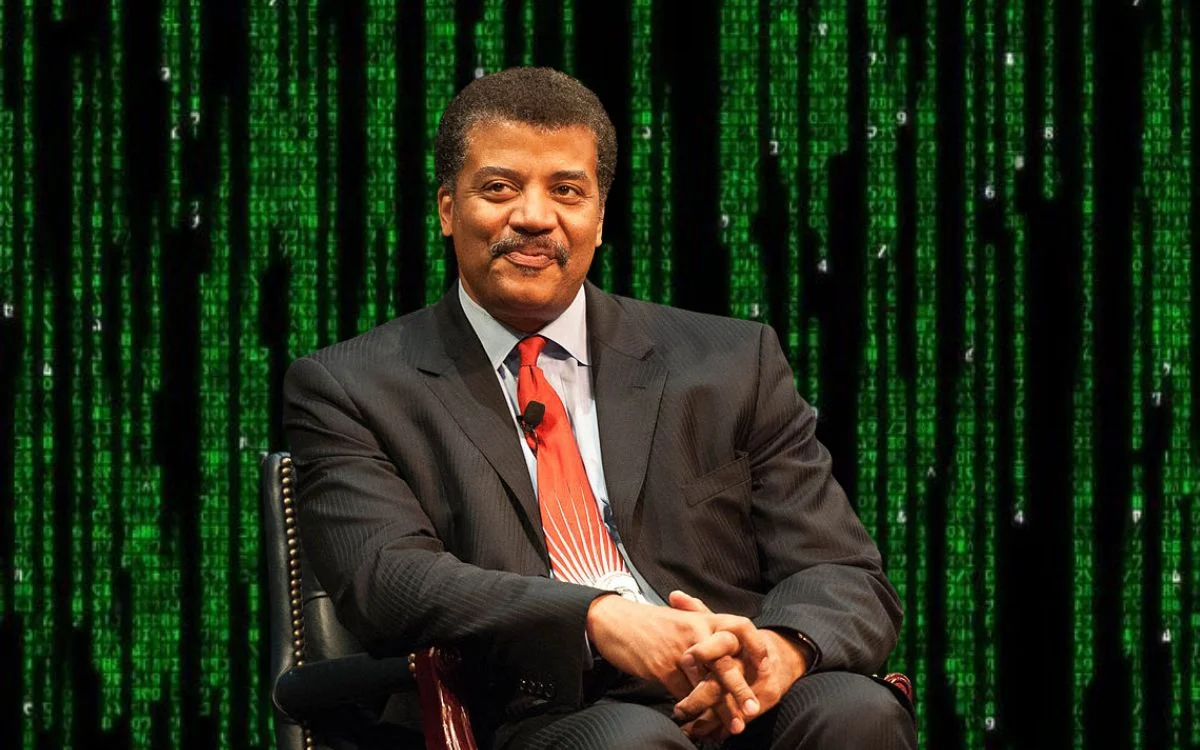

Did you know that notable scientist Neil DeGrasse Tyson thinks our universe could be a simulation, and now a science professor claims to have evidence that it is true?
The wild theory has been floating around for years, but it is back in the spotlight after fresh attention on comments from Tyson and arguments from University of Portsmouth researcher Melvin Vopson.
Tyson’s view is that because humans cannot yet build a full universe simulation, it may be more likely that a more advanced civilization already has.
Vopson then takes things a step further by arguing that there could be signs in physics that point to our reality being digitally constructed.
Click the star icon next to supercarblondie.com in Google Search to stay ahead of the curve on the latest and greatest supercars, hypercars, and ground-breaking technology
Neil DeGrasse Tyson’s thoughts on our universe being a computer simulation
This crazy tech idea sounds like it belongs in a sci-fi movie, but Tyson has previously suggested there is a serious philosophical angle to it.
The astrophysicist has argued that if simulation technology keeps getting more advanced, there is every chance a civilization somewhere could create a reality so detailed its inhabitants would never know the difference.

That is what makes the theory so fascinating because it flips the obvious question on its head.
Instead of asking whether humans will one day create a fake universe, it asks whether someone else, potentially aliens, already beat us to it.
Professor claims to have evidence to back it up
Vopson’s argument centers on entropy, which in physics is usually described as a measure of disorder.
He believes information systems behave differently from the standard second law of thermodynamics and that this could point to another kind of entropy called ‘information entropy’, helping keep the universe organized.
The researcher has suggested that a simulated universe would need built-in data compression and optimization to reduce the computational load.

According to his theory, that could explain patterns seen in nature, biological systems and mathematical symmetry.
Of course, not everyone is buying this.
Some scientists argue reality cannot be fully described by computation alone, meaning the universe could not be a simulation after all.
For now, the computer simulation theory sits firmly in the realm of speculation, but it is one of those mind-bending ideas that makes you wonder whether someone somewhere could be watching the entire universe play out like a very elaborate game.
Daisy is a technology and automotive journalist covering artificial intelligence, consumer tech, Apple news, cryptocurrency, emerging technologies, and transportation innovation. Since joining the team in 2025, she has reported on everything from AI-powered startups and major iOS updates to viral car stories and the latest developments shaping transportation and the digital economy. Drawing on her background in automotive journalism and a degree in History and Journalism from Goldsmiths, University of London, Daisy specializes in breaking down complex topics into clear, engaging reporting for a global audience. Her work spans cutting-edge technology, innovative vehicles, and the people driving change across both industries. Daisy has gained first-hand access to some of the world's most talked-about technologies and innovators, including meeting Tesla's Optimus humanoid robot during its first European appearance in London. She has also discussed the future of space exploration with an astronaut, bringing unique insights and real-world perspectives to her coverage of emerging technology.




