Robot disguised as a crab was put in the ocean and an army of real crabs came to defend it from a stingray
Published on Feb 20, 2026 at 5:18 PM (UTC+4)
by Daisy Edwards
Last updated on Feb 20, 2026 at 9:10 PM (UTC+4)
Edited by
Emma Matthews
It sounds like sci-fi, but it is a real moment from BBC’s Spy in the Ocean, where a robot disguised as a crab was defended by hundreds of real-life crabs.
Engineers built a hyper-realistic robotic crab, complete with articulated legs and lifelike detailing, designed to infiltrate a colony without disrupting natural behavior.
When a hungry stingray came along, it looked like the robot crustacean and its fellow real-life sea-dwellers were done for.
What happened next was less about spying and more about survival.
EXPLORE SBX CARS – Supercar auctions starting soon powered by Supercar Blondie
Robot disguised as a crab meets a stingray
The ocean is a brutal ecosystem, but what happens when you combine it with tech?
A four-meter stingray is basically a biological stealth bomber, gliding silently over the seabed and capable of eating up to 50 crabs a day.
Its flattened body lets it pin prey to the ground, while powerful jaws make short work of cracking shells and extracting the meat inside.
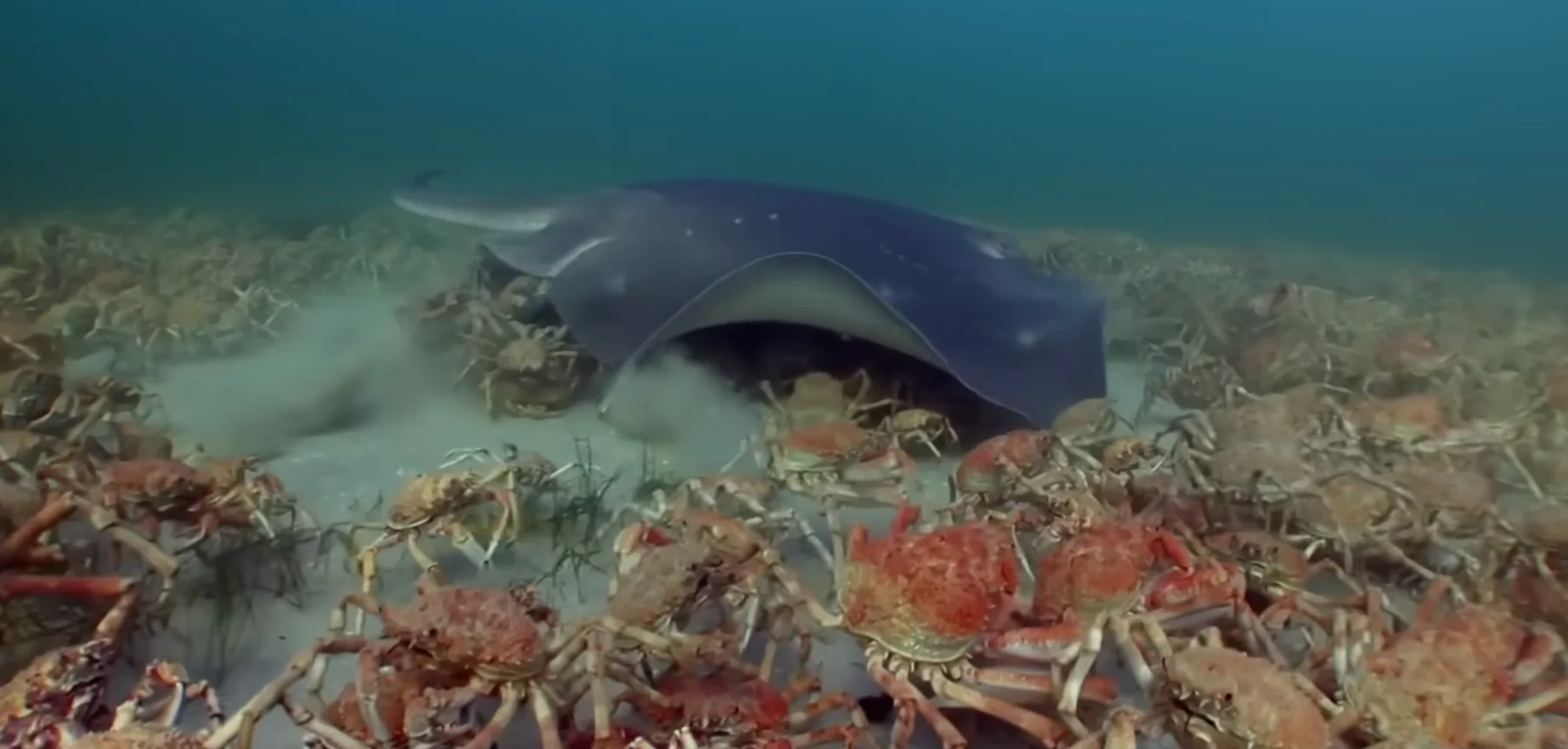
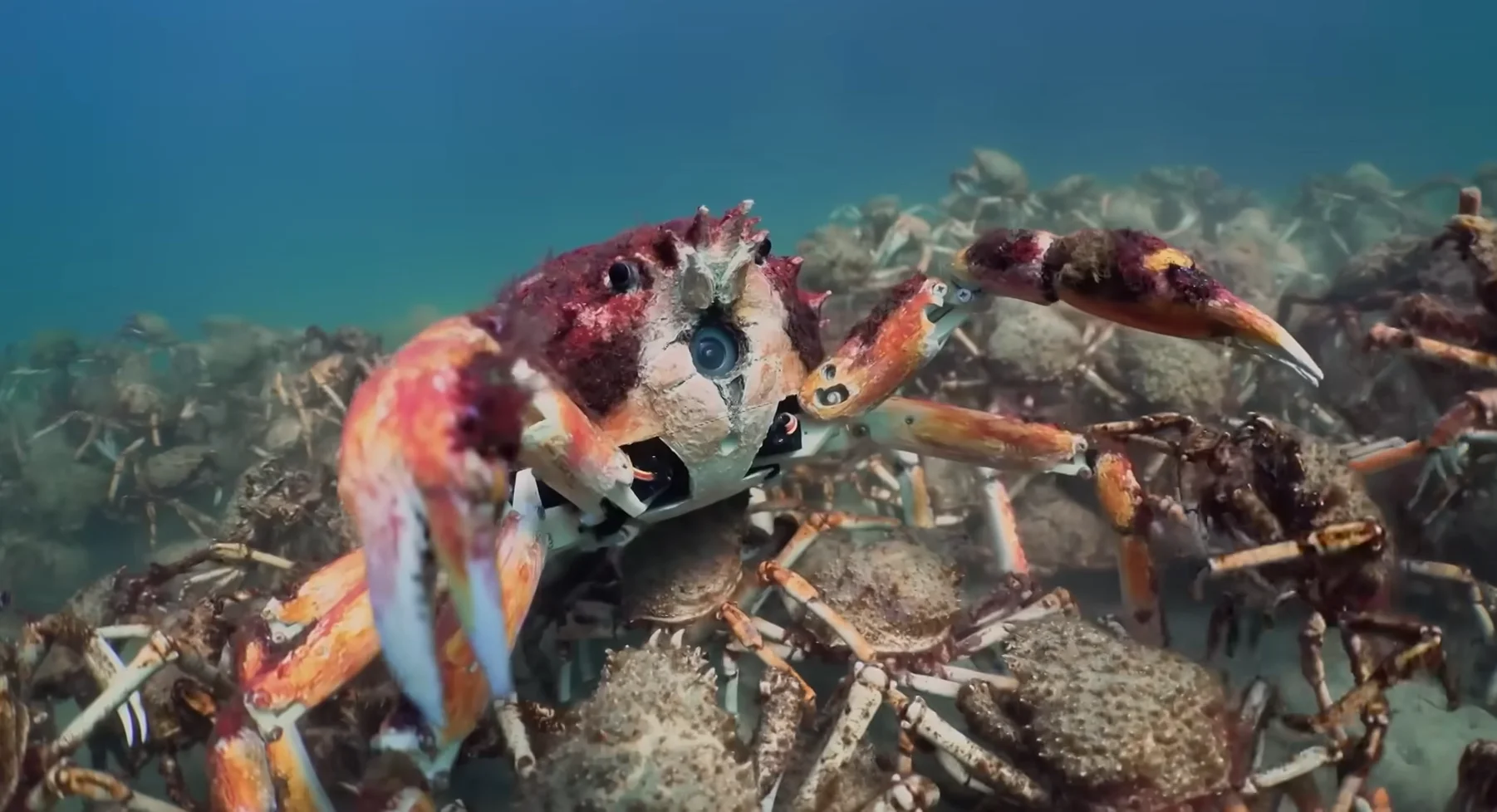
The spy robot crustacean, packed with cameras to capture a crab’s-eye view, suddenly found itself isolated from the swarm.
Left exposed on the sand, it became a target for the stingray, which is tuned to spot vulnerable, soft-shelled snacks in seconds.
The ray struck, flipping and hitting the robot with the full force of its hunting routine.
From the onboard camera, you see what would normally be the untimely end of a real crab, but the robotic shell takes the hit, stays operational, and the spy regains its footing.
Click the star icon next to supercarblondie.com in Google Search to stay ahead of the curve on the latest and greatest supercars, hypercars, and ground-breaking technology
An army of real crabs defends the AI impostor
What happened next feels like nature winning over technology.
As the robot scuttled back towards the group of real crabs, the crustaceans reorganized into a dense defensive formation.
Hard-shelled individuals form an outer armor layer, creating a multi-legged barricade, while softer ones stay protected beneath the living shield.
It is essentially nature’s firewall, and the other crabs worked to defend the robot imposter from the predator.
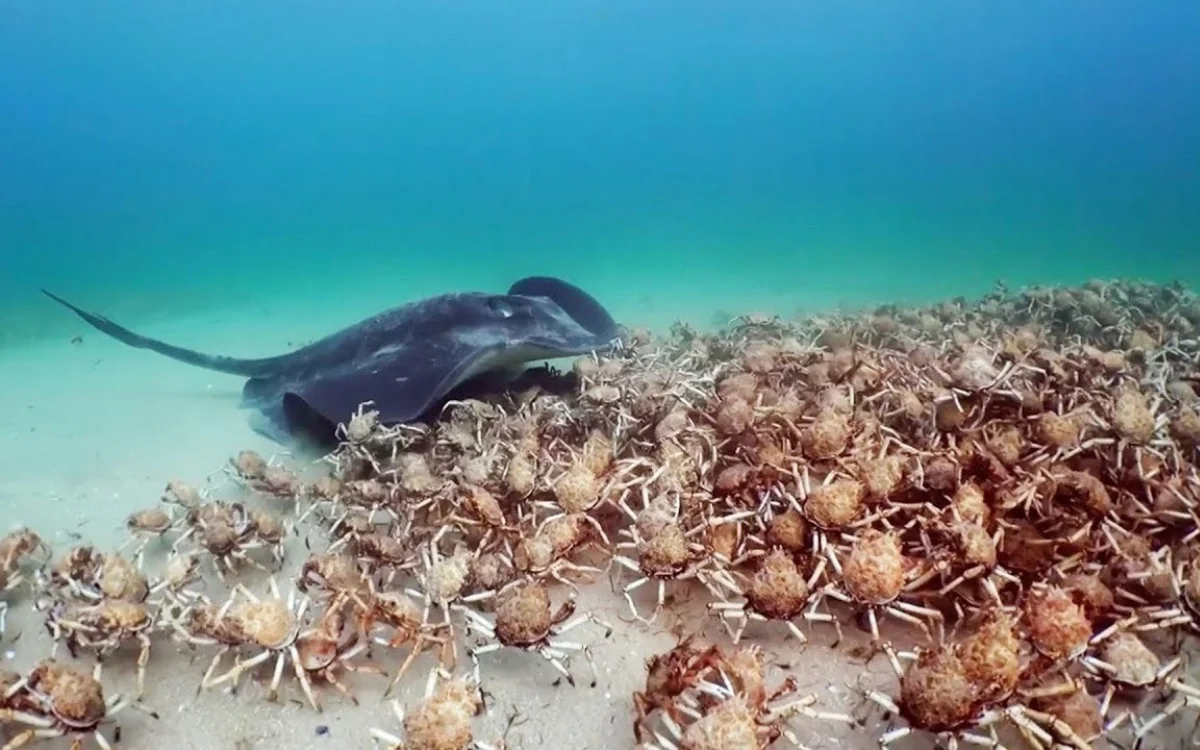
For the stingray, whose hunting strategy depends on isolating a single target, the swarm became too much – the tighter the formation, the harder it is to extract one individual without resistance.
The result was incredible.
The spy crustacean may have been built by humans, but it survived because of one of nature’s oldest technologies: strength in numbers.
DISCOVER SBX CARS: The global premium car auction platform powered by Supercar Blondie