Scientist claims he has proof we are living in an advanced virtual world simulation
- Melvin Vopson, associate Professor at the University Portsmouth, believes we may be living in a simulation
- He says there’s one component of our reality in particular that suggests that might be the case
- Vopson is working on a solution to test his theory
Published on Dec 29, 2023 at 10:52 AM (UTC-5)
by Alessandro Renesis
Last updated on Mar 06, 2024 at 5:16 AM (UTC-5)
Edited by
Adam Gray
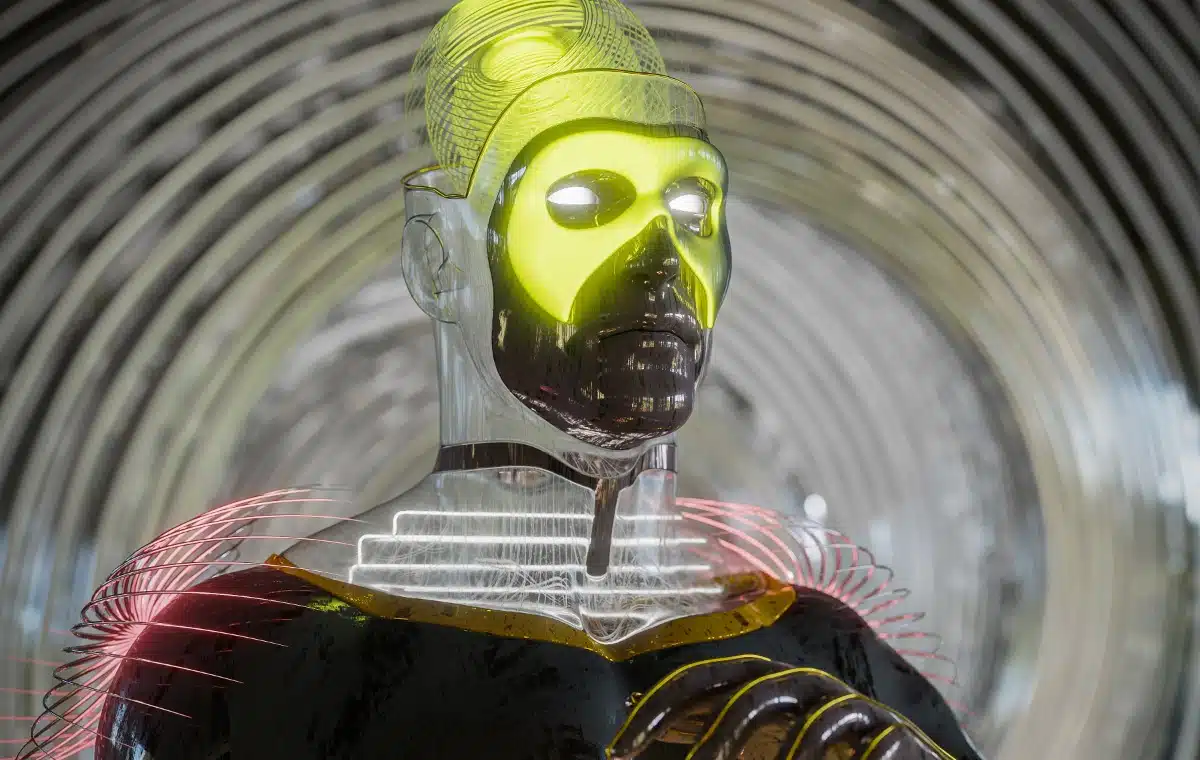

It turns out Elon Musk isn’t the only one who thinks we may be living in a computer simulation.
Melvin Vopson, associate professor in physics at Portsmouth University in the UK, is on board with the simulation theory.
And it goes further, because Vopson says he has proof.
READ MORE: Scientists explain bizarre ‘question mark’ spotted in space
His theory is a bit technical but, put simply, he believes there’s too much symmetry in our universe, it’s almost unnatural.
Speaking to the MailOnline, Vopson said the abundance of symmetry is strange.
“This abundance of symmetry in the universe is something that has never been explained,” he said.
Vopson used something called quantum entanglement as an example.
Quantum entanglement refers to two particles that remain connected even though they’re light-years apart.
Vopson says that, in quantum entanglement, these two particles are connected in that if you manipulate or alter one, the other one automatically changes, too.
Regardless of where they might be.
Melvin Vopson, Associate Professor in Physics at the University of Portsmouth, joins Andrew Doyle, to discuss his claims that we may well be characters in an advanced virtual world, and his new book: "Reality Reloaded: The Scientific Case for a Simulated Universe". pic.twitter.com/B2ipZzs36s
— GB News (@GBNEWS) October 22, 2023
Vopson explains that this, in theory, should be impossible, because it’d mean you’d be doing something faster than the speed of light.
The only explanation, according to the professor, is that these two particles are part of a code, and they’re equally far apart from the central processor, to which they’re connected.
“While we may think two particles are millions of light years apart, they wouldn’t be if they were created in a simulation,” Vopson concluded.
The professor says if this were the case, then we should be able to find bits of code around us.
And these bits of information should have a small mass, which would give us “something to search for”.
Vopson has an idea to prove his simulation theory.
He thinks that by making particles and antiparticles with the opposite electric charge collide, particles that shouldn’t be there would try to escape.

It all sounds a bit complicated, but there’s one thing that Vopson wrote in one of his papers that makes sense.
Vopson says that the nature of the reality we live is still a great mystery, which is a good point.
More importantly, he said that we should take the simulation hypothesis seriously simply because, that way, it’d be easier to prove it – or disprove it.

Alessandro is an automotive journalist with 10 years of experience covering supercars, automotive history, emerging vehicle technology, and luxury transportation. He wrote the first article published on SupercarBlondie.com when the website launched in 2022 and has since built a reputation for insightful reporting across the automotive and transportation industries. His expertise is grounded in hands-on experience. Alessandro has driven every Tesla model ever produced, from the original Roadster to the Cybertruck, and regularly covers the latest developments in electric vehicles and automotive innovation. His passion for transportation extends beyond cars, he has even flown a Boeing 787 Dreamliner simulator in Addis Ababa, Ethiopia. His reporting spans everything from classic American muscle cars and rare automotive discoveries to luxury yachts, private aircraft, high-end watches, and cutting-edge vehicle technology. Known for his deep knowledge of automotive history and ability to uncover the stories behind iconic vehicles, Alessandro brings readers a blend of historical context, technical expertise, and first-hand experience.




