World-first supercomputer discovers invisible flaw in all jet engines that no human had spotted
Published on Feb 17, 2026 at 5:01 PM (UTC+4)
by Daisy Edwards
Last updated on Feb 17, 2026 at 5:01 PM (UTC+4)
Edited by
Daisy Edwards
A world-first supercomputer has done something incredibly important: discovered a flaw in jet engines that no human had ever seen.
The breakthrough came after scientists used the most powerful computer on Earth to simulate the brutal environment inside a working turbine.
What they found was not a dramatic crack or snapped component, but something far smaller and far more subtle.
A microscopic surface flaw that had secretly affected performance for decades was finally exposed.
EXPLORE SBX CARS – Supercar auctions starting soon powered by Supercar Blondie
A world-first supercomputer spots an invisible flaw in all jet engines
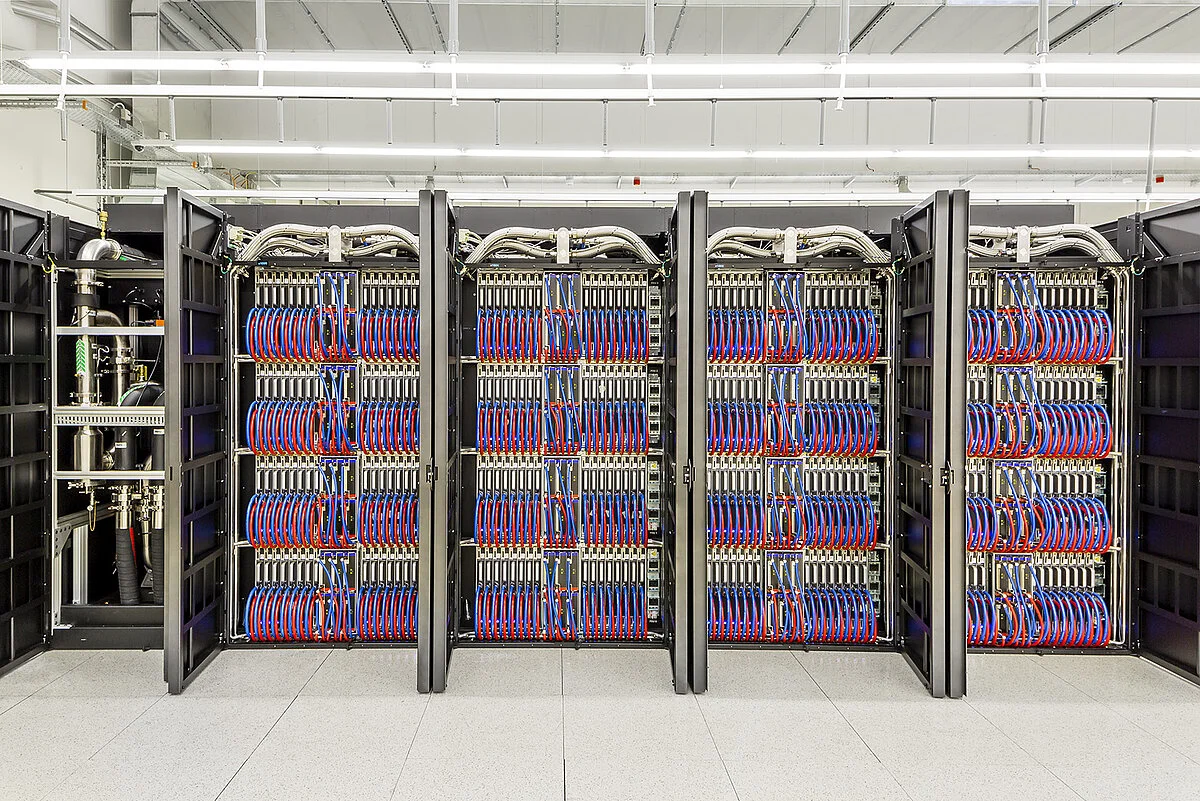
Tech researchers working with Frontier, the exascale supercomputer at Oak Ridge National Laboratory, ran ultra-high fidelity simulations of jet engine turbine blades operating under extreme heat and pressure.
These blades operate in the hottest, most punishing part of the engine, where airflow, combustion, and cooling systems all collide at once.
As turbine blades age, their surfaces become rough at a microscopic level.
That roughness is impossible to properly analyze with traditional testing or smaller-scale computing, but Frontier changed that.
By modeling billions of grid points at once, the system recreated both the full environment of the jet engines and the tiny surface degradation happening on each blade.
The result was the first truly accurate engine representative 3D simulation that captured how teeny tiny amounts of wear affect the entire turbine’s performance.
Click the star icon next to supercarblondie.com in Google Search to stay ahead of the curve on the latest and greatest supercars, hypercars, and ground-breaking technology
What was discovered?
The simulations revealed that this barely visible roughness can push airflow to shift earlier from smooth movement to turbulence.
That transition increases aerodynamic issues and causes heat transfer on the blade surface.
In simple terms, rough blades can reduce fuel efficiency and increase thermal stress on already extreme components, over time, that means higher operating costs, reduced durability, and more frequent maintenance.

Even with Frontier’s immense power, each simulation took weeks to complete.
On a standard laptop, the same calculations would have taken centuries; that scale of computing finally allowed engineers to see how tiny imperfections affect the entire system.
The long-term goal is to understand how this invisible flaw behaves, so that engineers can design turbine blades that are more tolerant to surface wear and tear and improve cooling strategies around newly identified hotspots.
In an industry where small efficiency gains translate into massive savings and improved safety, spotting what no human had seen before could be a total game-changer for the future of flight.
DISCOVER SBX CARS: The global premium car auction platform powered by Supercar Blondie
As a Content Writer since January 2025, Daisy’s focus is on writing stories on topics spanning the entirety of the website. As well as writing about EVs, the history of cars, tech, and celebrities, Daisy is always the first to pitch the seed of an idea to the audience editor team, who collab with her to transform it into a fully informative and engaging story.