Founder of $390,000,000 tech company was rejected 33 times due to age bias before forging his path
Published on Apr 02, 2026 at 10:25 AM (UTC-4)
by Daisy Edwards
Last updated on Apr 07, 2026 at 12:31 PM (UTC-4)
Edited by
Emma Matthews


A brutal string of knock-backs didn’t stop this co-founder of a $390,000,000 tech company, who was told ‘no’ 33 times due to age bias, before finally finding success.
Peter Thompson says he was 48 when he left his job, enrolled in Stanford’s Entrepreneurial Studies program, and decided to take a big swing in an industry that often celebrates youth above everything else.
Instead of being seen as experienced, he found himself pushing against the idea that startup ambition has an expiry date.
He kept going anyway, and that decision eventually helped him build LucidLink into a company valued at $390 million.
He was rejected 33 times while trying to get investors on board
Before taking the leap into tech, Peter Thompson had already spent decades working in enterprise storage, building up knowledge that only comes from years of seeing what works and what fails.
He said that background gave him a front-row seat to the same problem surfacing again and again, which is what made him feel qualified to take on a late-stage business switch.
Then came a call from an engineer he’d worked with years earlier, who showed him a new way of handling cloud file access that challenged the usual assumptions around storage systems.
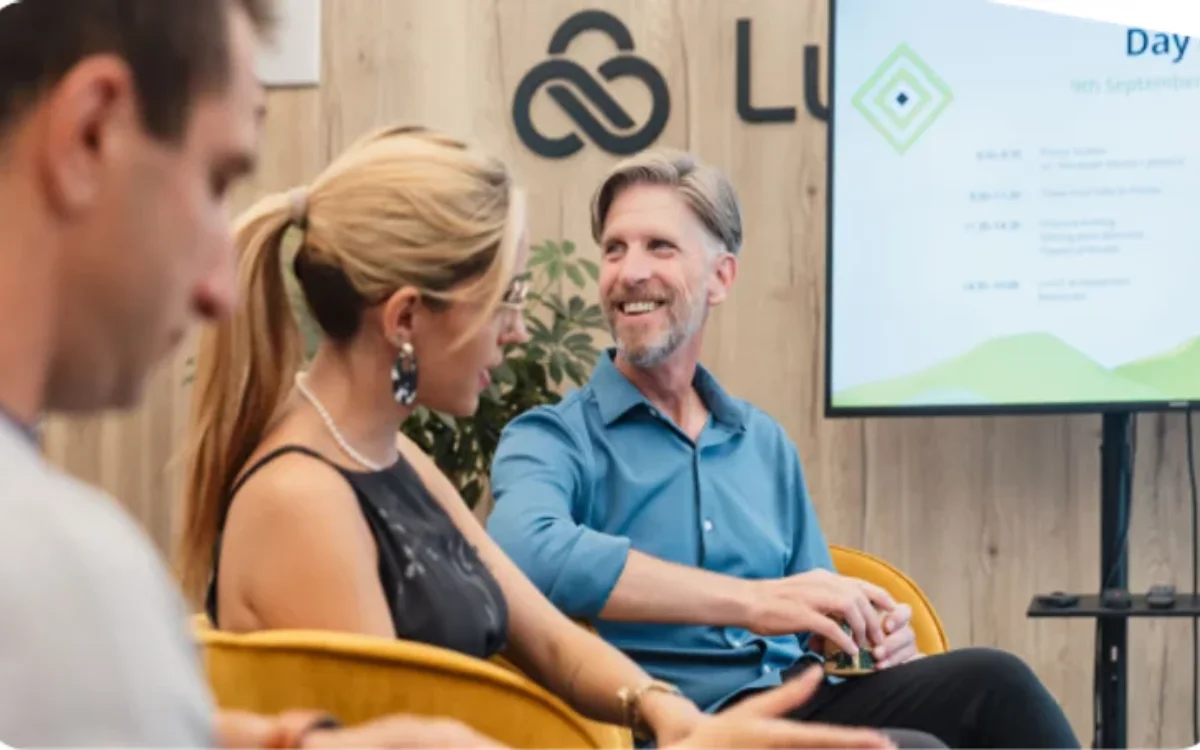
Thompson said that, at 48, he didn’t rush headfirst into cofounding LucidLink.
Instead, he and his team spent months testing the idea from every angle before committing.
Once they started pitching, though, investors were far from instantly convinced.
Thompson says he was rejected 33 times before finally finding someone who believed in the idea as much as he did.
Related



Age bias is still a big problem in the tech industry
Today, LucidLink serves thousands of companies, including major names like Paramount, Adobe, Shopify, and Spotify.
Thompson also said the business won an Emmy last year for helping transform the way entertainment gets made, showing just how far that once-doubted idea has come.
But the bigger point for him is not just the company’s success.

The founder argues that age bias in tech is more than a cultural issue because it can also stop smart ideas from getting backed in the first place.
His story is a reminder that not every great founder begins in a dorm room or drops everything in their 20s.
Sometimes the person best placed to build the future is someone who has already spent years learning exactly what’s broken.
Daisy is a technology and automotive journalist covering artificial intelligence, consumer tech, Apple news, cryptocurrency, emerging technologies, and transportation innovation. Since joining the team in 2025, she has reported on everything from AI-powered startups and major iOS updates to viral car stories and the latest developments shaping transportation and the digital economy. Drawing on her background in automotive journalism and a degree in History and Journalism from Goldsmiths, University of London, Daisy specializes in breaking down complex topics into clear, engaging reporting for a global audience. Her work spans cutting-edge technology, innovative vehicles, and the people driving change across both industries. Daisy has gained first-hand access to some of the world's most talked-about technologies and innovators, including meeting Tesla's Optimus humanoid robot during its first European appearance in London. She has also discussed the future of space exploration with an astronaut, bringing unique insights and real-world perspectives to her coverage of emerging technology.




