Tesla's Full Self-Driving has a much more honest name in China
- Tesla is finally bringing its Full Self-Driving capabilities to China
- However the company is using a very different name to describe it
- People are wondering if it’s a different system or just marketing honesty
Published on Feb 26, 2025 at 6:00 AM (UTC-5)
by Daisy Edwards
Last updated on May 15, 2025 at 10:32 AM (UTC-4)
Edited by
Kate Bain
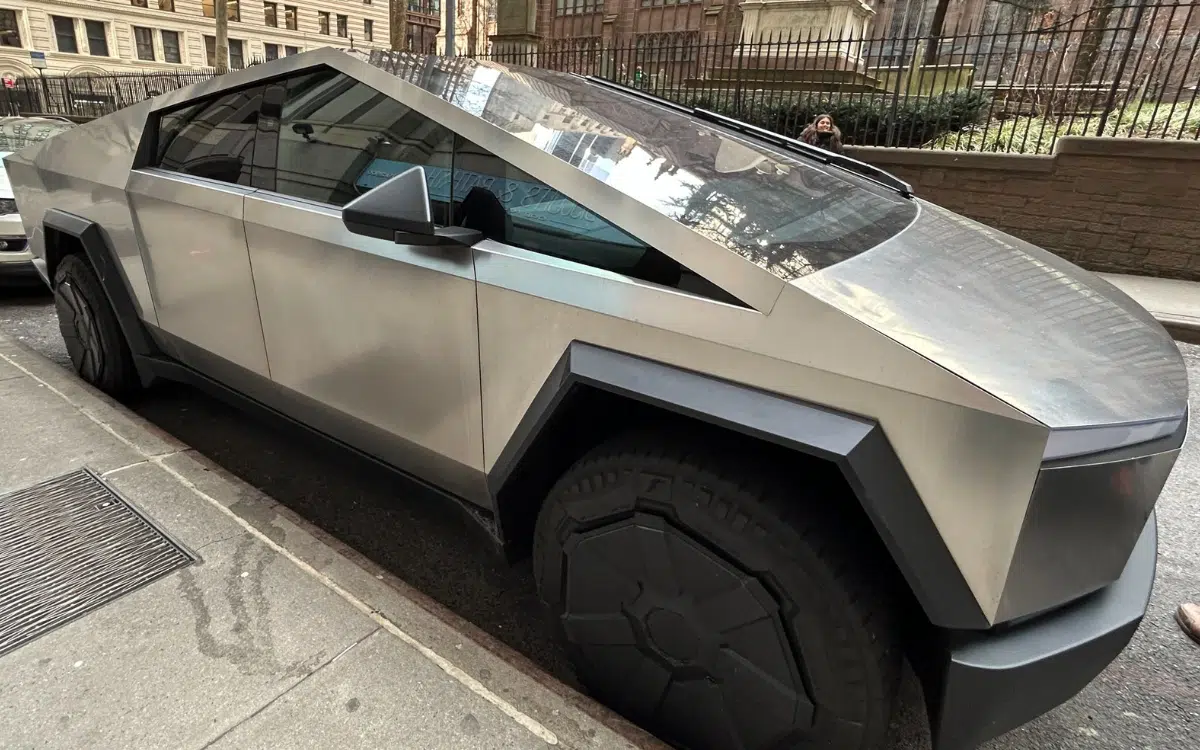

Tesla’s Full Self-Driving feature is called something very different in China.
After a recent, very slight rebrand in countries where FSD is already a thing, the launch in China suggests a far more honest marketing strategy.
It’s unclear why Tesla has rebranded in China, with some suggesting it’s because there is already more advanced self-driving technology on the market, or if the carmaker’s just being more honest about what Full Self-Driving actually is.
Regardless of the reason, its new name is certainly a mouthful.
DISCOVER SBX CARS: The global premium car auction platform powered by Supercar Blondie
What’s in a name?
Tesla’s Full Self-Driving feature was a huge innovative leap forward when it blasted onto the automotive scene in 2020, following years of beta testing through the Enhanced Autopilot (EAP) system that was in place before it.
Full Self-Driving was not without its growing pains either.
Early on, users were finding their Tesla vehicles stopping at green lights and even stopping at each exit on roundabouts.
The company made it clear that Tesla vehicles still needed human intervention, clarifying that Full Self-Driving capabilities were ‘intended for use with a fully attentive driver, who has their hands on the wheel and is prepared to take over at any moment’.
After years of watching other countries make the most of FSD, Chinese drivers are finally being given their own version of it.
However, it goes by a very different name: Autopilot Automatic Assisted Driving on Urban Roads. Catchy.
Tesla’s Full Self-Driving by any other name
Up until now, in comparison to Tesla’s current Full Self-Driving model, the pre-existing technology in place for Chinese Tesla drivers had been limited.
Even though it seems that the FSD system presented to China will be slightly less capable than than the system currently existing in Western countries, there is no doubt that whatever Autopilot Automatic Assisted Driving on Urban Roads (AAD) is will be better than what they already have.
Currently the FSD system in China will simply be not as good as there is a distinct lack of software training data.
The current system captures data for Tesla but it is extremely regulated and must stay inside China’s borders.
However, the move away from the ‘Full Self-Driving’ name could be less to do with the data and more to do with marketing.
Tesla has recently changed the name of the feature from Full Self-Driving (beta) to Full Self-Driving (supervised) following some pushback about false advertising, as well as the words ‘full’ and ‘supervised’ directly contradicting each other.
Automatic Assisted Driving better explains the system’s need for human intervention every 13 miles and seems like a wholly more appropriate (and honest) name.
Maybe Tesla’s just saving itself the hassle of trying to defend some old branding.
Daisy is a technology and automotive journalist covering artificial intelligence, consumer tech, Apple news, cryptocurrency, emerging technologies, and transportation innovation. Since joining the team in 2025, she has reported on everything from AI-powered startups and major iOS updates to viral car stories and the latest developments shaping transportation and the digital economy. Drawing on her background in automotive journalism and a degree in History and Journalism from Goldsmiths, University of London, Daisy specializes in breaking down complex topics into clear, engaging reporting for a global audience. Her work spans cutting-edge technology, innovative vehicles, and the people driving change across both industries. Daisy has gained first-hand access to some of the world's most talked-about technologies and innovators, including meeting Tesla's Optimus humanoid robot during its first European appearance in London. She has also discussed the future of space exploration with an astronaut, bringing unique insights and real-world perspectives to her coverage of emerging technology.




