This Google Maps alternative doesn't get talked about much but it has some very useful features that might make you switch
Published on Feb 11, 2026 at 11:32 PM (UTC-5)
by Daisy Edwards
Last updated on Feb 11, 2026 at 11:32 PM (UTC-5)
Edited by
Emma Matthews


In the great navigation app debate, there’s one Google Maps alternative that doesn’t get talked about much, but it has some very useful features that might make you switch from even Waze.
If you think your car screen is starting to look like a billboard, you’re not alone.
One driver said they were fed up with Google Maps feeling cluttered with ads, pins, and endless points of interest fighting for attention.
Their replacement pick is built around one thing: getting you where you are going with less drama. And the brand might surprise you.
EXPLORE SBX CARS – Supercar auctions starting soon powered by Supercar Blondie
Google Maps alternative that feels built for driving, not browsing
It seems like a bit of a throwback to the old school Satnavs we used to have in the 2000s, but an old name in tech is making a very successful comeback.
Forget Google Maps, Apple Maps, or Waze; it’s time for TomTom’s comeback. Yes, you read that right.
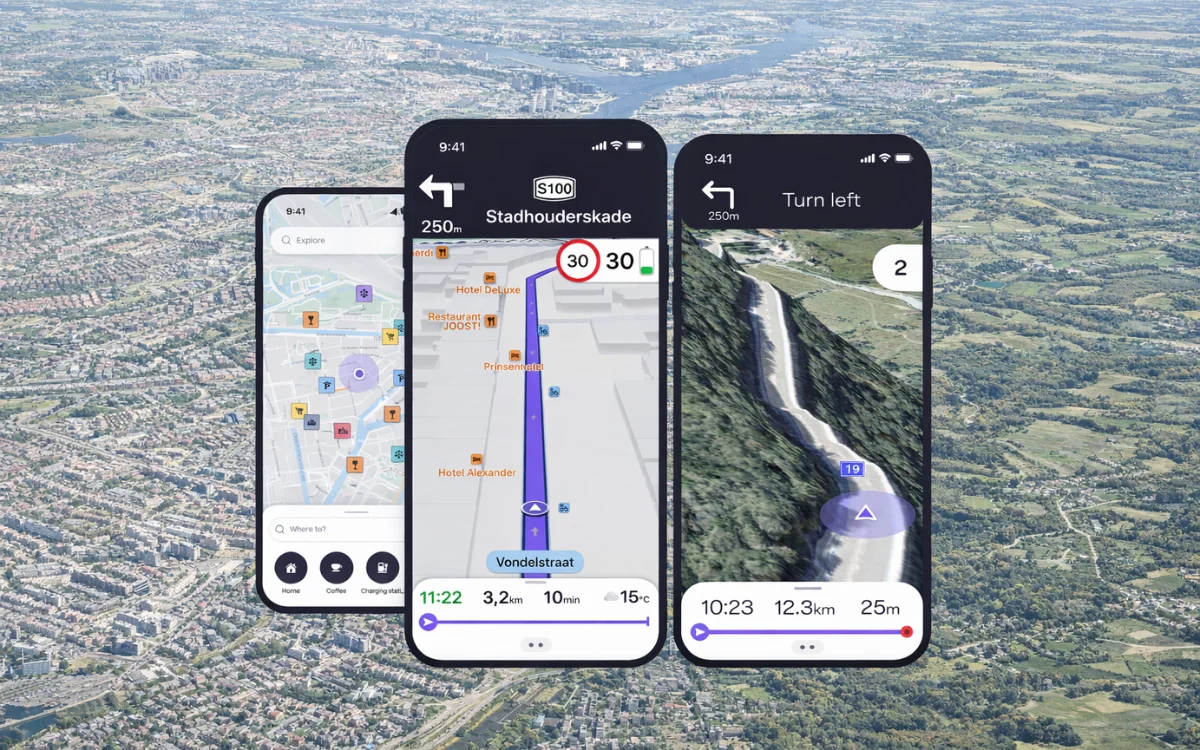
TomTom’s big flex is how clean it looks compared with Google Maps, especially when you are actually on the move.
A writer from MakeUseOf described why he switched from Google Maps, due to an interface focused on clarity, with live traffic, clear turn guidance, and an easy-to-read ETA strip that stays out of your way.

There are a couple of small touches that feel surprisingly premium in day-to-day driving.
TomTom shows your current speed alongside the posted speed limit, and the on-screen controls stay minimal, with quick taps for perspective, spoken directions, and reporting hazards like speed traps or accidents.
That simplicity carries over to Apple CarPlay and Android Auto, where the writer says it’s the cleanest in-car map user interface they have used, with big touch targets and a layout that keeps your eyes on the route.
Click the star icon next to supercarblondie.com in Google Search to stay ahead of the curve on the latest and greatest supercars, hypercars, and ground-breaking technology
Related


Useful features that might make you switch
If you mostly use navigation for driving from A to B, the Google Maps alternative’s ‘everything you need, nothing you don’t’ approach can be a genuine upgrade.
Fewer distractions, fewer prompts, and less temptation to start poking around mid-drive.
The swap is not perfect, though, and the writer was upfront about what you lose by stepping away from Google.

TomTom does not try to be a concierge: there is no Street View, no user reviews, no public transit tools, no augmented reality overlays, and none of the Google ecosystem perks like deep search history suggestions or AI integrations.
In other words, Google Maps can be better for discovering places, while TomTom can be better when you already know the destination and just want the most drama-free drive possible.
Daisy is a technology and automotive journalist covering artificial intelligence, consumer tech, Apple news, cryptocurrency, emerging technologies, and transportation innovation. Since joining the team in 2025, she has reported on everything from AI-powered startups and major iOS updates to viral car stories and the latest developments shaping transportation and the digital economy. Drawing on her background in automotive journalism and a degree in History and Journalism from Goldsmiths, University of London, Daisy specializes in breaking down complex topics into clear, engaging reporting for a global audience. Her work spans cutting-edge technology, innovative vehicles, and the people driving change across both industries. Daisy has gained first-hand access to some of the world's most talked-about technologies and innovators, including meeting Tesla's Optimus humanoid robot during its first European appearance in London. She has also discussed the future of space exploration with an astronaut, bringing unique insights and real-world perspectives to her coverage of emerging technology.




