Scientists discovered an enigma in space but it was quickly solved
- The extremely powerful James Webb Telescope discovered hydrogen atoms coming from 13.2 billion light-years away
- At first, scientists were surprised that we were able to see these atoms at all
- The reason why we’re able to see this in the first place shows just how powerful the telescope is
Published on Jan 22, 2024 at 11:38 AM (UTC-5)
by Alessandro Renesis
Last updated on Jan 24, 2024 at 4:24 AM (UTC-5)
Edited by
Amelia Jean Hershman-Jones
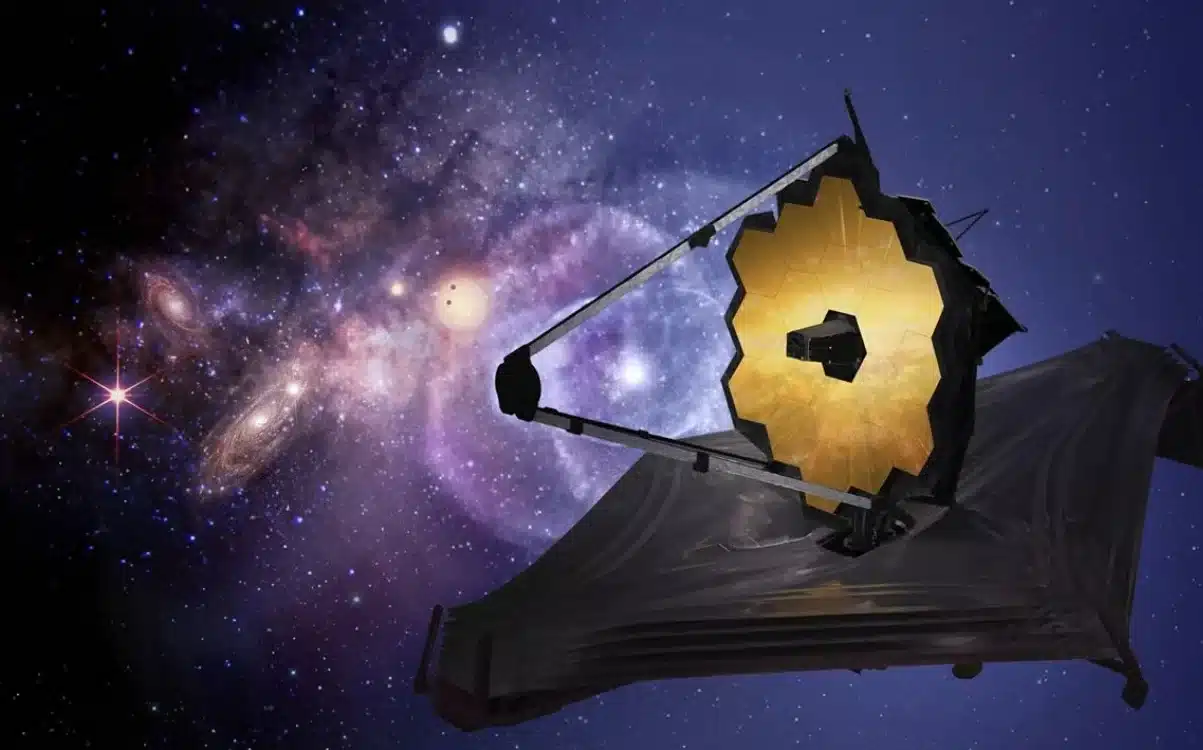

The ultra-powerful James Webb Telescope discovered something that, in theory, shouldn’t exist.
It took scientists a while to unpack what had happened.
And, when they did, the answer was surprising.
READ MORE: A Concorde with a silencer: NASA’s X-59 brings back supersonic travel with no sonic boom
One of the reasons we (as in humanity) are using such telescopes is we’re hoping to ‘time travel’, as it were, and get a glimpse into the past.
Because of the way light travels, we know that some of the stars we’re seeing actually died (literally) ages ago, and we’re now able to see billions of light-years away.
On a recent occasion, the Webb Telescope was able to see a light that we shouldn’t be able to see.
This is because said light came from a time known as ‘reionization’, a moment in time where space was packed with gas from the Big Bang.
We also detected hydrogen atoms, and these, according to University of Cambridge astronomer Callum Witten, should be invisible.
“One of the most puzzling issues that previous observations presented was the detection of light from hydrogen atoms in the very early Universe, which should have been entirely blocked by the pristine neutral gas that was formed after the Big-Bang,” Witten said in a statement.
“Many hypotheses have previously been suggested to explain the great escape of this ‘inexplicable’ emission.”
Thanks to the Webb Telescope, we know why we’re seeing these atoms.
Witten says that these atoms don’t come from one galaxy.
Instead, they come from a collision of galaxies that created this wildly active cosmic environment.
The Webb image shows a distant galaxy known as EGSY8p, which is located a mind-blowing 13.2 billion light-years away from Earth.
The galaxy is surrounded by two smaller galaxies, and we’ve only recently developed the technology to see these two galaxies.

Stanford University researcher, Sergio Martin-Alvarez, broke it down for us in a statement.
And, no – it’s not because we’re living in a simulation as Melvin Vopson aims to prove.
It’s something else entirely.
“Hubble [Webb’s predecessor, ed.] was seeing [this] as one large galaxy, [whereas] Webb sees a cluster of smaller interacting galaxies,” Martin-Alvarez said.
“This revelation has had a huge impact on our understanding of the unexpected hydrogen emission from some of the first galaxies.


Alessandro is an automotive journalist with 10 years of experience covering supercars, automotive history, emerging vehicle technology, and luxury transportation. He wrote the first article published on SupercarBlondie.com when the website launched in 2022 and has since built a reputation for insightful reporting across the automotive and transportation industries. His expertise is grounded in hands-on experience. Alessandro has driven every Tesla model ever produced, from the original Roadster to the Cybertruck, and regularly covers the latest developments in electric vehicles and automotive innovation. His passion for transportation extends beyond cars, he has even flown a Boeing 787 Dreamliner simulator in Addis Ababa, Ethiopia. His reporting spans everything from classic American muscle cars and rare automotive discoveries to luxury yachts, private aircraft, high-end watches, and cutting-edge vehicle technology. Known for his deep knowledge of automotive history and ability to uncover the stories behind iconic vehicles, Alessandro brings readers a blend of historical context, technical expertise, and first-hand experience.




