Tesla has quietly changed its definition of Full Self Driving
Published on Sep 11, 2025 at 6:22 PM (UTC-4)
by Daisy Edwards
Last updated on Sep 11, 2025 at 6:22 PM (UTC-4)
Edited by
Emma Matthews

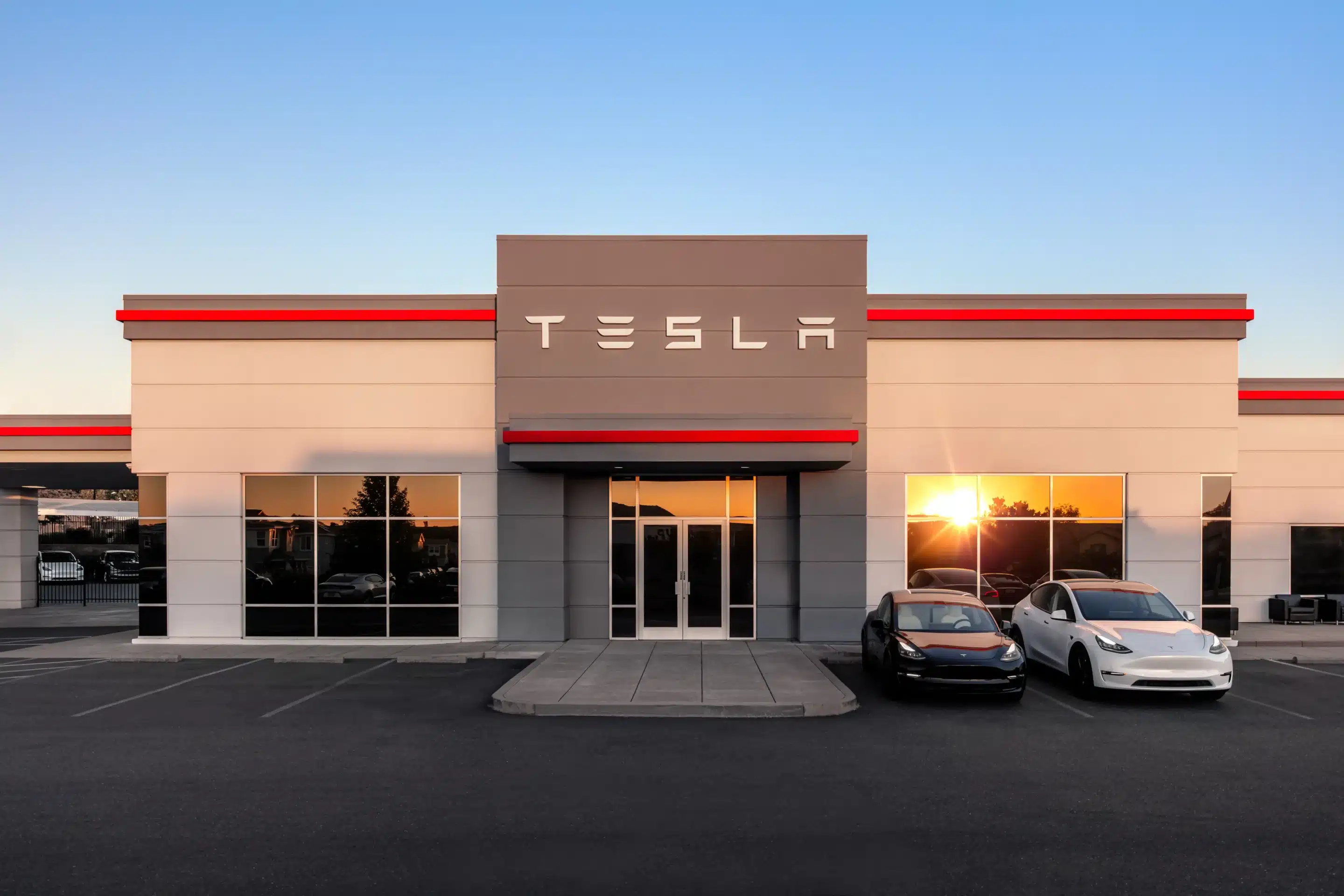
Did you know that the once-futuristic, apparently ‘fully-autonomous’ Full Self Driving technology has had its definition changed by Tesla?
Tesla has launched Full Self Driving in its EVs around the world, with different definitions depending on the country, but FSD has always been classed as Level 2 Autonomy.
Level 2 Autonomy means that the driver must always be ready to take over driving from the EV if things go wrong, and the wording from Tesla itself is now beginning to reflect that in official documents.
Using phrasing like ‘similar functionality’ and ‘specified driving conditions’ has redefined what FSD is into vaguer and broader terms, matching what the US National Transportation Safety Board has declared about it.
EXPLORE SBX CARS – Supercar auctions starting soon powered by Supercar Blondie
Tesla has quietly changed its definition of Full Self Driving
Since its inception, Tesla and its ‘Full Self Driving’ have caused some controversy due to the nature of the autonomy in its EVs and how it was named.
When people think of the future, they think of self-driving cars or flying taxis. And while the name Full Self Driving suggests a robot car that can drive wherever it wants, it’s actually never been that.
FSD technically qualifies as Level 2 Autonomy, which requires humans to be there to jump into action if things go wrong with the tech. This qualification has recently caused some issues with the autonomous Robotaxis in Austin.
The Californian DMV actually sued Tesla for false advertising, and in China, the name was changed before it even hit the Chinese market to ‘Full Self Driving (Supervised)’ or ‘Intelligent Assisted Driving.’
Why has the company changed the definition?
The new FSD definition appeared in a filing with the SEC, where it was described as:
“An advanced driving system, regardless of the marketing name used, that is capable of performing transportation tasks that provide autonomous or similar functionality under specified driving conditions.”
The phrasing of ‘similar functionality under specified driving conditions’ makes the actual autonomy broader and vaguer, possibly to avoid claims of false advertising.
It could also show that tech developers realised that Level-5 self-driving, as in genuine full autonomy, is further away than we may have been led to believe.
If anything, the name FSD needs to be changed so that users don’t rely on their car’s autonomy in an emergency. And maybe automakers should follow in Tesla China’s shoes when it comes to defining what FSD really is.
Daisy is a technology and automotive journalist covering artificial intelligence, consumer tech, Apple news, cryptocurrency, emerging technologies, and transportation innovation. Since joining the team in 2025, she has reported on everything from AI-powered startups and major iOS updates to viral car stories and the latest developments shaping transportation and the digital economy. Drawing on her background in automotive journalism and a degree in History and Journalism from Goldsmiths, University of London, Daisy specializes in breaking down complex topics into clear, engaging reporting for a global audience. Her work spans cutting-edge technology, innovative vehicles, and the people driving change across both industries. Daisy has gained first-hand access to some of the world's most talked-about technologies and innovators, including meeting Tesla's Optimus humanoid robot during its first European appearance in London. She has also discussed the future of space exploration with an astronaut, bringing unique insights and real-world perspectives to her coverage of emerging technology.