Tesla and Chinese EVs put head-to-head in reverse safety test to show which automatically stops for small obstacles and there's a major gap in tech
Published on Jul 24, 2026 at 8:20 AM (UTC-4)
by Daisy Edwards
Last updated on Jul 28, 2026 at 6:49 AM (UTC-4)
Edited by
Mason Jones
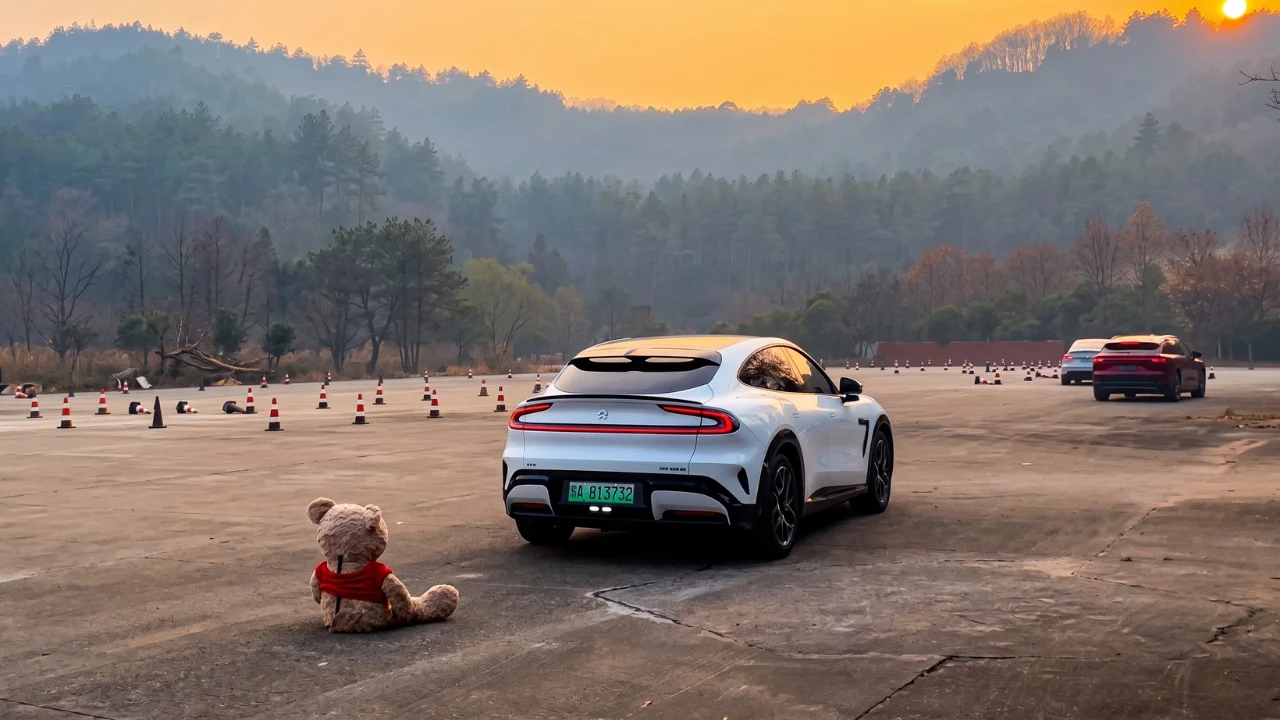

Tesla and Chinese EVs have been put head-to-head many times, but this reverse safety test could be the most important because it shows which one automatically stops for small obstacles.
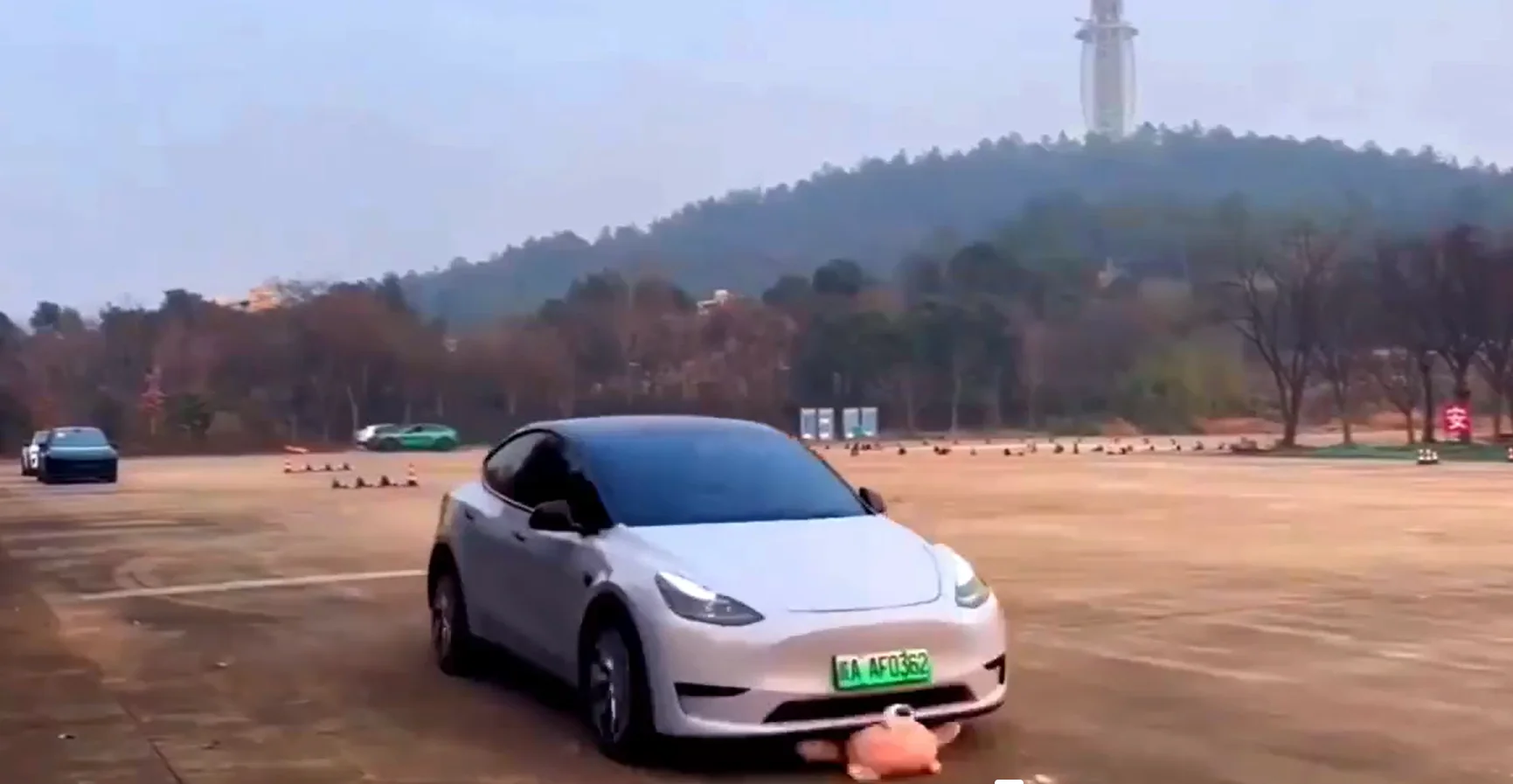
The unusual experiment used a sad, large teddy bear as a stand-in for a child or other small object behind the vehicle.
While some brands stopped flawlessly, others rolled straight into the obstacle despite their advanced driver assistance systems.
The results show just how much work is still needed before these features can be relied on in every situation.
Tesla and Chinese EVs faced the same reverse safety challenge
Advanced Driver Assistance Systems (ADAS) have become one of the biggest battlegrounds in the EV world, with manufacturers promising ever smarter cameras, sensors, and automatic emergency braking.
To see how well those claims stack up, a group of Chinese-made EVs, along with a Tesla, were put through the same obstacle course.
The test was simple but incredibly important.
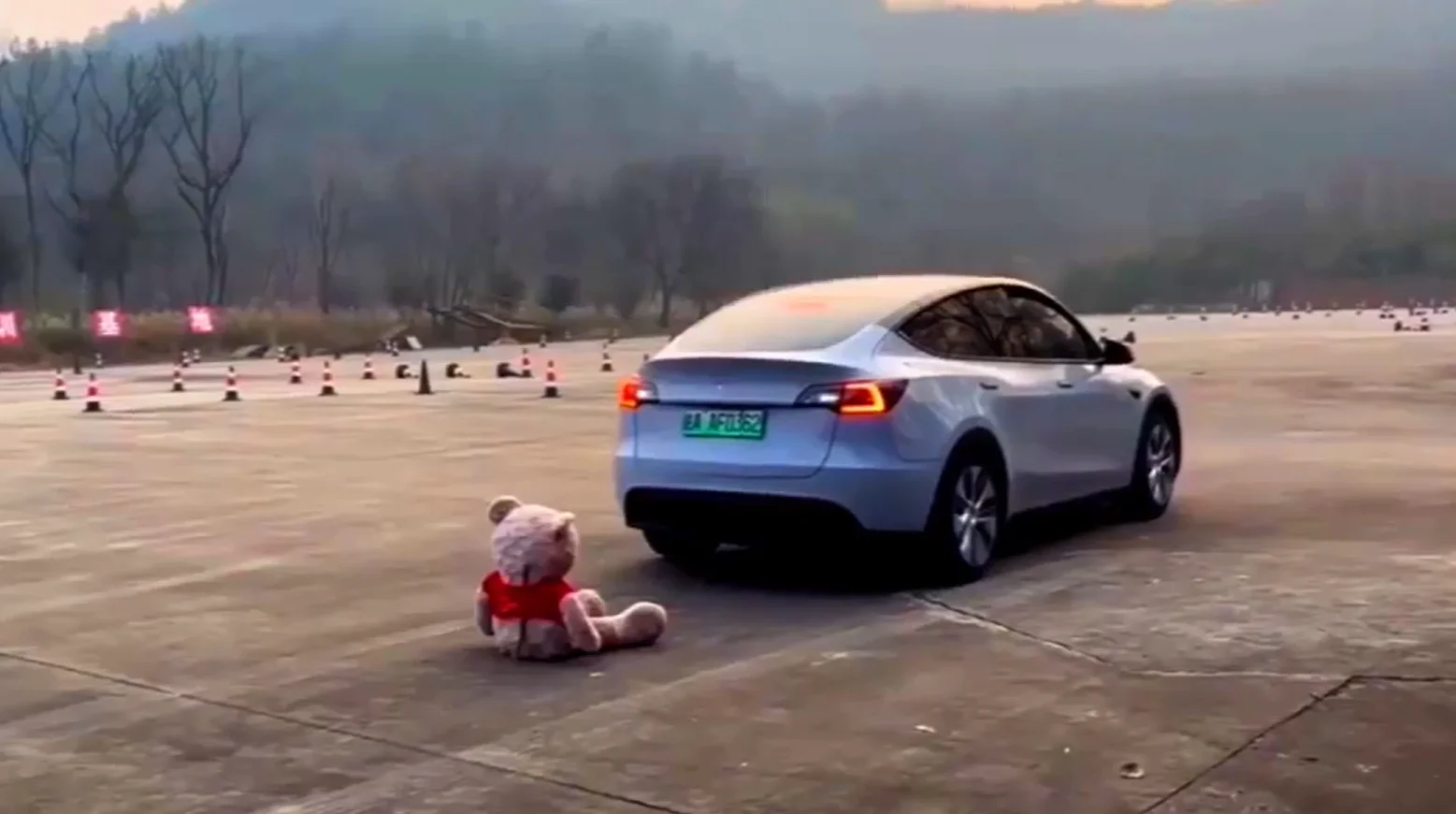
Each vehicle had to detect a teddy bear positioned behind the car while reversing and automatically stop before making contact.
The teddy represented the kind of small obstacle that could easily be hidden from a driver’s view, such as a child or pet.
The results varied dramatically.
Leapmotor delivered one of the standout performances, successfully detecting the teddy and stopping on its very first attempt.
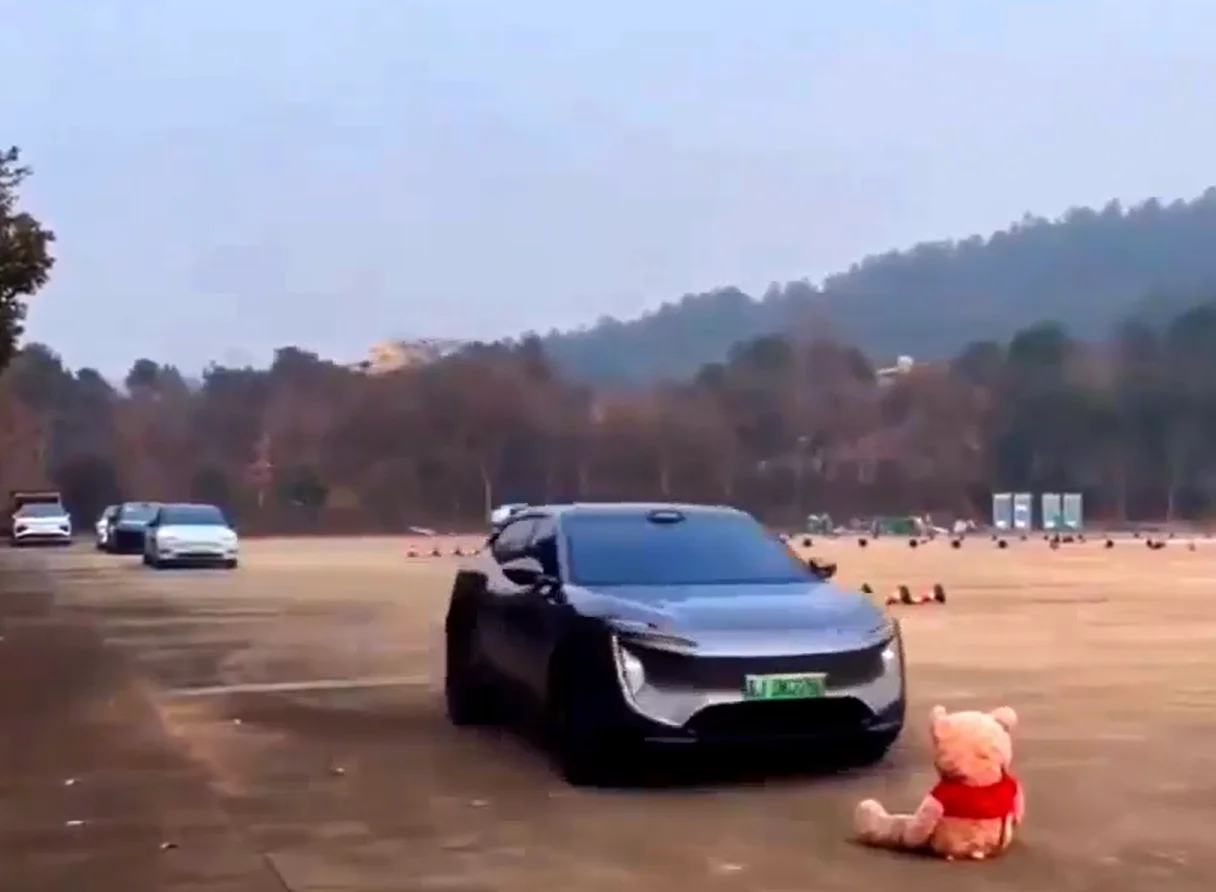
Li Auto also impressed, bringing the vehicle to a controlled emergency stop before reaching the obstacle.
XPENG’s performance was more inconsistent: while it showed promising capability, it didn’t achieve the same level of reliability as the top performers.
Tesla also produced mixed results when its reverse ADAS managed to improve compared to its forward-facing performance, but the company still failed to consistently match the best-performing Chinese rivals.
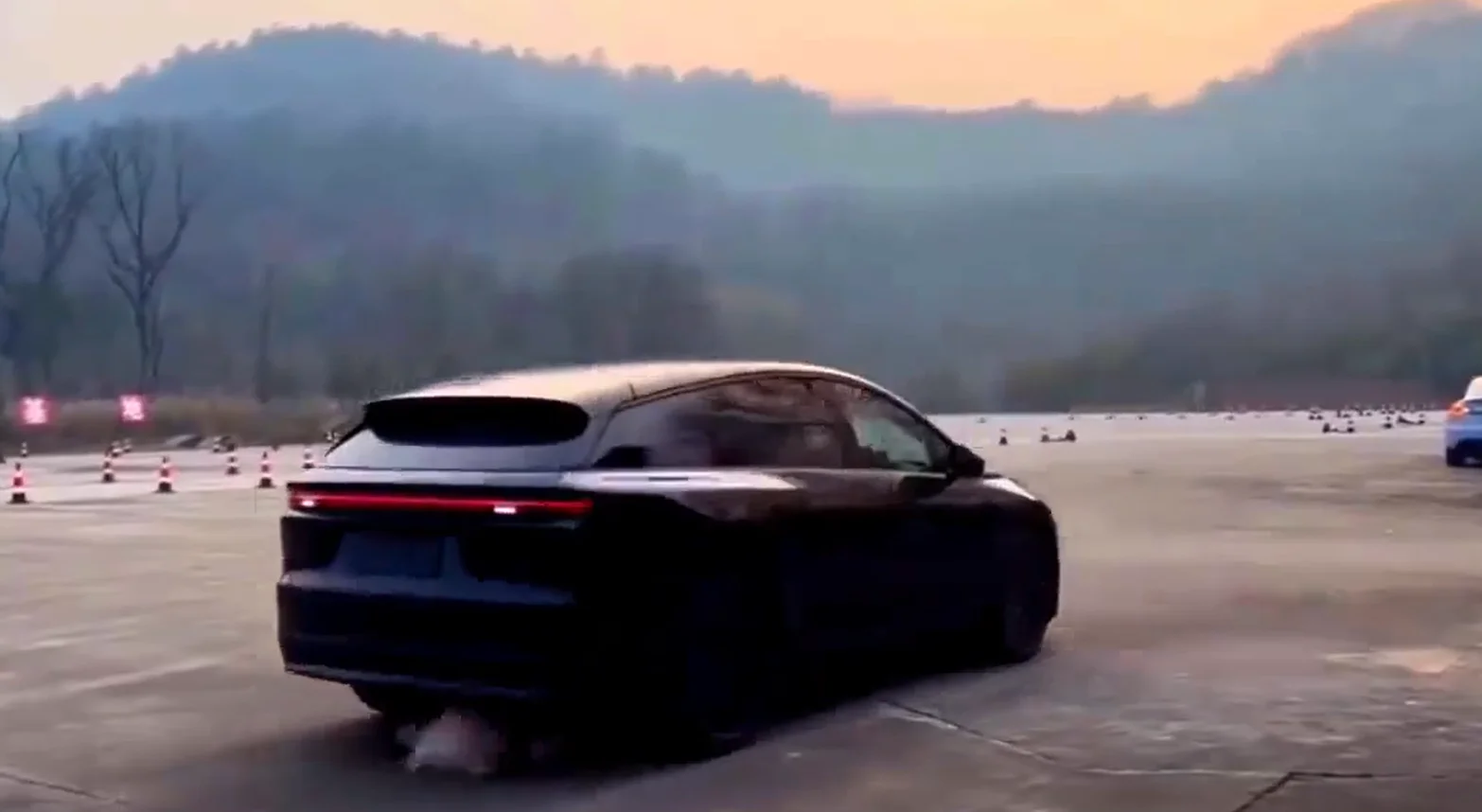
Meanwhile, Xiaomi struggled the most, failing the braking portion of the test entirely.
Related
The teddy bear test shows there’s still a long way to go
Although modern cars are packed with cameras, radar, ultrasonic sensors, and increasingly sophisticated software, the test highlights that automatic obstacle detection is still far from foolproof.
A vehicle passing one scenario doesn’t necessarily mean it will perform equally well in every real-world situation.
That’s why experts continue to stress the importance of standardized, repeatable ADAS testing before manufacturers make broad claims about the capabilities of their safety systems.
China has rapidly become one of the world’s biggest testing grounds for assisted driving technology, with domestic automakers pushing frequent software updates and introducing increasingly advanced safety features in Chinese EVs.
The latest teddy bear challenge shows that progress is happening quickly, but it also reveals that there’s still a significant gap between the strongest and weakest systems.
It makes you remember that this assistance tech is exactly that – assistance, so you’ve got to be careful.
They’re designed to help reduce risk, not replace paying attention behind the wheel, especially when reversing in areas where small obstacles can be difficult to spot.
Daisy is a technology and automotive journalist covering artificial intelligence, consumer tech, Apple news, cryptocurrency, emerging technologies, and transportation innovation. Since joining the team in 2025, she has reported on everything from AI-powered startups and major iOS updates to viral car stories and the latest developments shaping transportation and the digital economy. Drawing on her background in automotive journalism and a degree in History and Journalism from Goldsmiths, University of London, Daisy specializes in breaking down complex topics into clear, engaging reporting for a global audience. Her work spans cutting-edge technology, innovative vehicles, and the people driving change across both industries. Daisy has gained first-hand access to some of the world's most talked-about technologies and innovators, including meeting Tesla's Optimus humanoid robot during its first European appearance in London. She has also discussed the future of space exploration with an astronaut, bringing unique insights and real-world perspectives to her coverage of emerging technology.