Man claims to be first person in the world to complete fully autonomous US coast-to-coast journey with Tesla's Full Self Driving
Published on Jan 02, 2026 at 1:27 PM (UTC+4)
by Alessandro Renesis
Last updated on Jan 02, 2026 at 5:14 PM (UTC+4)
Edited by
Mason Jones

Now that we know that Tesla FSD works, people want to know whether it can handle any situation – from a simple trip to Costco to a complex coast-to-coast road trip across the US.
A Tesla Model 3 owner in the US figured the only way to prove this would work was to actually do it.
And so he did.
Over 2,700 miles and nearly three days later, the verdict’s in.
DISCOVER SBX CARS: The global premium car auction platform powered by Supercar Blondie
If the Tesla owner’s bio is true, the irony is not lost on us
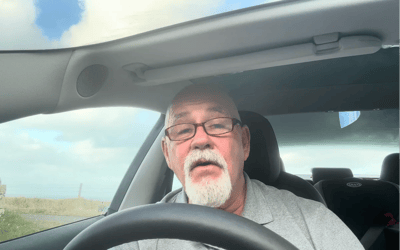
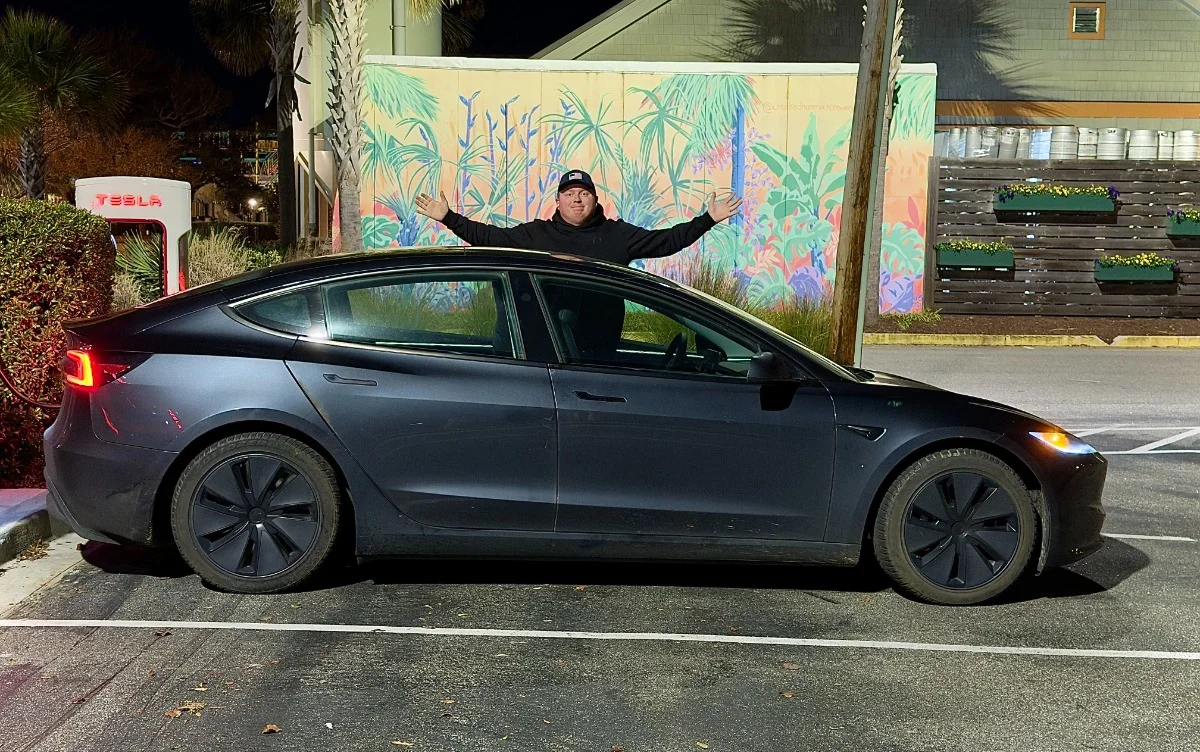
David Moss, owner of a Tesla Model 3, just completed a coast-to-coast road trip across the US relying entirely on autonomy.
Moss drove right across the US almost in a straight line, from the Tesla Diner in Los Angeles to Myrtle Beach in South Carolina, exactly 2,732.4 miles away.
All of them on FSD, and the coast-to-coast road trip was completed with ‘absolutely zero disengagements’.
For reference, a ‘disengagement’ is when the system kicks control back to the driver if it thinks it can’t deal with that particular stretch of road.
It took him two days and 20 hours.
I am proud to announce that I have successfully completed the world’s first USA coast to coast fully autonomous drive!
— David Moss (@DavidMoss) December 31, 2025
I left the Tesla Diner in Los Angeles 2 days & 20 hours ago, and now have ended in Myrtle Beach, SC (2,732.4 miles)
This was accomplished with Tesla FSD V14.2… pic.twitter.com/DFA8HiH5Yf
What makes this test even more interesting is the Tesla owner’s bio.
On X, David Moss calls himself a ‘LiDAR salesman’.
This is probably just a joke but it’s still kind of funny because Tesla famously doesn’t use LiDAR, which is basically a more expensive and sophisticated type of radar with lasers.
Unlike companies like Waymo or Zoox, Tesla only uses cameras.
Where are we with autonomous cars?
Two things can be true at once.
First: autonomous cars are already here.
They’re better than expected, and progress has been made faster than predicted.
But second: we’re still a long way from a scenario where all cars are autonomous.
Self-driving cars can navigate complex traffic situations in less-than-ideal road conditions, but could a self-driving car successfully take you from A to B on Death Road in Bolivia?
And even if it could, would you let it?
The good news – or bad, depending on who you ask – is that it definitely looks like we’re going to find out sooner rather than later.
A timeline of autonomy
1925: The first public demonstration of a radio-controlled car takes place in Manhattan
1987: the start of the Eureka Prometheus Project, a Pan-European R&D project that eventually proved that computers can ‘see’ the road
2004: The DARPA (US military agency) begins testing self-driving vehicles
2015: Tesla releases Autopilot, Waymo completes first autonomous trip
2020: Waymo completes first paid ride
After beginning his automotive writing career at DriveTribe, Alessandro has been with Supercar Blondie since the launch of the website in 2022. In fact, he penned the very first article published on supercarblondie.com. He’s covered subjects from cars to aircraft, watches, and luxury yachts - and even crypto. He can largely be found heading up the site’s new-supercar and SBX coverage and being the first to bring our readers the news that they’re hungry for.