US man who's driven Tesla for 8 months compares charging costs to gas costs and finds surprising result to challenge common misconception
Published on Sep 18, 2026 at 8:19 AM (UTC-4)
by Ben Thompson
Last updated on Sep 22, 2026 at 11:21 AM (UTC-4)
Edited by
Mason Jones
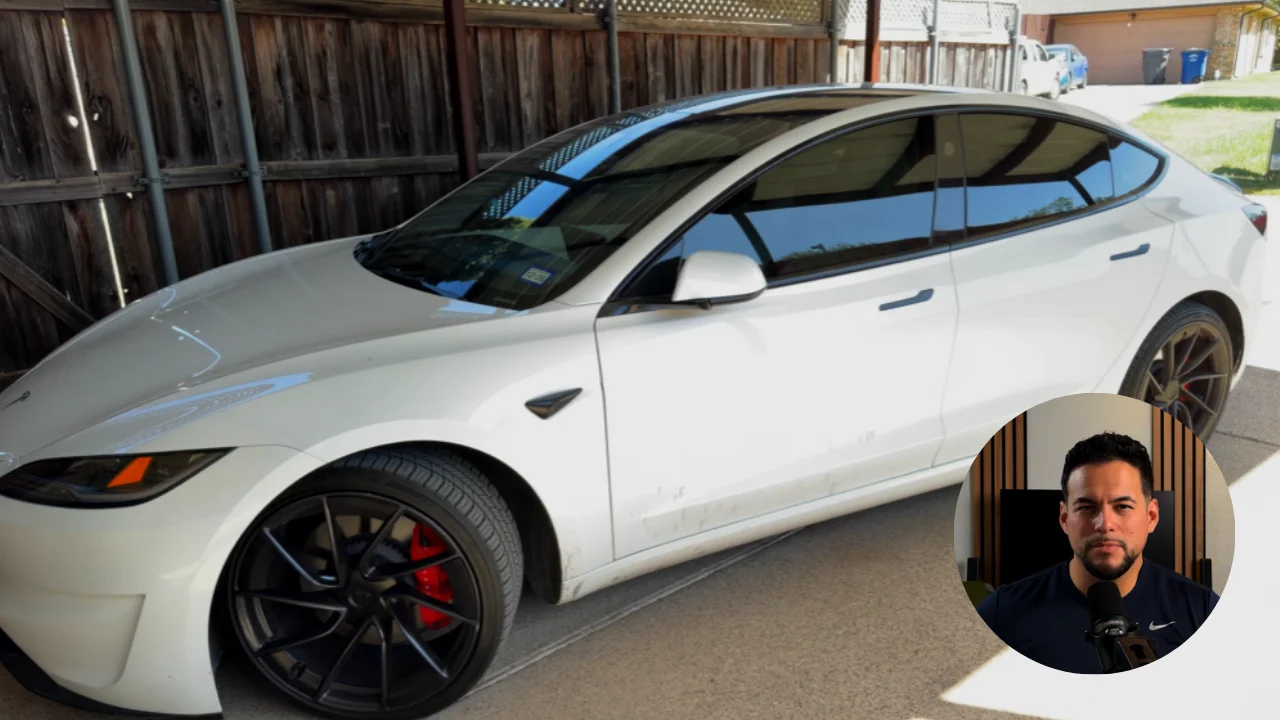

An American man who’d owned a Tesla for 8 months broke down the difference between charging costs and gas costs.
Diego James made a bold proclamation when he took to YouTube to share his thoughts.
When people are considering buying an EV, cheaper charging prices are often touted as an incentive to make the switch.
But in his view, this isn’t necessarily the case.
There’s been a lot of talk about charging prices
Ever since EVs have entered the mainstream, there’s been endless discourse about whether they’re cheaper.
The general consensus has been that it’s cheaper to charge up an EV than it is to fill up a gas car.
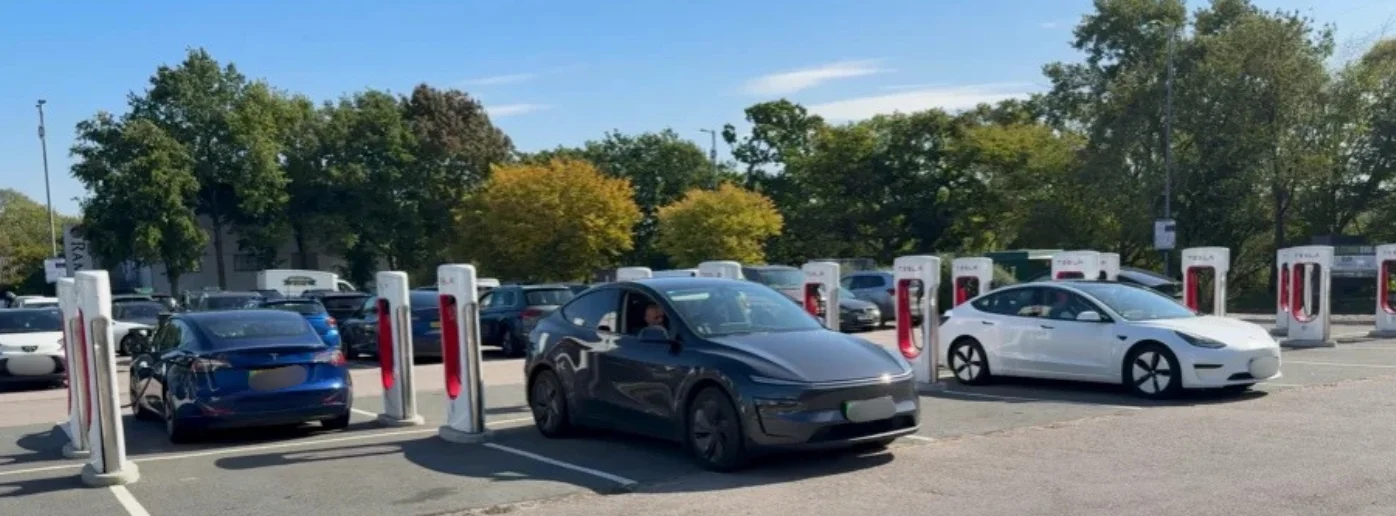
There’s been no shortage of anecdotes about the cost differences, whether that’s related to a Tesla Cybertruck or a Tesla Model S.
Much is made of the differences in costs, with EVs coming out as cheaper to refuel most of the time.
But in one YouTuber’s view, this isn’t the whole story.
Related



What charging costs conclusion did this YouTuber come to?
YouTuber Diego James wanted to challenge the notion that EVs were always cheaper to top up.
“I don’t like when people just say EVs are cheaper to drive than gas cars. The reality is that’s not always true because it depends where you charge,” he said.

“If I drove 1,000 miles and I did all of my charging at a Supercharger… that’s about $114… So, if you drive 1,000 miles [in a 35 MPG gas car], you will need about 28.5 gallons… that’s about $100.”
He made a crucial distinction between charging costs when it comes to home charging and public charging.
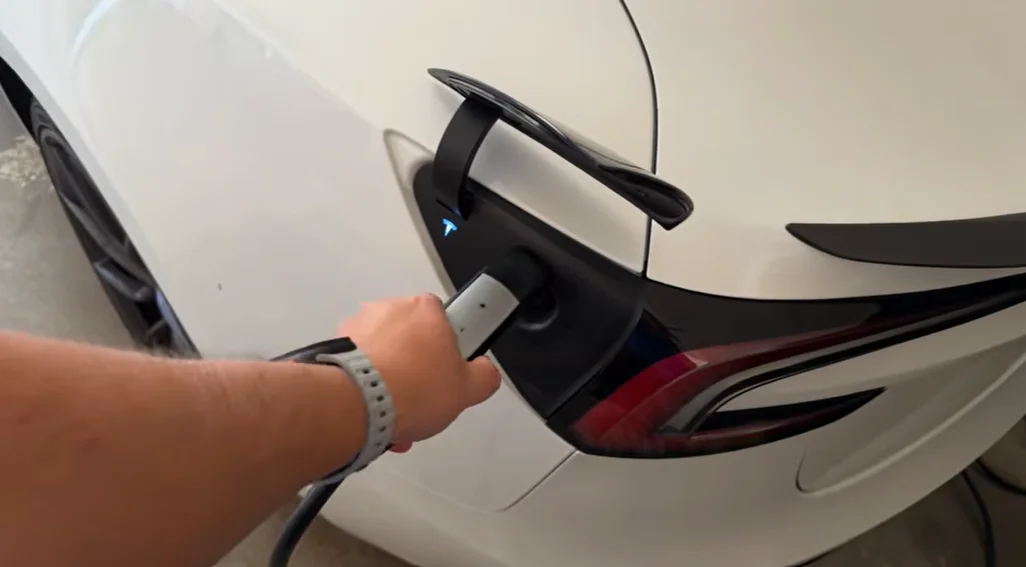
“If you own a Tesla and you’ve been charging at home, you know that charging at home changes everything,” he said.
“And with charging at home for 10 cents per kilowatt hour, that’s about $429 to drive 15,000 miles basically year round… that same 15,000 miles with a car that gets 35 m per gallon at $3.50 a gallon, that’s about $1,500 in gas.”

In his analysis, he came up with what could be considered the ‘Golden rule of EV math’.
He stated that comparing the cost of a tank of gas to the cost of a full battery was the wrong way of looking at things.
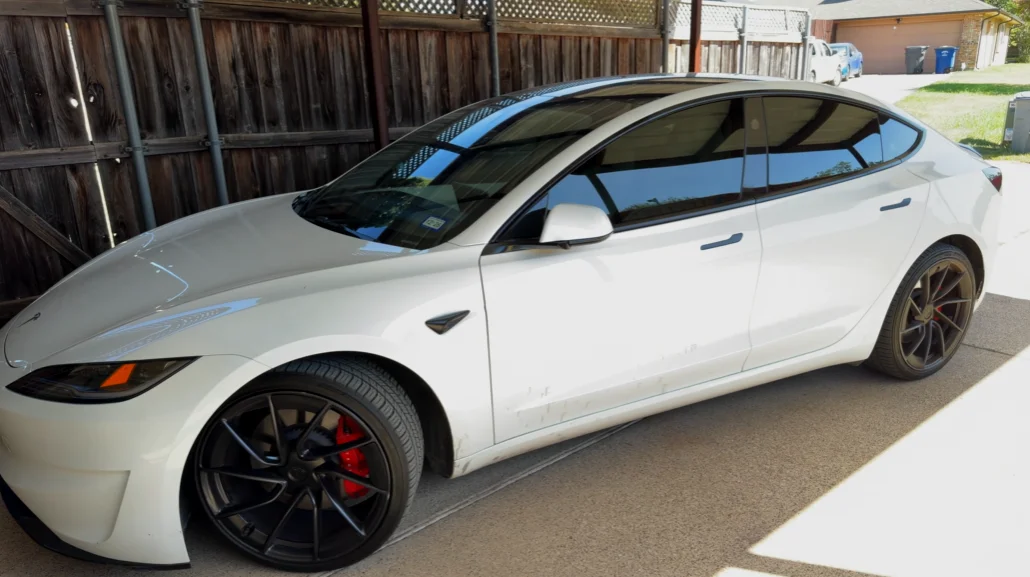
In his view, it should be about the cost to drive the same amount of miles.
“That’s the number that actually matters,” he said.
When asked how people had responded to his video, he gave a nuanced response.
“The response has actually been pretty interesting because a lot of people immediately assume that driving an EV means you’re always going to save money on fuel,” he told Supercar Blondie.
“What I was trying to show in the video is that it really depends on how and where you charge. I also wanted to help viewers look at cost per mile as a more apples to apples comparison between EVs and gas vehicles.
“If you’re charging at home at a low electricity rate, the savings can be significant. But if you’re relying heavily on Superchargers or other public fast chargers, the cost can get surprisingly close to driving an efficient gas car…and in some cases, it can even be more expensive.”
A quick history of EV batteries
1859: Invention of the lead-acid battery by Gaston Planté—used in early electric carriages.
1899: Camille Jenatzy’s electric car, using lead-acid batteries, sets a land speed record of 65 mph.
1960s: Nickel-cadmium (NiCd) batteries provide better energy density but are costly.
1991: First commercial lithium-ion battery developed by Sony—revolutionizing portable tech.
1996: GM EV1 uses advanced lead-acid and nickel-metal hydride (NiMH) batteries in prototypes.
2008: Tesla Roadster launches with lithium-ion cells—first car to use laptop-style battery packs.
2012: Tesla Model S refines battery cooling and packaging for longer range and safety.
2015: Solid-state battery research accelerates, promising faster charging and higher energy density.
2020: EV battery costs drop 89% in a decade, reaching ~$137/kWh, enabling mass-market EVs.
2023: Panasonic, CATL, and others begin testing next-gen ‘4680’ cell designs for higher performance.
Ben joined Supercar Blondie in February 2025 after being published by international organizations including LADbible, The Sun, the New York Post, and the Daily Mail. He covers supercars, rare and collectible vehicles, aviation, luxury assets, and the fascinating people behind them. His reporting has explored everything from seven-figure supercars and historic Ferrari collections to unusual aircraft adventures and extraordinary automotive discoveries from around the world. Ben has also gained first-hand insight into vehicle craftsmanship and customization, including visiting specialist workshops to see bespoke vehicles up close.