Thermal imaging of a gas-powered car vs electric car shows the key differences between the two very clearly
Published on May 08, 2026 at 9:29 AM (UTC-4)
by Ben Thompson
Last updated on May 22, 2026 at 11:47 AM (UTC-4)
Edited by
Mason Jones
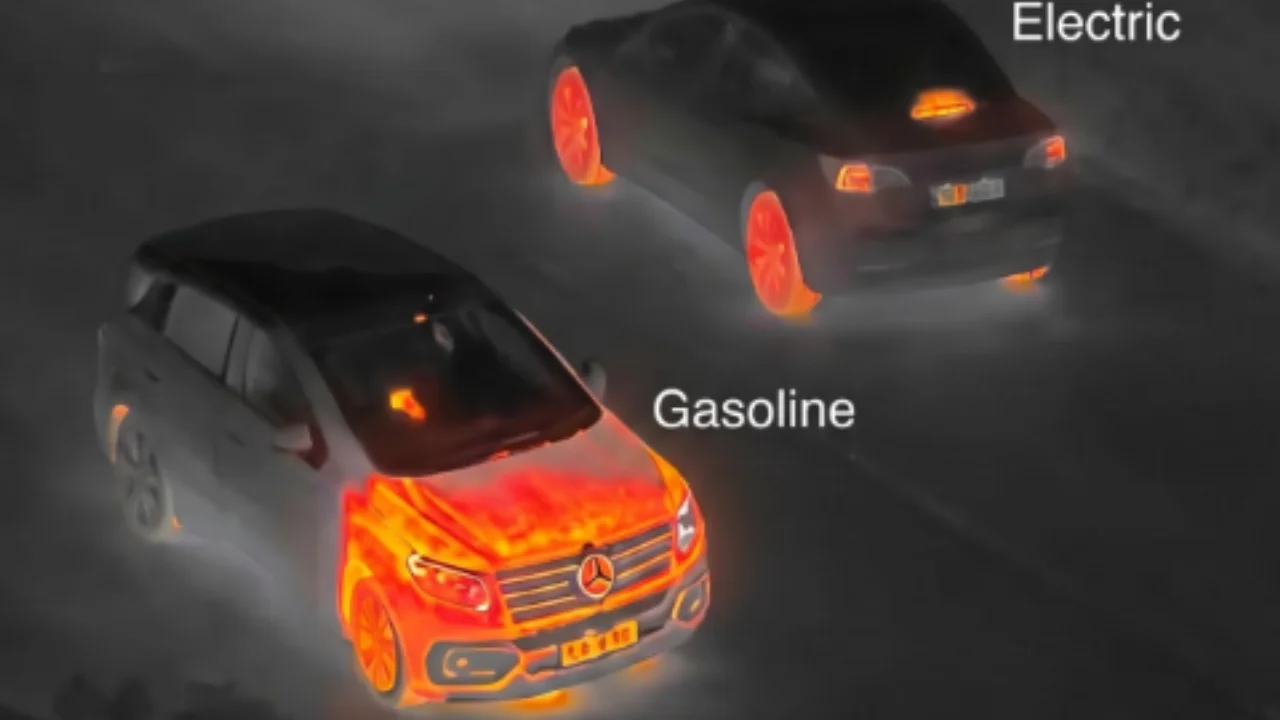

There’s been a lot of gas-powered car and electric car comparisons over the years, but this thermal imaging showcased one difference as plain as day.
No stone has been left unturned in the ongoing EV vs Gas debate.
From costs to range, nothing has been left to chance.
Now, some thermal imaging is doing the rounds online, showcasing the stark contrast between the two when it comes to energy efficiency.
This thermal imaging puts things into perspective
Without thermal imaging, these two cars would be passing each other on a road like any normal day.
Sure, one would make more noise than the other, but they’d otherwise look not too dissimilar from the outside.
But with thermal imaging, it’s made clear where the heat is going.
The gas car is lit up in orange at the front, as the internal combustion engine works overtime producing thermal energy.
This infrared flare-up shows us where the energy is being directed to in the car, and what’s heating up as a result.
It’s a totally different story with the electric car.
Electric motors produce far less heat, so they appear cooler under thermal cameras.
The heat is concentrated more around the electronics, so the wheels and lights flash up orange.
Beyond being a cool visual, what does this tell us about EVs more broadly?
It shows us that they’re more energy efficient, as less energy is being lost through heat.
That allows for more energy to go towards movement.
Another benefit is that lower temperatures can play a part in a longer life for components, as there’s lower cooling requirements.
Related

This is yet another stark difference between these two types of car
Ever since EVs rolled onto the scene, people have been drawing comparisons.
Plenty of studies have compared electric cars and gas cars before, with a wide array of results.
One study found that electric car owners were replacing their cars at a much faster rate of every three years, compared to every 12 for ICE drivers.
Another revealed that electric cars were still cheaper to charge, even when drivers opted for public chargers over home charging.
There are dramatic cost differences between the two, and the money aspect often has the most sway with buyers who are on the fence.
Ben joined Supercar Blondie in February 2025 after being published by international organizations including LADbible, The Sun, the New York Post, and the Daily Mail. He covers supercars, rare and collectible vehicles, aviation, luxury assets, and the fascinating people behind them. His reporting has explored everything from seven-figure supercars and historic Ferrari collections to unusual aircraft adventures and extraordinary automotive discoveries from around the world. Ben has also gained first-hand insight into vehicle craftsmanship and customization, including visiting specialist workshops to see bespoke vehicles up close.