This is why the last 20% of your electric car's battery takes so much longer to charge
Published on Apr 06, 2026 at 12:10 PM (UTC+4)
by Molly Davidson
Last updated on Apr 02, 2026 at 2:10 PM (UTC+4)
Edited by
Amelia Jean Hershman-Jones
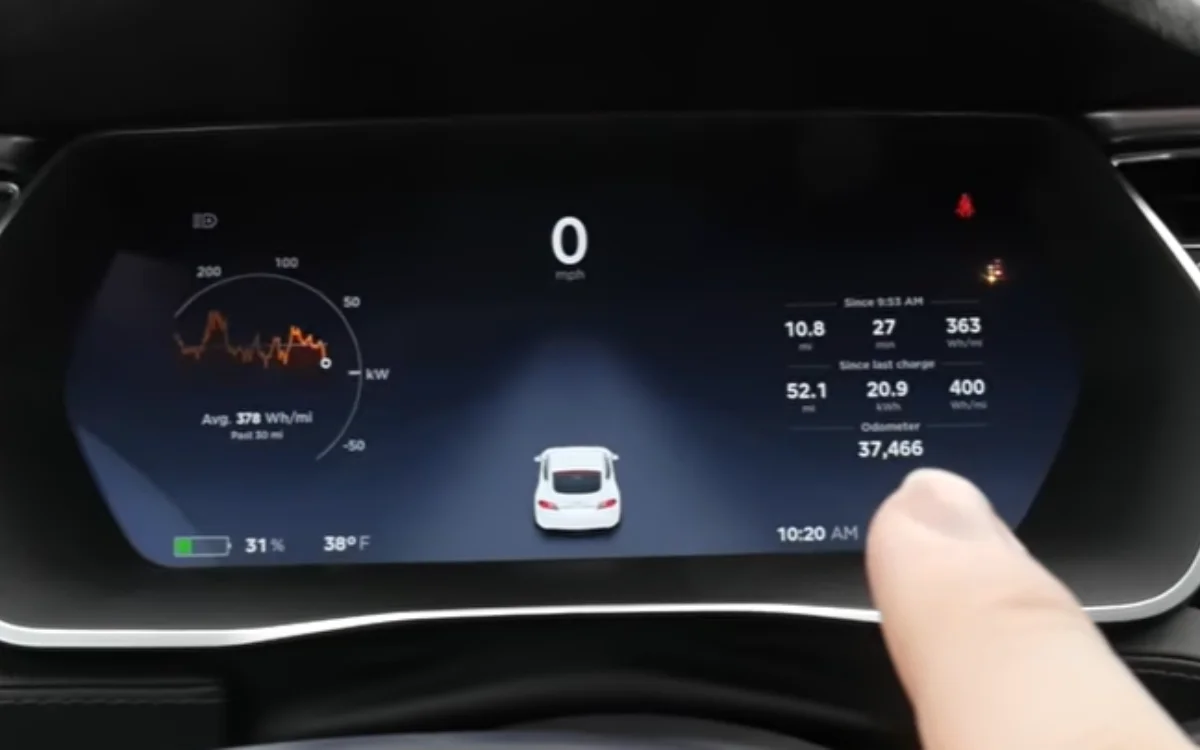

If you’ve ever charged an electric car, you’ll know the battery races to 80 percent.
But then it suddenly slows to a crawl.
That last bit always feels weirdly long.
And no, your charger isn’t broken – here’s what’s behind it.
Enter our competition to win a stunning 2006 Ford GT or $400,000 cash!
The last 20% of electric car charging takes so much longer
Up to about 80 percent, your electric car is basically in a rush.
There’s loads of room inside the battery, so energy can flow in fast without causing problems.
It’s the easy part of the job, so the car just goes for it.
But once you get closer to full, everything tightens up.
First, there’s a safety limit kicking in.
As the battery fills, its voltage climbs higher and closer to the danger zone.
So the car steps in and dials things back to stop it from overheating or wearing itself out too quickly.
At the same time, the battery itself is starting to struggle a bit.
Think of it like trying to pack a suitcase.
At the start, you’re tossing stuff in with no problem.
By the end, you’re sitting on it trying to zip it shut.
That’s basically what’s happening inside.
The battery stores energy by moving tiny particles called lithium ions into a part called the anode.

Early on, there’s heaps of space, so they slide in easily.
But later, that space starts running out.
So instead of neatly fitting in, the ions can get stuck or pile up.
And if you keep forcing them in too fast, they can stick to the surface instead of going where they’re meant to.
That’s called lithium plating, and once it happens, it doesn’t undo itself.
It slowly damages the battery over time.
So the car slows everything down on purpose, giving those ions time to settle in properly instead of causing problems.
Why most EV makers tell you to stop at 80%
This is also why you’ll hear people say ‘just charge to 80 percent.’
It’s the sweet spot.
You get most of your range, it charges quickly, and you avoid stressing the battery in that slow, cramped final stretch.
Charging to 100 percent is still fine if you need it, like before a long trip.

But for everyday use, that last 20 percent takes longer and does the battery no favors.
So when your charging speed suddenly drops near the end, it’s not the car giving up.
It’s the car looking after itself, so you don’t end up with a worn-out battery later.
DISCOVER SBX CARS: The global premium car auction platform powered by Supercar Blondie
With roles at TEXT Journal, Bowen Street Press, Onya Magazine, and Swine Magazine on her CV, Molly joined Supercar Blondie in June 2025 as a Junior Content Writer. Having experience across copyediting, proofreading, reference checking, and production, she brings accuracy, clarity, and audience focus to her stories spanning automotive, tech, and lifestyle news.