Toyota teases groundbreaking ‘holy grail’ EV feature expected to debut in 2027-28, and it’s a world first
Published on Dec 09, 2025 at 4:47 PM (UTC-5)
by Alessandro Renesis
Last updated on Dec 09, 2025 at 4:47 PM (UTC-5)
Edited by
Emma Matthews
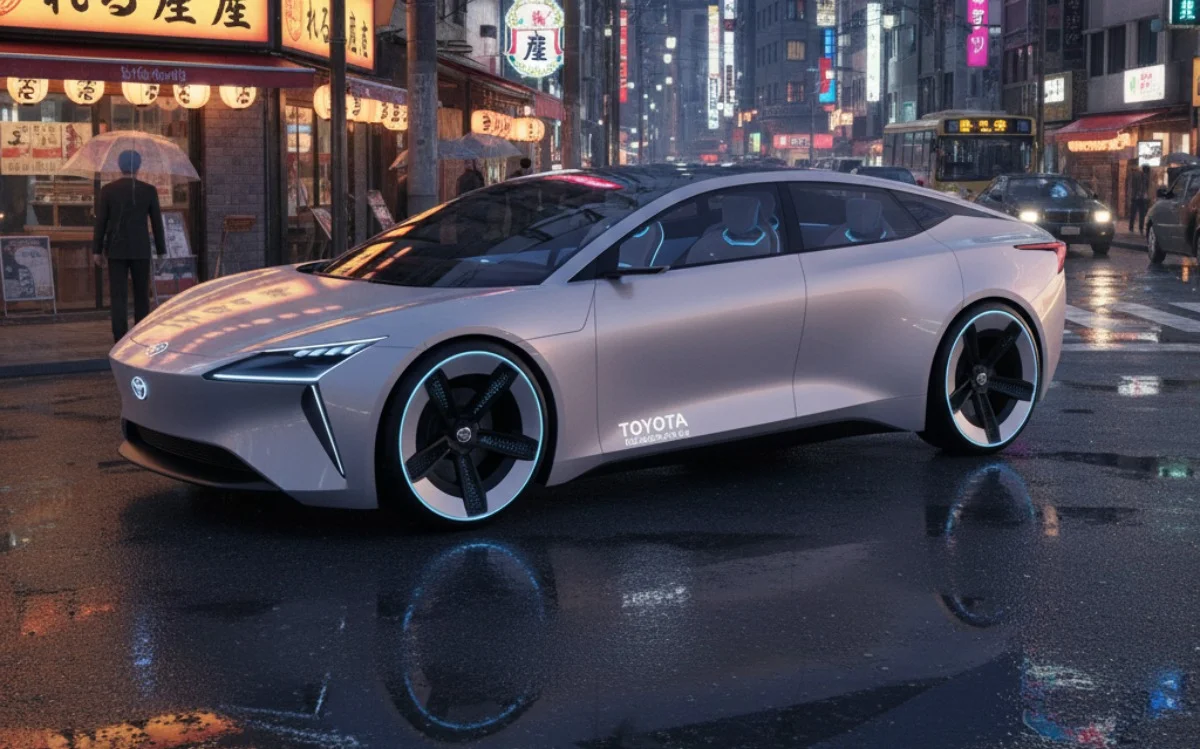

Toyota, out of all automakers, is apparently very close to achieving what many EV makers can only dream of: a solid-state battery car.
If everything goes well, the new EV will be launched in 2027 or 2028.
We’re not talking about a concept here, but a full-blown production car.
And here’s why that’s so important.
DISCOVER SBX CARS: The global premium car auction platform powered by Supercar Blondie
Here’s how solid-state batteries work, and why they’re important
Solid-state batteries could change the game because they’re more energy-dense.
All things being equal, a solid-state battery gives you 25 percent more driving range compared to a corresponding liquid-state battery.
That’s because solid electrolytes – hence the name solid-state battery – are better conductors for battery components that work in tandem to generate energy.
With the same weight and size, you get more energy from a battery that’s solid and easier to cool.
It’s a win-win situation.
Related


Toyota and Mercedes want to pioneer this technology
Toyota isn’t exactly the most EV-obsessed automaker in the world – the fact that its latest supercar is a gas car proves it – but the Japanese automaker is serious about solid-state batteries.
If they keep their promise, Toyota’s upcoming electric vehicle will be the world’s first production solid-state car.
But that’s assuming Mercedes doesn’t beat them to the punch.
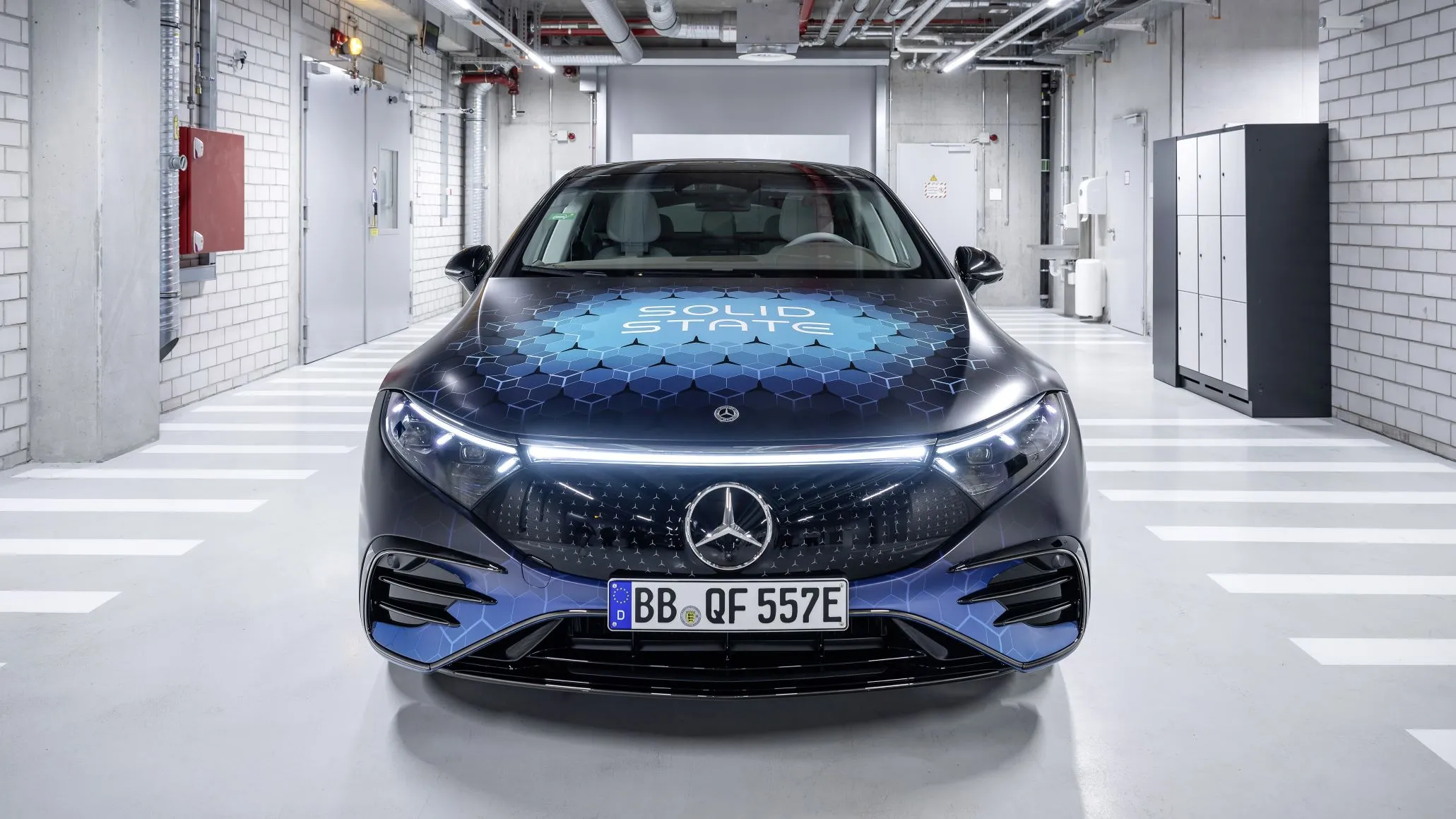
Mercedes has been working on this type of tech for a while.
Just a couple of years ago, they managed to run a Mercedes EQS for 1,000km (620 miles) on a charge.
About a year later, they did even better: 750 miles on a charge.
A quick history of EV batteries
1859: Invention of the lead-acid battery by Gaston Planté – used in early electric carriages
1899: Camille Jenatzy’s electric car, using lead-acid batteries, sets a land speed record of 65mph
1960s: Nickel-cadmium (NiCd) batteries provide better energy density but are costly
1991: First commercial lithium-ion battery developed by Sony – revolutionizing portable tech
1996: GM EV1 uses advanced lead-acid and nickel-metal hydride (NiMH) batteries in prototypes
2008: Tesla Roadster launches with lithium-ion cells – first car to use laptop-style battery packs
2012: Tesla Model S refines battery cooling and packaging for longer range and safety
2015: Solid-state battery research accelerates, promising faster charging and higher energy density
2020: Battery costs drop 89 percent in a decade, reaching ~$137/kWh, enabling mass-market electric vehicles
2023: Panasonic, CATL, and others begin testing next-gen ‘4680’ cell designs for higher performance
Alessandro is an automotive journalist with 10 years of experience covering supercars, automotive history, emerging vehicle technology, and luxury transportation. He wrote the first article published on SupercarBlondie.com when the website launched in 2022 and has since built a reputation for insightful reporting across the automotive and transportation industries. His expertise is grounded in hands-on experience. Alessandro has driven every Tesla model ever produced, from the original Roadster to the Cybertruck, and regularly covers the latest developments in electric vehicles and automotive innovation. His passion for transportation extends beyond cars, he has even flown a Boeing 787 Dreamliner simulator in Addis Ababa, Ethiopia. His reporting spans everything from classic American muscle cars and rare automotive discoveries to luxury yachts, private aircraft, high-end watches, and cutting-edge vehicle technology. Known for his deep knowledge of automotive history and ability to uncover the stories behind iconic vehicles, Alessandro brings readers a blend of historical context, technical expertise, and first-hand experience.