US couple who have committed to living on a cruise ship for 15 years share how much it costs compared to living in the average US household
Published on Jun 05, 2026 at 6:40 AM (UTC-4)
by Ben Thompson
Last updated on Jun 08, 2026 at 12:15 PM (UTC-4)
Edited by
Mason Jones
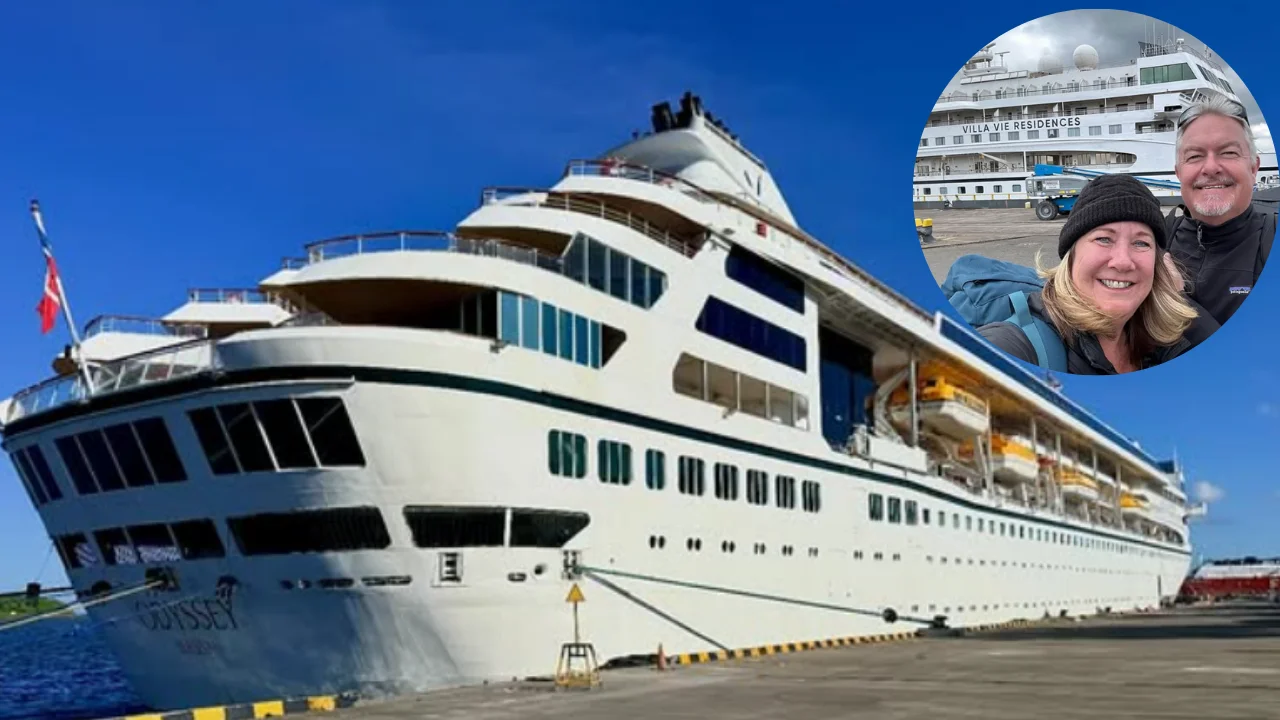

An American couple who have committed to living on a cruise ship for 15 years have revealed the cost behind their lifestyle.
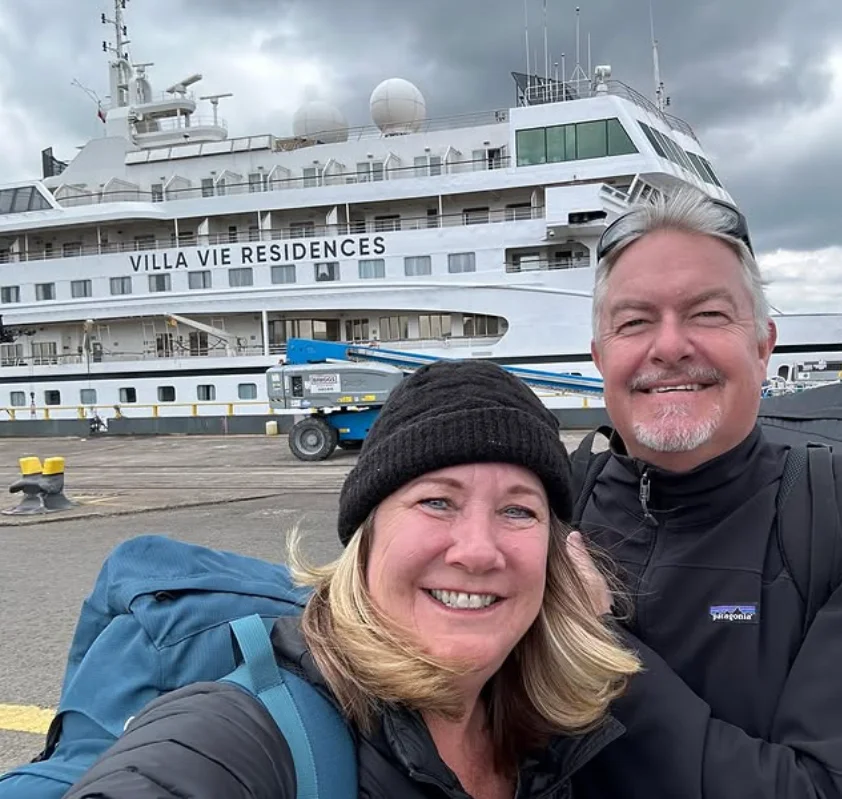
Lanette and Johan traded a traditional life on land for a residential cruise heading around the world.
It sounds idyllic on the face of it, but how much does this cost them?
And how does it compare to the average costs that come with living in a standard US household?
Is living on a cruise ship all it’s cracked up to be?
Lanette and Johan run the aptly named channel Living Life on a Cruise, in which they dispense advice on the unorthodox living arrangement.

In a recent video, they revealed the costs that come with a life out on the high seas.

When they signed up for their life on a cruise ship, they secured lower rates than what is currently on offer.
At this point in time, a smaller cabin purchase would set you back $130,000, with monthly maintenance fees coming out at $4,000 for a couple and $3,000 for a solo traveler.
Johan cautioned viewers that the purchase of the cabin wasn’t like a standard real-estate investment.
“This is definitely not an investment. It’s an investment in a lifestyle and experiences. That’s what it is,” Johan said.
“Because if we bought our cabin, it’s not like buying a condo. We know that in 15 to 20 years, the ship might be scrapped and that’s it.”
Johan and Lanette estimated that they spend around $5,150 a month, once personal extras were taken into account.
There’s a lot of figures there, so let’s break down what each of them mean in a bit more detail.
What falls under a maintenance fee?
The $4,000 maintenance fee covers the majority of Johan and Lanette’s day-to-day living expenses.
That includes three meals a day, plus complimentary beer and wine at lunch and dinner.
Housekeeping and laundry also fall under the umbrella, as does high-speed internet and access to a gym, fitness classes, and onboard entertainment.

Taking out-of-pocket expenses into account
All in all, the couple spend around $100 a month on US Mobile, while also paying out for Netflix and Amazon Prime.
Travel insurance sets them back around $400 a month.
A budget of $500 is set aside each month to cover exploring ports upon which they dock at.

Lanette sets aside $50 a month for services at an onboard hair salon, while her husband opts for cheap haircuts at ports.
Does living on a cruise ship come out cheaper than living on land?
When all is said and done, is the cruise ship lifestyle kinder on the bank account than a life on land?
The couple estimated that they were now spending a lot less money.
For one thing, they don’t pay for any cars now, whereas before they had 31 vehicles to account for due to their rental business.
Gas, property taxes, utilities, and home repairs are all now things of the past.

However, some surprise costs do creep in like international visas and visitor fees.
They estimated they were spending more than $8,000 a month when they were living in Hawaii.
With the average household expenditure in the US coming it at around $6,500 a month, they noted that life on a cruise ship was notably cheaper.

What advice would the couple give to another thinking about living on a cruise full-time?
“Choose the people as much as the ship,” Lanette told Supercar Blondie.
“Most people focus on the destinations, the cabin, or the itinerary. Those things are important, but what truly makes this lifestyle special is the community you build onboard.
“When you live on a residential cruise ship, you’re not just travelling with people for a week and then saying goodbye. You’re sharing meals, celebrating birthdays, exploring ports together, and creating friendships all over the world.
“Over time, your fellow residents become more like neighbors and extended family than fellow passengers.”
And would they have done anything differently?
“Not really. We came aboard for the travel, but what surprised us most was the community,” Lanette said.
“We’ve visited incredible places, but some of our favorite memories are the everyday moments with the people we’ve met along the way.
“Living aboard has taught us that experiences are wonderful, but sharing those experiences with a close-knit community is what truly makes this lifestyle special.”
Living on a cruise ship seems to be a growing trend
It’s not just Johan and Lanette who have decided land life isn’t for them.
In fact, there’s a growing swathe of people who have taken to the internet to share their cruise ship experiences.
One woman has gone into the ins and outs of her lifestyle, breaking down her monthly bills.
And all of this could soon pale in comparison to the $16 billion floating city that has been proposed.
Could living on land soon become unfashionable? Only time will tell.
Ben joined Supercar Blondie in February 2025 after being published by international organizations including LADbible, The Sun, the New York Post, and the Daily Mail. He covers supercars, rare and collectible vehicles, aviation, luxury assets, and the fascinating people behind them. His reporting has explored everything from seven-figure supercars and historic Ferrari collections to unusual aircraft adventures and extraordinary automotive discoveries from around the world. Ben has also gained first-hand insight into vehicle craftsmanship and customization, including visiting specialist workshops to see bespoke vehicles up close.