US man uses Chevy Silverado EV truck to tow long distance to see if it solves 'Achilles heel'
Published on Feb 16, 2026 at 4:28 AM (UTC+4)
by Daisy Edwards
Last updated on Feb 12, 2026 at 6:09 PM (UTC+4)
Edited by
Editorial Guest
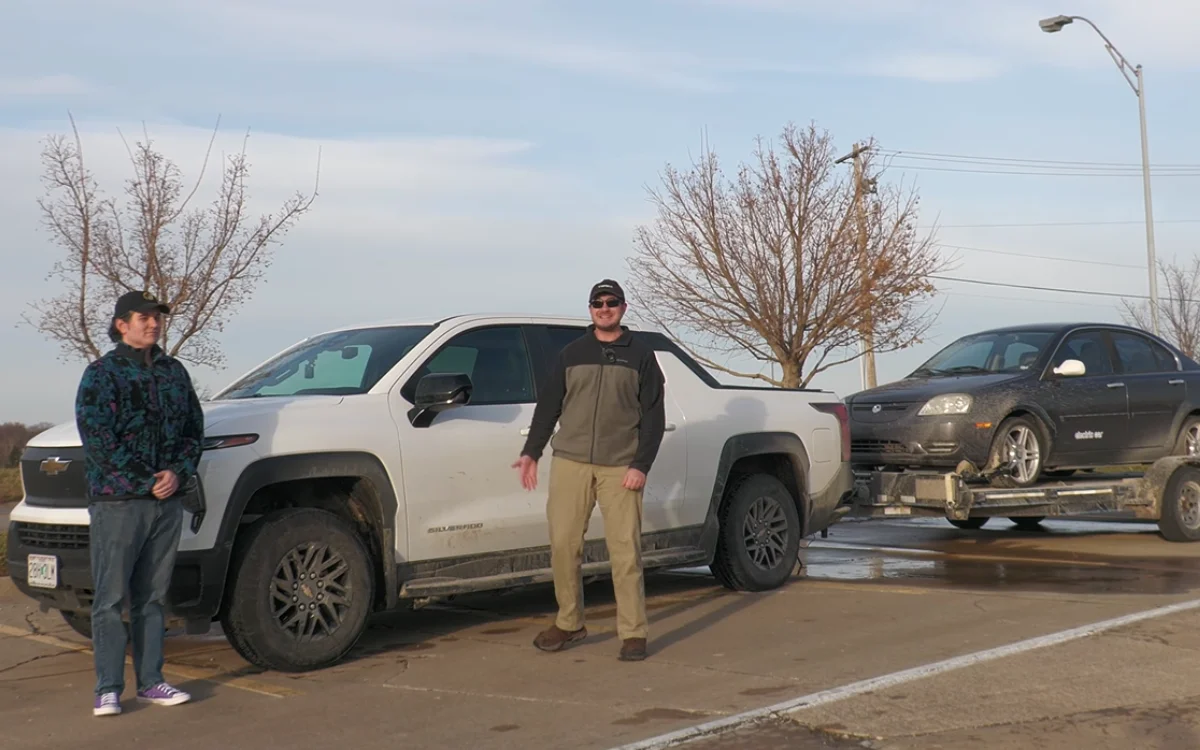

A man from the US used his Chevy Silverado EV truck to tow a long distance to see if it solves the ‘Achilles heel’.
He set out to prove that electric trucks tow brilliantly, but usually fall apart when you try to do it for real miles.
So he hitched up a trailer and pointed a Chevy Silverado EV towards California in the middle of winter.
The goal was simple: find out if the Silverado EV’s famous massive maximum range battery can finally tame long-distance towing.
EXPLORE SBX CARS – Supercar auctions starting soon powered by Supercar Blondie
Chevy Silverado EV truck tries to tackle towing long distance
The YouTuber had already tested EV trucks with different weights and setups and came away impressed by how they drive while towing.
The problem is range, because most electric trucks chew through battery when you hang a trailer on the back, which turns long-distance towing into a big weakness.
That is why the Silverado EV with the max range pack was the chosen weapon and it has a much larger battery than other electric trucks, and it can charge quickly when everything is working properly.
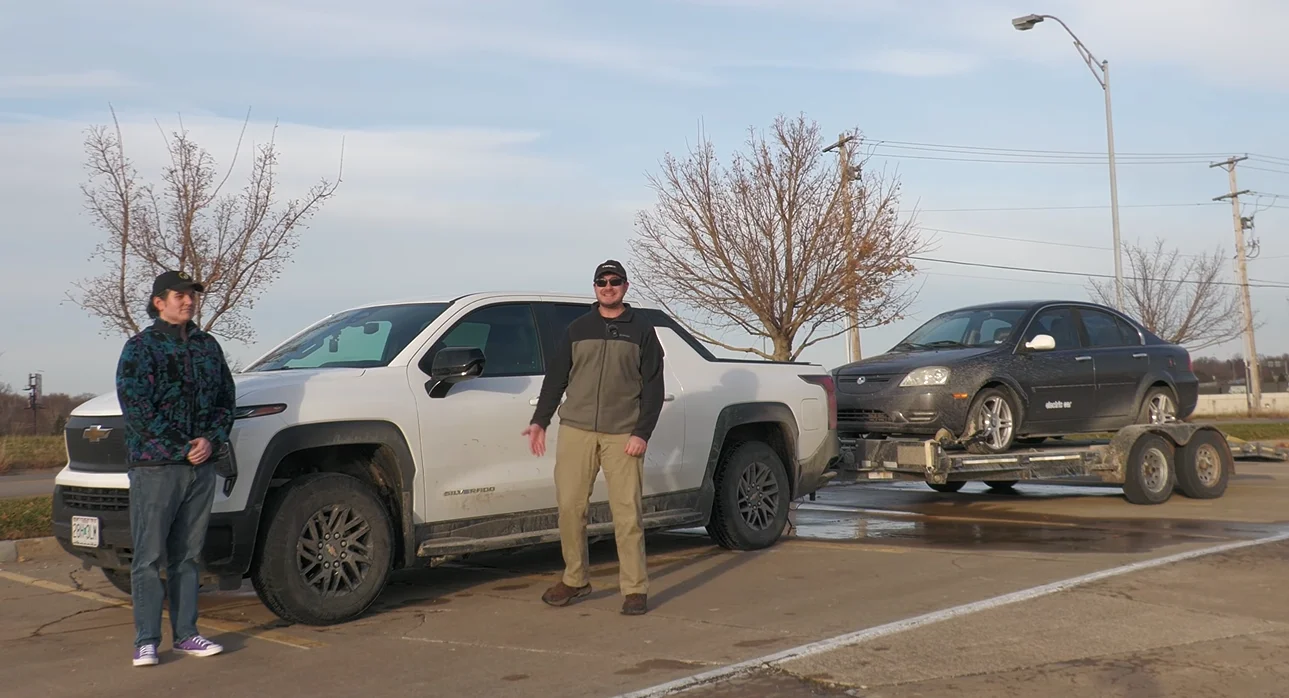
The plan was ambitious: tow a Kota EV from Missouri to the Bay Area, a trip of about 2,000 miles.
From the start, the truck proved how impressive it was in the towing challenge: it towed smoothly, felt confident on the move, and handled climbs and descents with ease, but the real battle was planning, charging, and timing.
Click the star icon next to supercarblondie.com in Google Search to stay ahead of the curve on the latest and greatest supercars, hypercars, and ground-breaking technology
The ‘Achilles heel’ is charging, not capability
Two things kept showing up at nearly every stop.
First, range estimates were unreliable with a trailer, and the truck’s predicted arrival charge often looked far too optimistic; then reality hit when they rolled in much lower.
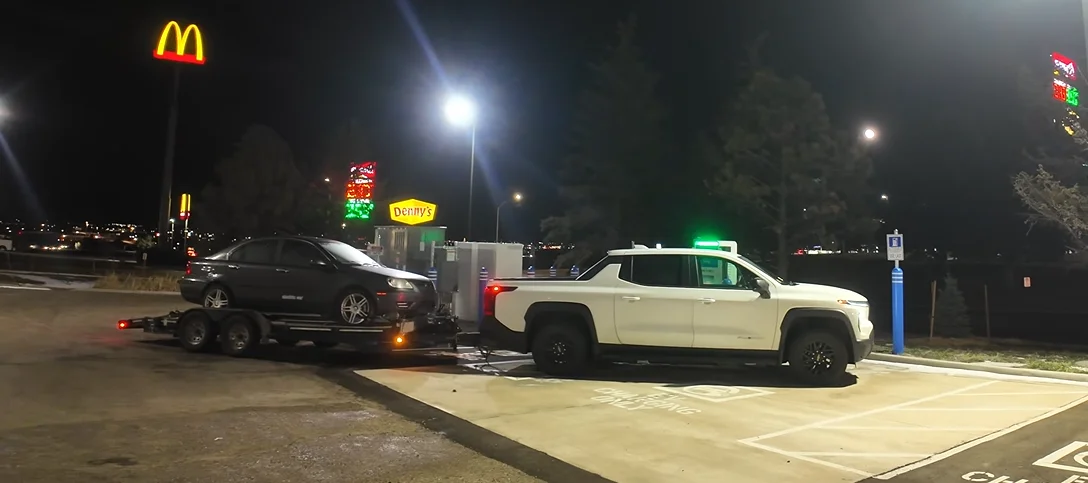
Second, charging setups were not trailer-friendly because many stations were not pull-through, and the Silverado’s charge port is at the back, which meant blocking multiple stalls to plug in while still hitched.
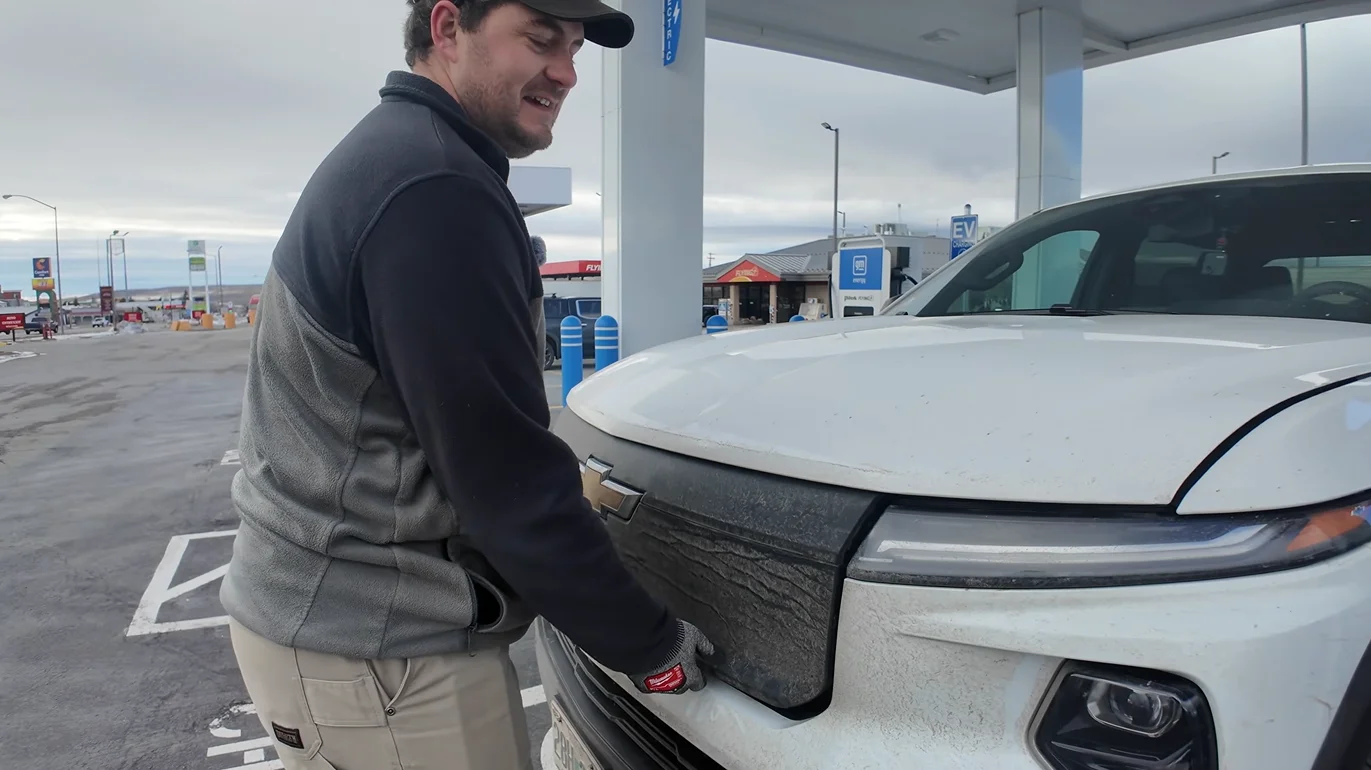
Then came the biggest twist when partway through the journey, the Silverado stopped using its clever 800V split pack fast charging mode and began charging like a 400V vehicle, cutting peak speeds and stretching stops into hour-long slogs.

Winter itself was not the villain, and heating load barely mattered compared to the energy needed to push a truck and trailer down the highway, and frequent stops kept the battery from getting too cold.
In the end, the Silverado EV completed the haul and proved it can do the job, but it also showed the ‘Achilles heel’ is still real: charging friction, longer charging times, and infrastructure not built for towing.
DISCOVER SBX CARS: The global premium car auction platform powered by Supercar Blondie