Man sees what happens if you ignore the four most important lithium battery safety warnings to test how dangerous it is
Published on Jan 05, 2026 at 12:02 PM (UTC+4)
by Molly Davidson
Last updated on Jan 05, 2026 at 2:30 PM (UTC+4)
Edited by
Mason Jones

Lithium batteries are everywhere, quietly powering phones, laptops, tools, and cars.
They also come with a short list of safety warnings most people barely register.
One creator decided to stop taking those warnings at face value.
So he ignored all four to see what would happen.
DISCOVER SBX CARS – The global premium auction platform powered by Supercar Blondie
The four lithium battery safety warnings everyone ignores
At a glance, lithium batteries look harmless.
Inside, though, each cell is a tightly rolled stack of materials: a positive electrode, a negative electrode, and a plastic separator so thin it’s doing all the heavy lifting.
As long as that separator keeps the layers apart, everything behaves.
Once it fails, though, things escalate fast.
That’s why the same four warnings show up again and again.
Don’t get them wet.
Don’t expose them to heat or fire.
Don’t crush, puncture, or take them apart.
And never short-circuit the terminals.
They sound obvious, but they all exist for the same reason.
Every rule is about preventing one thing: an internal short circuit.
That single failure is what turns a boring metal cylinder into something extremely dangerous.

What happened when this man ignored all four safety warnings
To show why those rules exist, Erik from YouTube’s Concept Crafted Creations ran four controlled experiments, each designed to break one safety warning at a time.
Test one: Water
The first test looked almost boring.
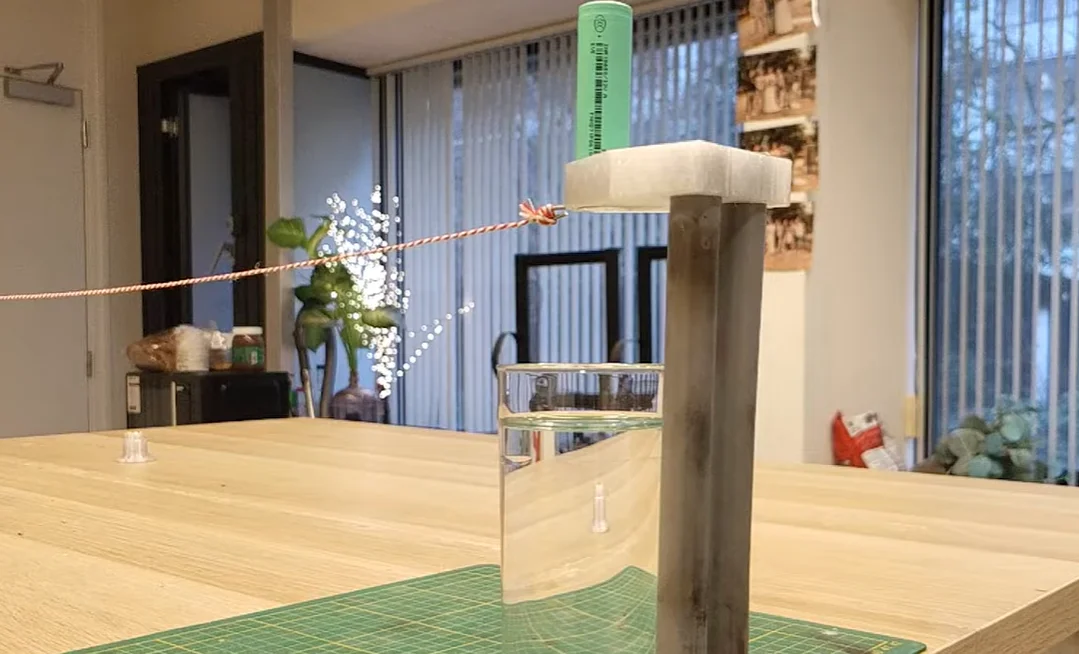
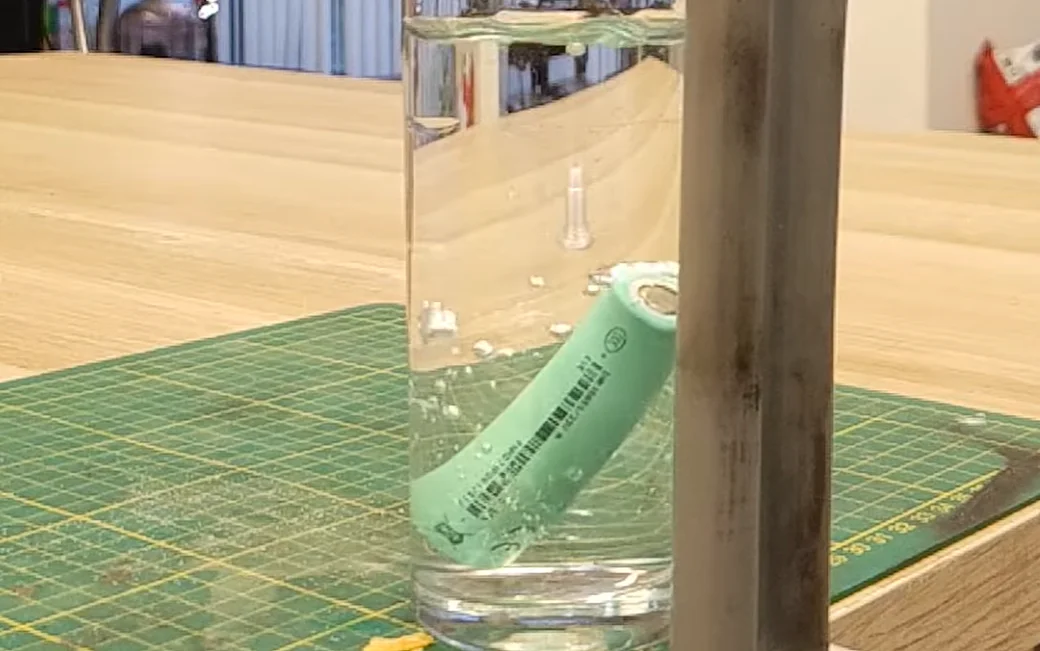
Dropped into plain tap water, the lithium battery did nothing.
That’s because fresh water isn’t very good at carrying electricity.
Then salt was added.
Suddenly the water could conduct electricity, giving the battery a path to leak energy into its surroundings.
It wasn’t explosive, but it was unstable – a slow, messy discharge that becomes dangerous once moisture starts creeping inside the cell.
Test two: Heat and fire
Next came heat.
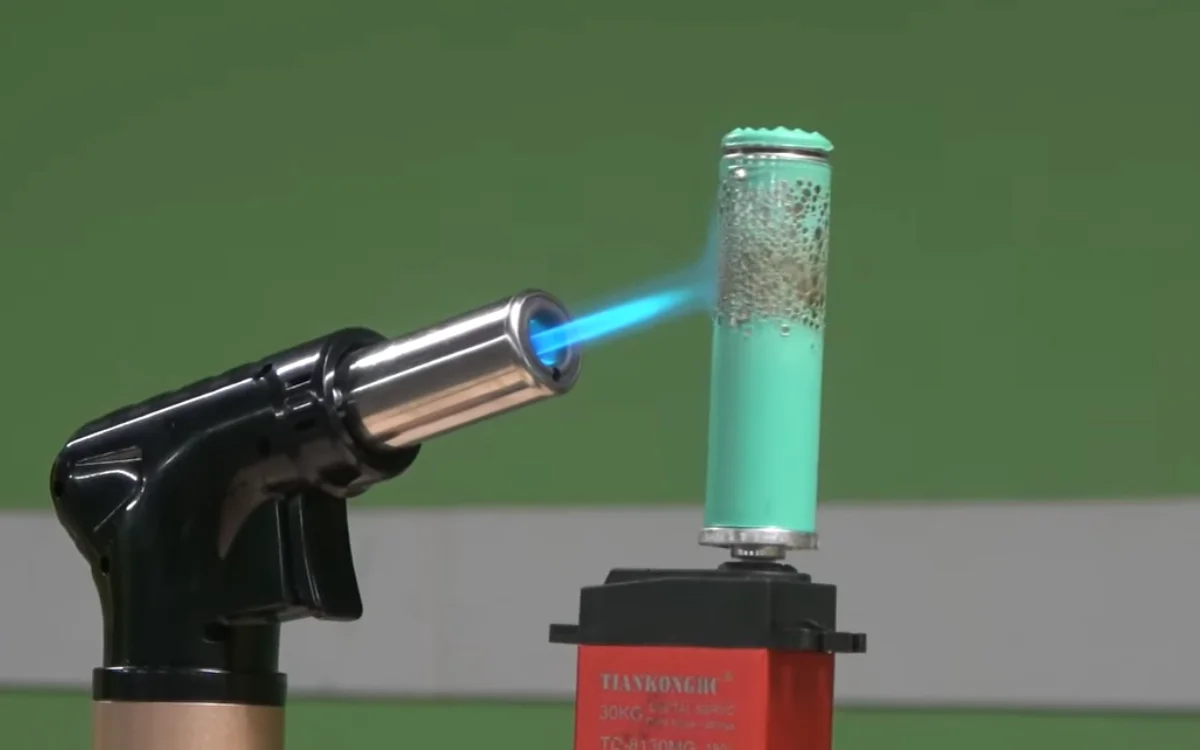
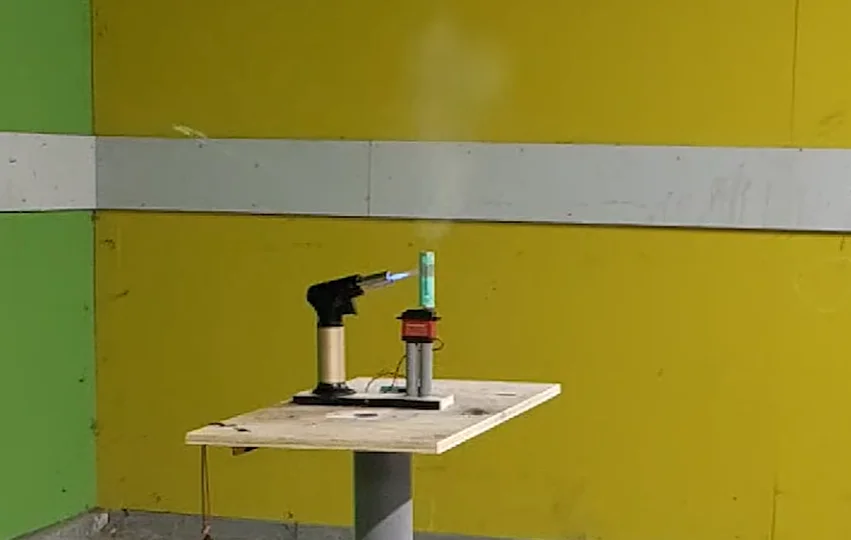
The battery was warmed evenly with a gas burner, and pressure began building up inside the metal casing.
A safety vent popped first, releasing gas exactly like it’s designed to do.
But the heat didn’t stop.
The chemistry inside the battery broke down, thermal runaway kicked in, and the battery started producing its own heat and oxygen.
From that point on, it didn’t need the burner anymore – the reaction was feeding itself.
Test three: Puncture damage
This one escalated instantly.
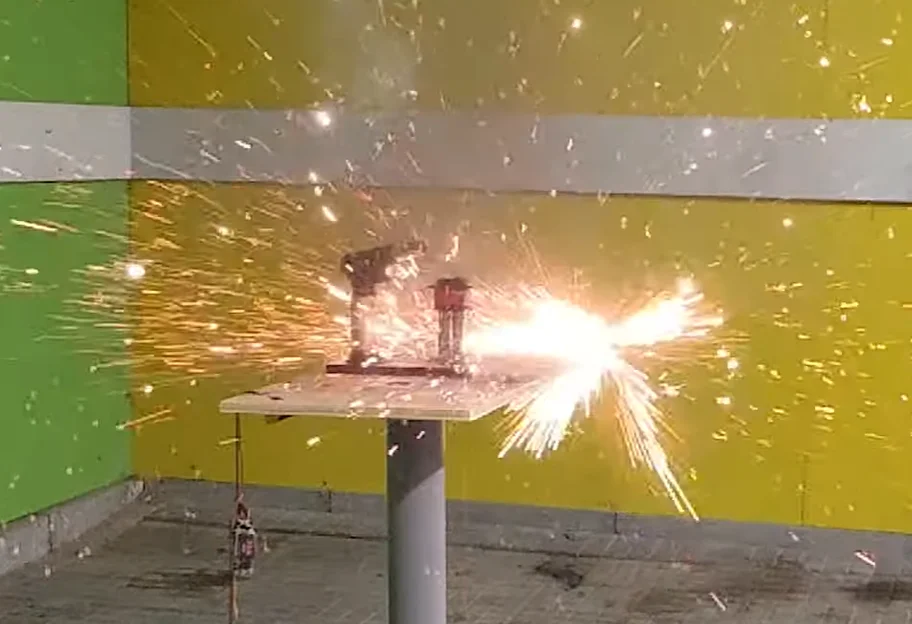
A steel drill punched straight through the casing, forcing the internal layers to touch.
There was no buildup and no warning.
It ignited on the spot.
The drill bit itself ended up glowing red – not from drilling friction, but from the energy dumping out of the battery.


Test four: Short circuit
The final test looked calm by comparison.
Thick copper wires short-circuited a single battery, pulling a huge amount of current and heating it up fast.
Then it leveled out.
No fire and no explosion.
But that calm only applies to one cell.
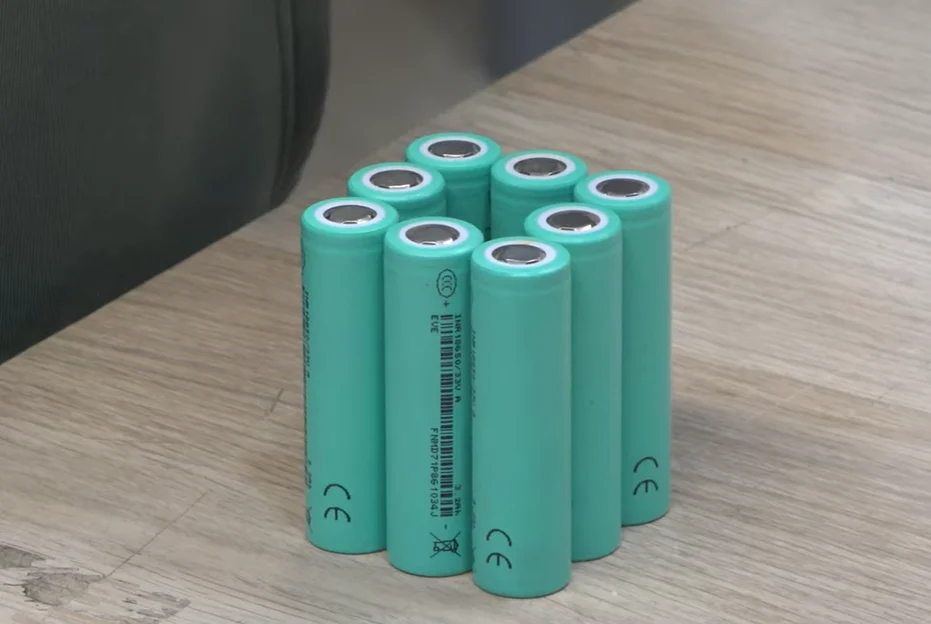
In real battery packs, cells sit tightly together and heat each other up.
One failure quickly turns into many, and the reaction spreads fast.

By the end, the pattern was obvious.
Water, heat, punctures, and short circuits might look like different mistakes, but they all cause the same problem.
Once a lithium battery’s insides fail, the reaction keeps going on its own.
And at that point, the battery doesn’t need fire – it makes its own.
To see the test in full, subscribe to Concept Crafted Creations on YouTube.
DISCOVER SBX CARS: The global premium car auction platform powered by Supercar Blondie
With roles at TEXT Journal, Bowen Street Press, Onya Magazine, and Swine Magazine on her CV, Molly joined Supercar Blondie in June 2025 as a Junior Content Writer. Having experience across copyediting, proofreading, reference checking, and production, she brings accuracy, clarity, and audience focus to her stories spanning automotive, tech, and lifestyle news.