Most people have no idea what the letter 'E' actually stands for on a gear stick
Published on Feb 24, 2026 at 5:08 PM (UTC+4)
by Henry Kelsall
Last updated on Feb 25, 2026 at 8:58 PM (UTC+4)
Edited by
Amelia Jean Hershman-Jones
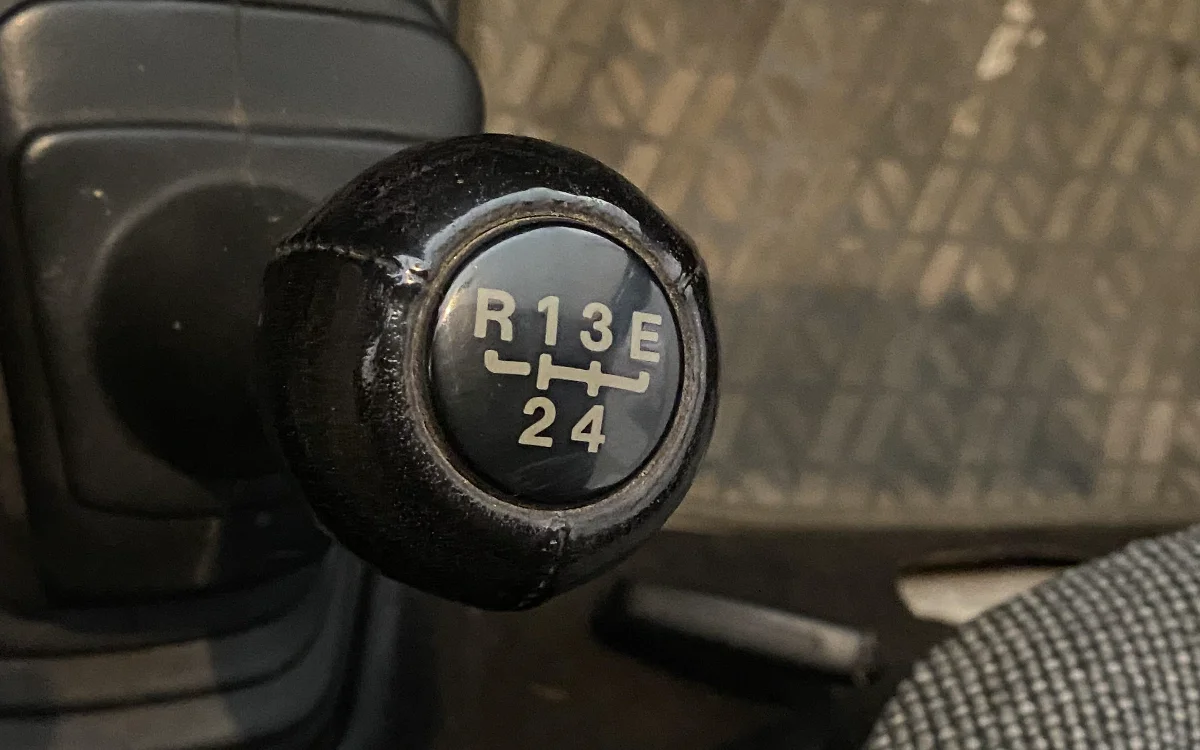

A manual transmission gear stick usually has a bunch of numbers and perhaps a ‘D’, ‘N’, and an ‘R’, but it’s the letter ‘E’ that leaves most people stumped about its meaning.
Typically, the stick will show the number of gears and their position, be it one through five, or up to six or seven, with a manual transmission.
Some letters appear, such as ‘R’ for reverse, but the letter ‘E’ is one that is a conundrum for many drivers.
As it turns out, if you do have an ‘E’ on your gear stick, it is a very useful gear to have.
DISCOVER OUR SUPERCAR AUCTION SITE – View live auctions on SBX Cars
What does the E stand for on a gear stick?
We asked if people knew what the ‘E’ stood for on a recent Facebook post on the Supercar Blondie page.
Several suggestions were given to us, some serious and some not so much.
One user suggested it stood for ‘E’ for ‘electric’ on a hybrid car.
Another jokingly said it was an ‘E’ for an ‘ejection seat’, in true James Bond Aston Martin DB5 style.
But the answer is thankfully simpler – and less dramatic – than that.
The letter ‘E’ itself stands for ‘economy’, and it’s not something you see on modern cars.
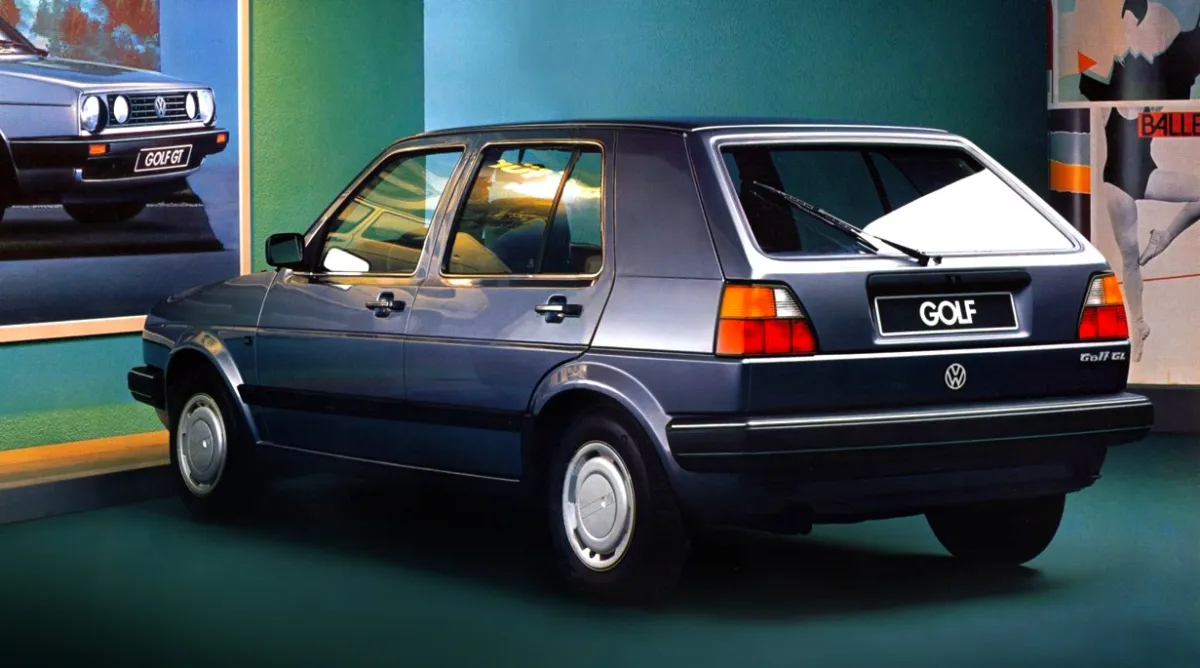
If you have a car from the 1980s, especially a German one, you might see it then.
The image we posted was taken from a 1988 Volkswagen Golf.
Click the star icon next to supercarblondie.com in Google Search to stay ahead of the curve on the latest and greatest supercars, hypercars, and ground-breaking technology
This is what the economy gear does
The economy gear is quite clever, and it aims to prioritize fuel efficiency in a car.
It differentiated a longer final gear, such as fifth, from a normal gear.
The behaviour of the transmission and the engine management is changed when this is engaged.
For example, upshifts occur at a lower engine RPM, keeping revs low and fuel economy down.
It is similar to an overdrive gear.
This also reduces RPM and in some cases shuts cylinders in an engine down.
Some French cars from Citroen and Peugeot also had the gear, where it was labelled ‘Économie’.
Nowadays, the ‘E’ is largely redundant, and the manual transmission is going the same way too.
As the years have passed, engines have become naturally more economical, so there was no need for the gear.
So if you do have a car with the economy gear, you are, in some ways, driving a piece of history.
A history of the manual transmission
1894 – First modern manual: Panhard and Levassor invent the three-speed sliding-gear transmission, establishing the foundation for modern gearboxes.
1928 – Synchromesh innovation: Cadillac introduces synchromesh, matching gear speeds before engagement to eliminate grinding and ‘double-clutching’.
1950s-1960s – Global standard: Manuals dominate the auto industry, primarily functioning as 3-speed column shifters or 4-speed floor shifters.
1970s – Rise of the 5-speed: To combat global oil crises, automakers introduced 5-speeds with a fuel-saving ‘overdrive’ fifth gear.
1990s – The 6-speed era: Six-speed gearboxes debut in high-performance sports cars, eventually becoming the standard for modern manuals.
2012 – Pushing to seven: Porsche introduces the world’s first 7-speed manual in the 911 Carrera to maximize highway fuel efficiency.
Present Day – Enthusiast niche: Though largely replaced by automatics and EVs, the manual lives on as a highly desired feature for driving purists.
DISCOVER SBX CARS: The global premium car auction platform powered by Supercar Blondie
Henry joined the Supercar Blondie team in February 2025, and since then has covered a wide array of topics ranging from EVs, American barn finds, and the odd Cold War jet. He’s combined his passion for cars with his keen interest in motorsport and his side hustle as a volunteer steam locomotive fireman at a heritage steam railway.