US man who wired 400 car batteries together in one of the most extreme YouTube experiments shares major issue he faced filming it
Published on Feb 26, 2026 at 6:13 AM (UTC-5)
by Alessandro Renesis
Last updated on Feb 26, 2026 at 12:22 PM (UTC-5)
Edited by
Emma Matthews
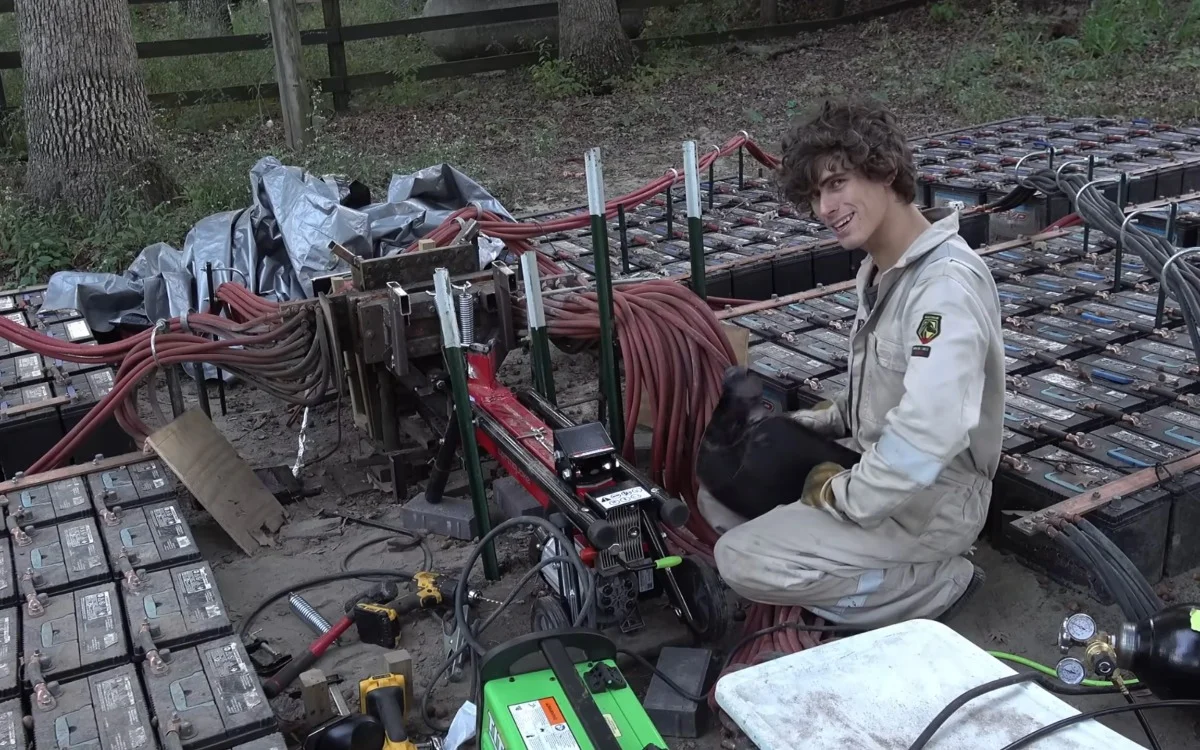

This YouTuber tried wiring 400 car batteries together in one of the most extreme science experiments ever, and the result was shocking.
Modern batteries are pretty powerful, whether they’re lithium-ion or sulphur-based.
This guy tried testing the result in a controlled environment, but it was still pretty impressive to watch.
But there was an extra problem he hadn’t considered.
DISCOVER SBX CARS: The global premium car auction platform powered by Supercar Blondie
This is why filming 400 car batteries wasn’t easy at all
YouTuber and self-proclaimed ‘science maniac’ styropyro built something akin to one of the biggest lasers ever seen on the internet.
He used 400 old batteries to create a lightning strike, for a grand total of 160,000 amps of energy being discharged.
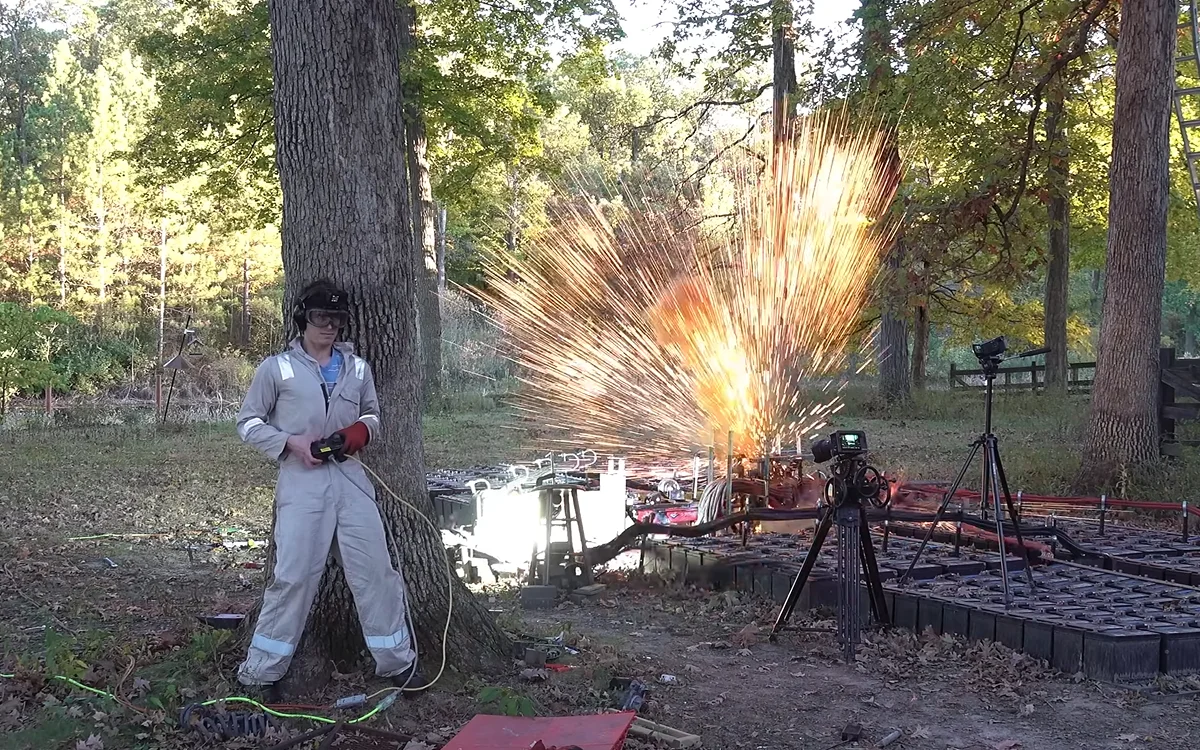
The experiment went well, and the lightning strike was bigger than he thought, but there was a problem he hadn’t considered: his cameras kept being disabled while filming the video.
That’s because his strange experiment also generated an immense electromagnetic pulse, which, to put it mildly, is not a camera’s best friend.
Click the star icon next to supercarblondie.com in Google Search to stay ahead of the curve on the latest and greatest supercars, hypercars, and ground-breaking technology
There’s another thing people don’t realize can fry your camera
People may not realize that pointing your phone camera at a LiDAR might ruin the camera.
It can leave purple spots on it or, in some cases, ruin it completely.
This is sort of a big deal these days because America’s streets are being taken over by Waymos.
And Waymo, like most self-driving companies – with a few exceptions like Tesla and Xpeng – uses LiDAR.
The problem is that LiDAR uses infrared light, which humans can’t see.
But our camera can.
Without getting too geeky, phone cameras are designed to capture light and turn it into a picture.
But LiDAR emits an amount of light that’s too much for the camera to handle.
Pointing the camera lens at a LiDAR beam is the same as using a magnifying glass on a sunny day on a tiny spot: it’ll burn it.

Alessandro is an automotive journalist with 10 years of experience covering supercars, automotive history, emerging vehicle technology, and luxury transportation. He wrote the first article published on SupercarBlondie.com when the website launched in 2022 and has since built a reputation for insightful reporting across the automotive and transportation industries. His expertise is grounded in hands-on experience. Alessandro has driven every Tesla model ever produced, from the original Roadster to the Cybertruck, and regularly covers the latest developments in electric vehicles and automotive innovation. His passion for transportation extends beyond cars, he has even flown a Boeing 787 Dreamliner simulator in Addis Ababa, Ethiopia. His reporting spans everything from classic American muscle cars and rare automotive discoveries to luxury yachts, private aircraft, high-end watches, and cutting-edge vehicle technology. Known for his deep knowledge of automotive history and ability to uncover the stories behind iconic vehicles, Alessandro brings readers a blend of historical context, technical expertise, and first-hand experience.