The US could be set to get its own Autobahn with one American state looking to make history
Published on Jun 27, 2026 at 12:06 PM (UTC-4)
by Alessandro Renesis
Last updated on Jun 27, 2026 at 12:06 PM (UTC-4)
Edited by
Kate Bain


Arizona could become the first US state to get its own unrestricted highway, a German-style Autobahn, thanks to a new bill put forward by Arizona State Representative Nick Kupper.
Kupper is a retired U.S. Air Force master sergeant who spent a significant portion of his 19-year military career stationed in Germany, and while he was there, he realized there was a good argument for unrestricted highways.
The bill, part of the so-called RAPID Act, is set to be reintroduced soon.
We had a conversation with Arizona State Representative Nick Kupper, the primary proponent of the bill, to find out exactly what this could mean for drivers.
What would it mean for Arizona drivers?
The entire premise is quite simple.
Large sections of the Autobahn in Germany are unrestricted, with an advisory speed limit (Richtgeschwindigkeit) of 130 km/h – 80 mph.
The key word is ‘advisory.’
Anybody can drive as fast as their car can go on the Autobahn, and yet, Germany’s highways are among the safest in the world.
Arizona State Representative Kupper is keen to prove this with data.

“The two main metrics I would like to see would be fatalities per vehicle mile traveled and accidents per vehicle mile traveled,” Kupper told Supercar Blondie.
“If those data points were statistically the same or lower than on our other interstates, or than the average of the last five years on I-8 then I would call that a success.”
Would out-of-state drivers also be allowed to use the zones?
“Yes, just like how anyone can drive on the Autobahn,” Kupper said.
Different rules for different vehicles?
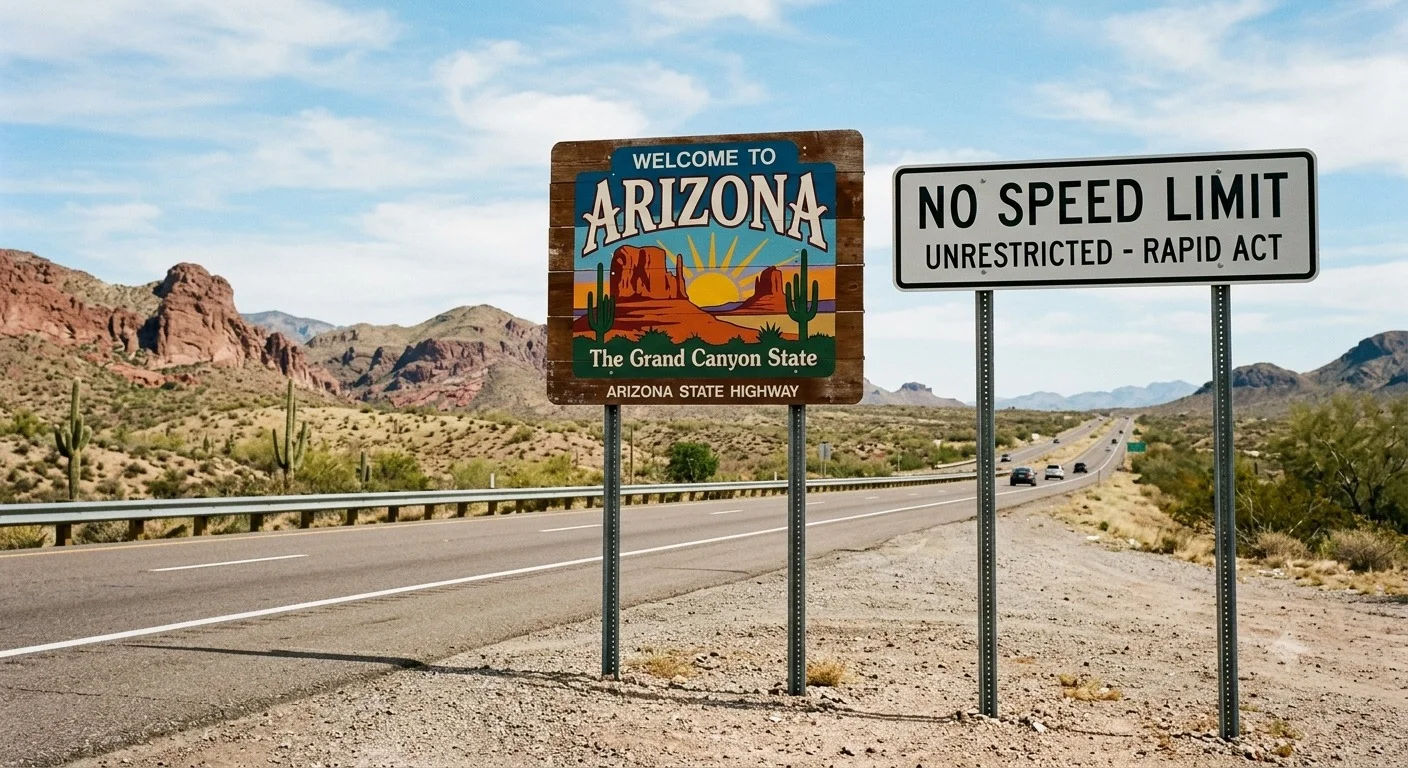
One of the key differences between the scenario in Arizona if the bill passes and the Autobahn is that a speed limit would still apply to commercial vehicles.
We asked Kupper about this, and his answer was interesting and once again backed by data.
“I based my bill off of how Montana handled their derestricted speed zones in the mid 1990s,” he explained.
“They had this differential and still had fewer fatalities per vehicle mile traveled so I am not concerned. I believe that this worked because studies have shown when there is no set speed limit, like Montana used to have and the Autobahn still does, the average driver maintains about 80MPH.”
How close is the bill to getting passed?

While legislative deadlines put the brakes on Arizona’s Autobahn proposal for the current session, Representative Nick Kupper clarifies that the legislation is merely paused, not abandoned.
“The bill was not withdrawn,” he prefaced.
“The chairman of the committee it was assigned to never put it on the agenda for a hearing and our annual session is over now.
“I fully intend to reintroduce the RAPID Act next session in January. This bill deserves a full discussion in the legislature and I’m confident that if signed into law, it would reduce vehicle fatalities while increasing driver freedom.”
We, as car people, and the people of Arizona wish him the best of luck.
Alessandro is an automotive journalist with 10 years of experience covering supercars, automotive history, emerging vehicle technology, and luxury transportation. He wrote the first article published on SupercarBlondie.com when the website launched in 2022 and has since built a reputation for insightful reporting across the automotive and transportation industries. His expertise is grounded in hands-on experience. Alessandro has driven every Tesla model ever produced, from the original Roadster to the Cybertruck, and regularly covers the latest developments in electric vehicles and automotive innovation. His passion for transportation extends beyond cars, he has even flown a Boeing 787 Dreamliner simulator in Addis Ababa, Ethiopia. His reporting spans everything from classic American muscle cars and rare automotive discoveries to luxury yachts, private aircraft, high-end watches, and cutting-edge vehicle technology. Known for his deep knowledge of automotive history and ability to uncover the stories behind iconic vehicles, Alessandro brings readers a blend of historical context, technical expertise, and first-hand experience.