Bill Gates has claimed humans could work a two-day week within 10 years thanks to AI
Published on Jan 13, 2026 at 4:03 AM (UTC+4)
by Ben Thompson
Last updated on Jan 12, 2026 at 8:55 PM (UTC+4)
Edited by
Amelia Jean Hershman-Jones
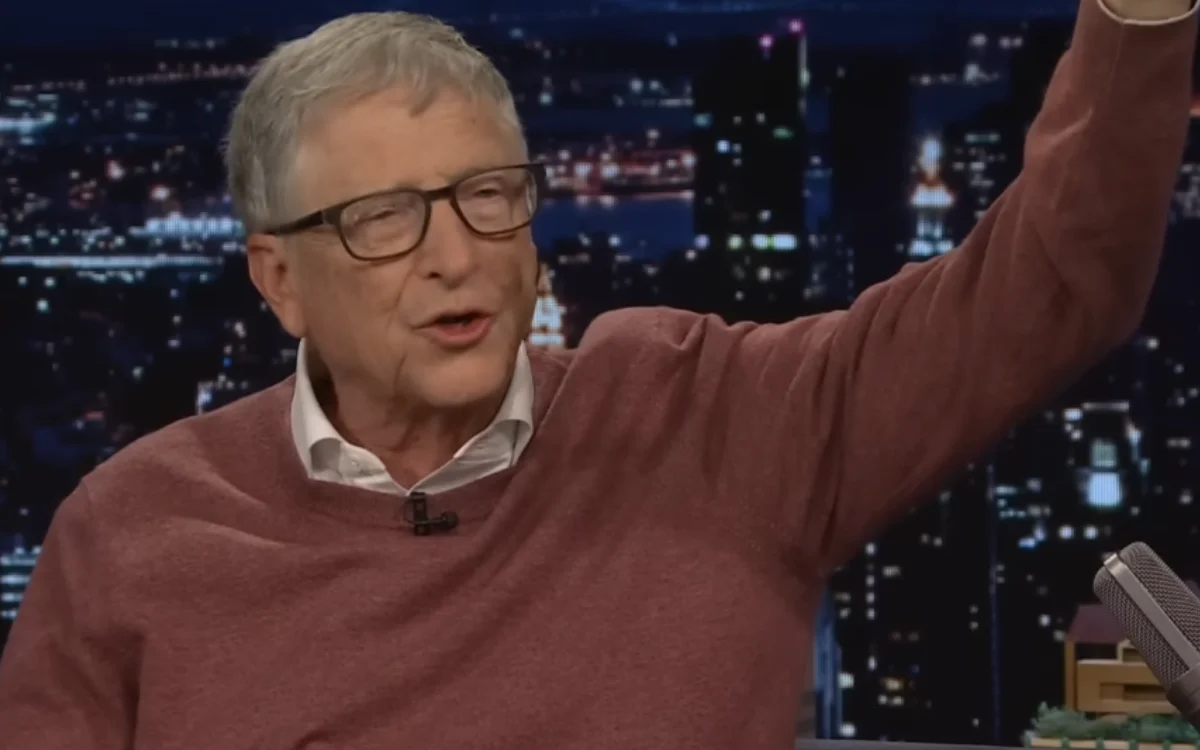
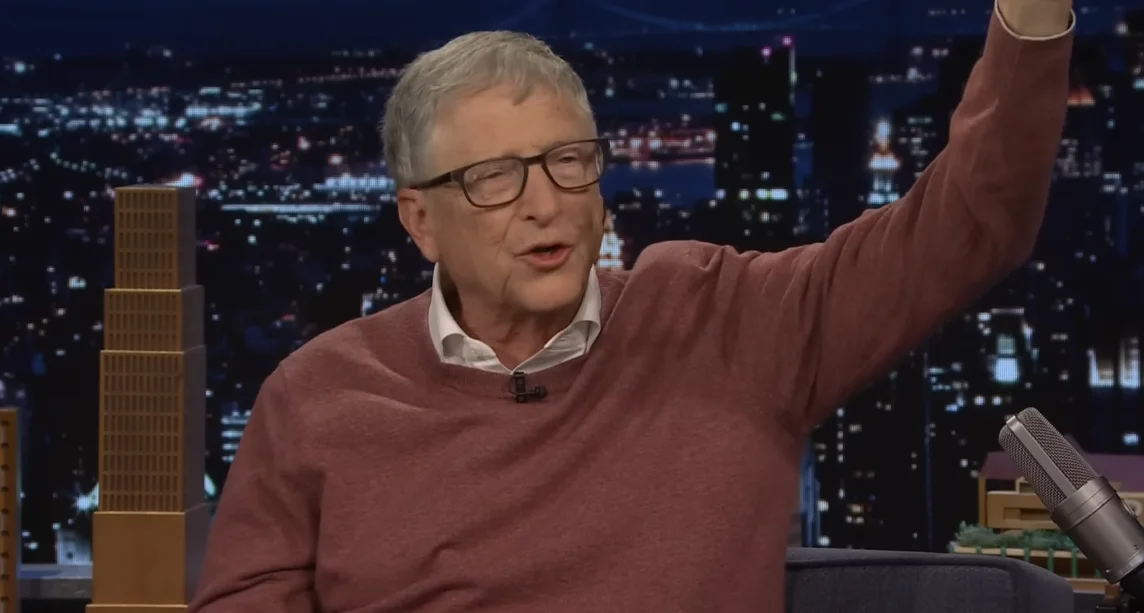
Bill Gates has theorized that humans will be working a two-day week within 10 years, thanks to AI.
The Microsoft co-founder made the claim during an appearance on The Tonight Show with Jimmy Fallon.
He argued that humans won’t be required ‘for most things’, opening up a lot of free time.
And this isn’t the first time Bill Gates has sounded the alarm on what societal changes AI will bring about.
EXPLORE SBX CARS – Supercar auctions starting soon powered by Supercar Blondie
Why Bill Gates thinks humans will be working a two-day week within 10 years
During the interview with Fallon, Bill Gates opined on what he thought the future of work looked like, given that AI is developing at lightning speed.
Two jobs were singled out as being particularly at risk of extinction.
“With AI, over the next decade, (intelligence) will become free, commonplace – great medical advice, great tutoring,” Gates said.
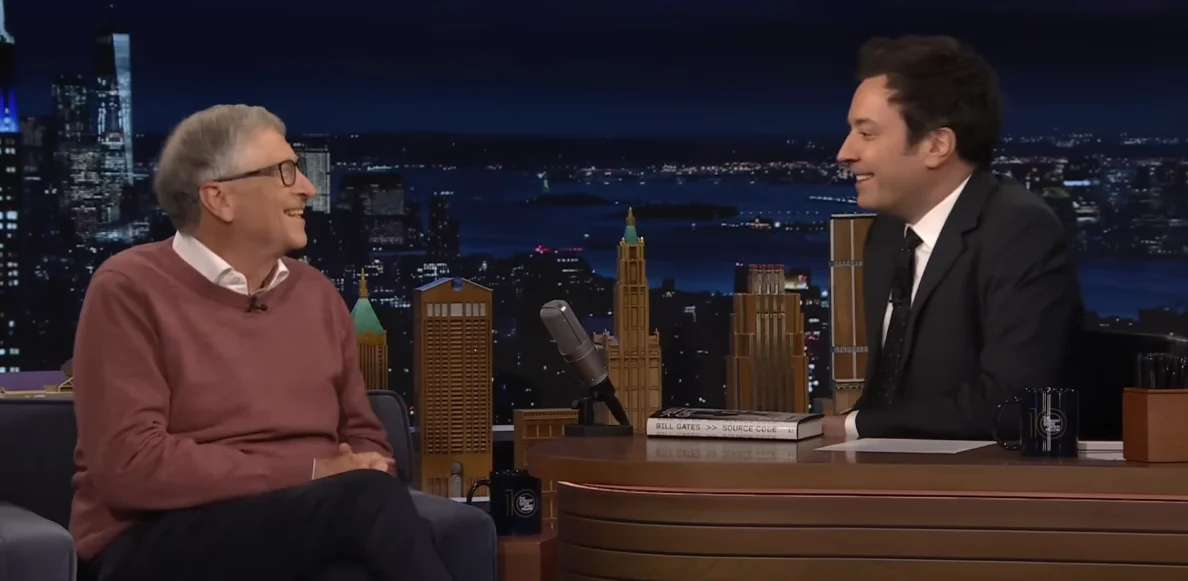
“There will be some things that we reserve ourselves for, but in terms of making things and moving things and growing food – over time, those will be basically solved problems.”
You might recall that Gates has a knack for predictions, as he made 15 back in 1999 and they all came true.
He accurately predicted the rise of smartphones, the proliferation of social media, and remote working.
So we’re inclined to say that the 70-year-old could be right on the money with his two-day work week prediction.
While Gates said he loved that AI would ‘drive innovation forward’ he acknowledged the uncertainty it would bring.
After all, if more and more jobs are being done by artificial intelligence or robots, will a two-day week be forced upon us?
Will we be glad to have it, or will be longing for the days of a 45-hour work week?
Is your job AI-proof?
The most affected jobs centered around information, communication, and creation – think writers, translators, and historians.
Microsoft stopped short of saying that artificial intelligence would replace jobs outright.
The jobs deemed to be safest from AI were more physically demanding labor jobs.
Across the tech world, this is a conversation that is generating a lot of buzz.
The CEO of Anthropic, Dario Amodei, warned the public that up to half of all entry-level white-collar jobs could disappear in five years.
The chief of design at Mercedes-Benz went a step further, claiming that artificial intelligence will replace him in 10 years and be much cheaper, too.
Others, like billionaire Mark Cuban, argue that the technology will ultimately be a net job creator.
It remains to be seen how it will play out in the years to come and whether the two-day week, if realized, is a blessing or a curse.
But one thing is for sure – it’ll be interesting to watch unfold.
Timeline of Artificial Intelligence
1950: Alan Turing publishes ‘Computing Machinery and Intelligence’, in which the Turing Test is introduced – this test sets out to determine whether a machine can demonstrate human-like intelligence.
1956: At the Dartmouth Conference, John McCarthy coined the term ‘Artificial Intelligence’.
1966: Joseph Weizenbaum created ELIZA, the world’s first chatbot.
1969: Shakey the Robot, the world’s first mobile robot capable of reasoning about its own actions, was developed.
1997: IBM’s Deep Blue defeats world chess champion Garry Kasparov.
2002: The Roomba is released, bringing autonomous artificial intelligence into the household.
2010: Microsoft launched Kinect for Xbox 360, using artificial intelligence to track human body movement in real-time.
2011: Apple introduced Siri.
2022: OpenAI released ChatGPT, which reached 100 million users within two months.
DISCOVER SBX CARS: The global premium car auction platform powered by Supercar Blondie
Following stints at LadBible, The Sun, The New York Post, and the Daily Mail, Ben joined the team full-time in February 2025. In his role as Senior Content Writer, his sparkling copy, the ability to sniff out a good story at 100 paces, and a GSOH quickly led to him becoming an integral and invaluable member of the writing staff.