Boeing C-17 Globemaster lands and forgets it's a plane and immediately starts reversing like a car
Published on Feb 27, 2026 at 9:37 AM (UTC+4)
by Jason Fan
Last updated on Feb 27, 2026 at 9:36 PM (UTC+4)
Edited by
Mason Jones

A Boeing C-17 Globemaster operated by the US Air Force pulled off a runway move so unusual it looked more like a three-point turn than a military landing.
In an older video that has been quietly circulating online, the enormous transport jet touches down, rolls out smoothly, and then appears to reverse under its own power.
There is no tug in sight, no ground crew guiding it backwards.
Instead, the 265-tonne aircraft was behaving in a way most people would swear is impossible.
DISCOVER SBX CARS – The global premium auction platform powered by Supercar Blondie
The Boeing C-17 Globemaster III is no ordinary jet
Developed in the 1980s and entering service in 1995, it was designed to give the United States Air Force a strategic and tactical airlifter capable of hauling heavy equipment directly into austere airfields.
Built by Boeing, the C-17 bridges the gap between long-range cargo aircraft and rugged battlefield transports.
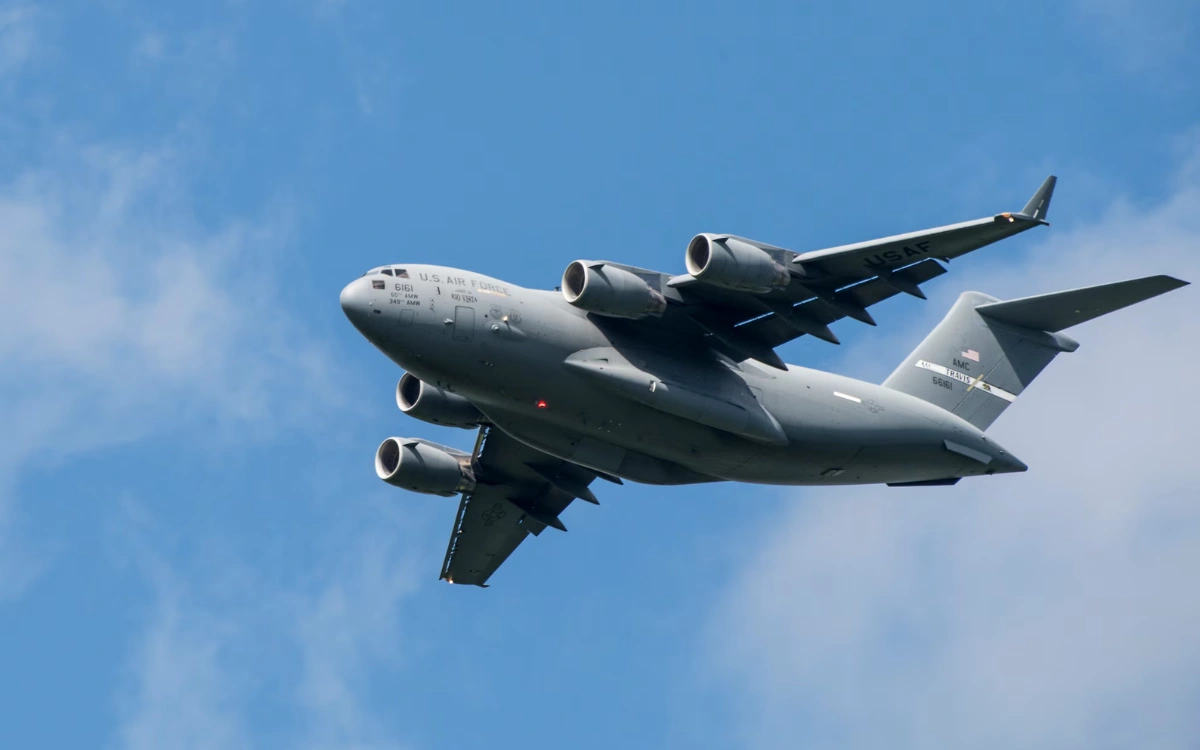
The specs are staggering.
The C-17 is about 174 feet long, with a wingspan of nearly 170 feet.
It can carry up to 170,900 lbs of cargo, including tanks, helicopters, and troop carriers.
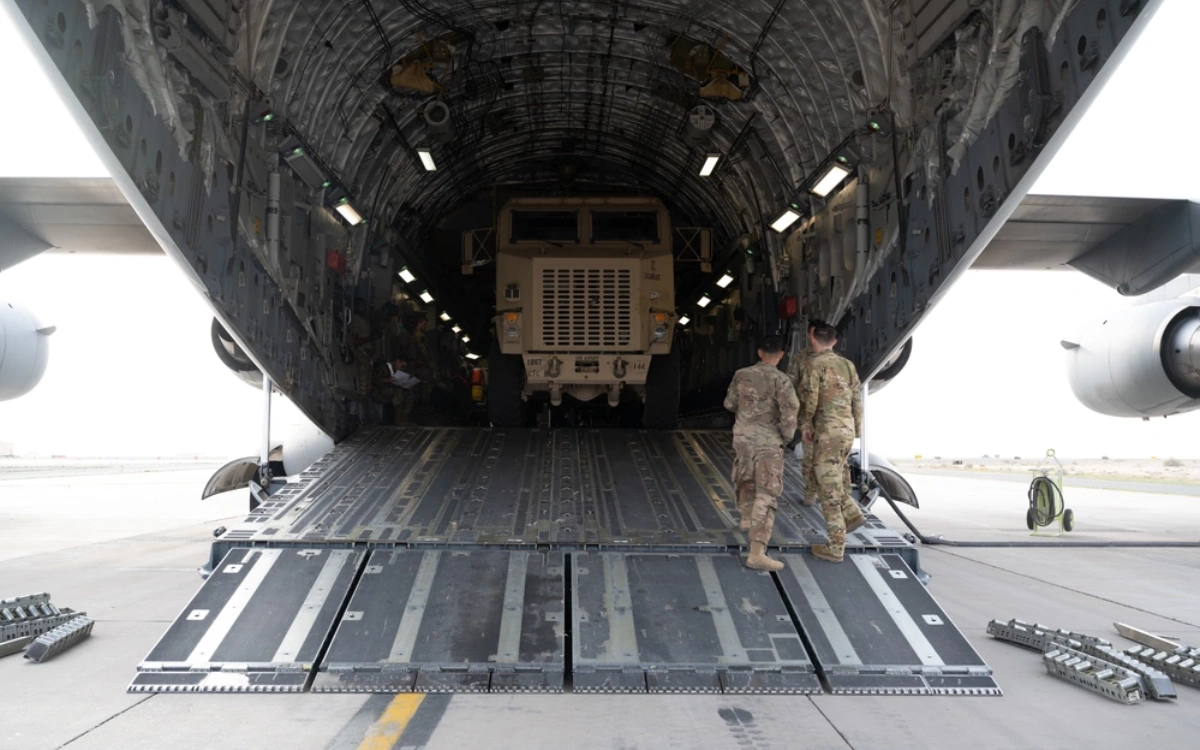
And while it’s not quite the biggest military plane out there, it certainly ranks pretty highly.
Powered by four Pratt and Whitney F117 turbofan engines, it produces enough thrust to lift fully loaded payloads across intercontinental distances without refueling.
It can operate from short, narrow runways as small as roughly 3,500 feet, and crucially, from semi-prepared surfaces.
Click the star icon next to supercarblondie.com in Google Search to stay ahead of the curve on the latest and greatest supercars, hypercars, and ground-breaking technology
Why reversing is such a big deal
Most commercial jets use thrust reversers to slow down after landing, redirecting engine thrust forward to assist braking.
But once they stop, that is it.
They cannot continue applying reverse thrust to taxi backwards in a controlled way.
At airports, pushback tugs are required to move airliners away from gates.
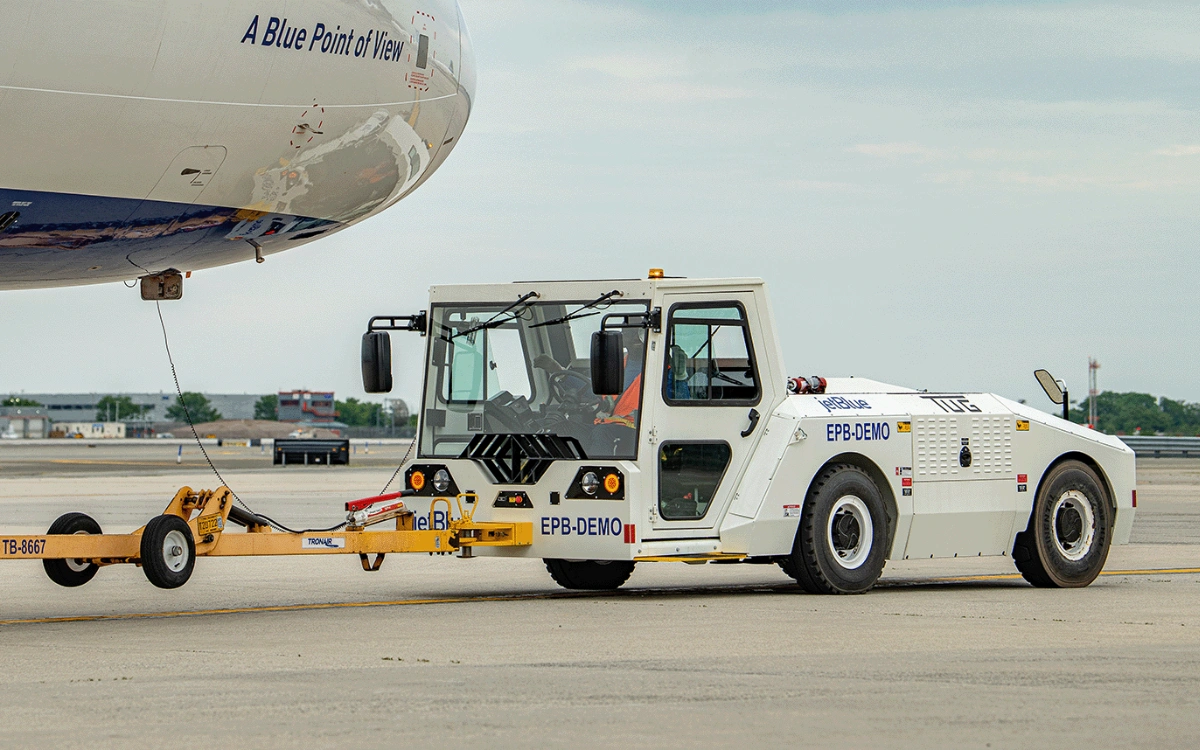
The Boeing C-17 Globemaster, however, is designed with austere operations in mind.
It can deploy sustained reverse thrust after landing and use it to back up without any ground support.
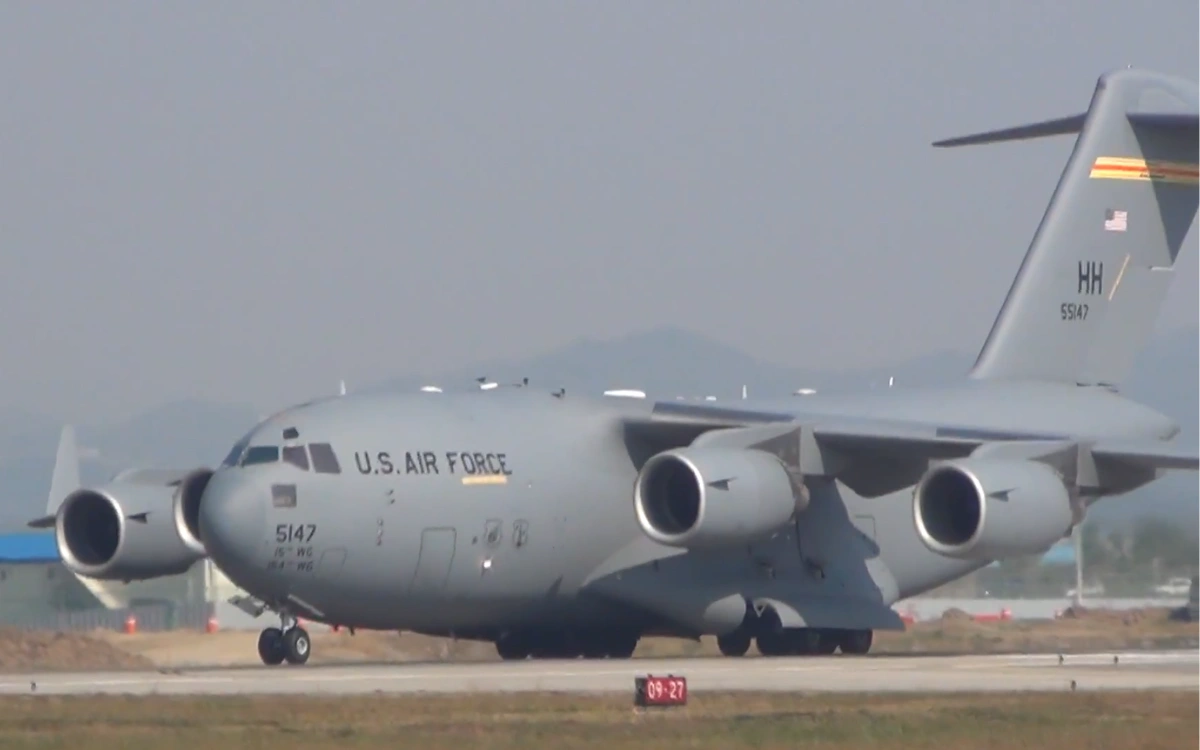
In remote environments or active operational areas where there are no service vehicles available, that ability can save valuable time and reduce vulnerability on the ground.
Watching a 265-tonne aircraft smoothly roll backwards still looks surreal, even years after the footage first appeared.
It feels like a glitch in the laws of physics, but in reality, it’s just clever engineering.
DISCOVER SBX CARS: The global premium car auction platform powered by Supercar Blondie