Man gave ChatGPT, Claude and Grok control of a real Toyota Corolla to see if they could actually drive the car and filmed it all
Published on Sep 28, 2026 at 11:40 AM (UTC-4)
by Alessandro Renesis
Last updated on Sep 30, 2026 at 8:12 AM (UTC-4)
Edited by
Mason Jones
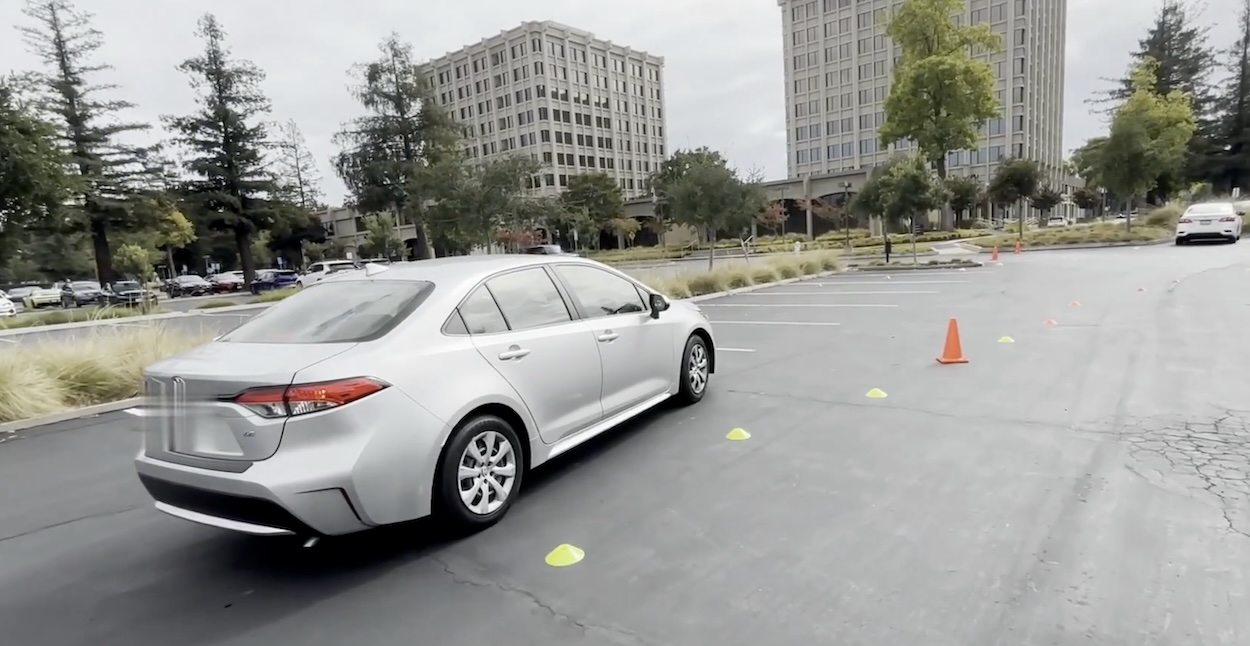

This guy tried giving ChatGPT, Claude and Grok full control of a real Toyota Corolla and the result was hilarious.
All three had their problems, but one model clearly handled the car better than the others.
But what’s interesting is that while all four AI models (he tried two different ones with ChatGPT) were chaotic, they all had their own individual issues when it came to operating a vehicle.
This is how he ‘hacked’ his Toyota Corolla
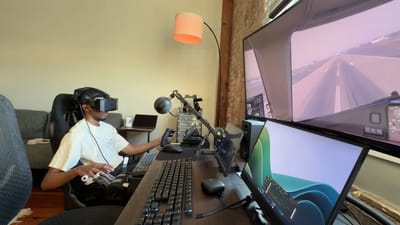
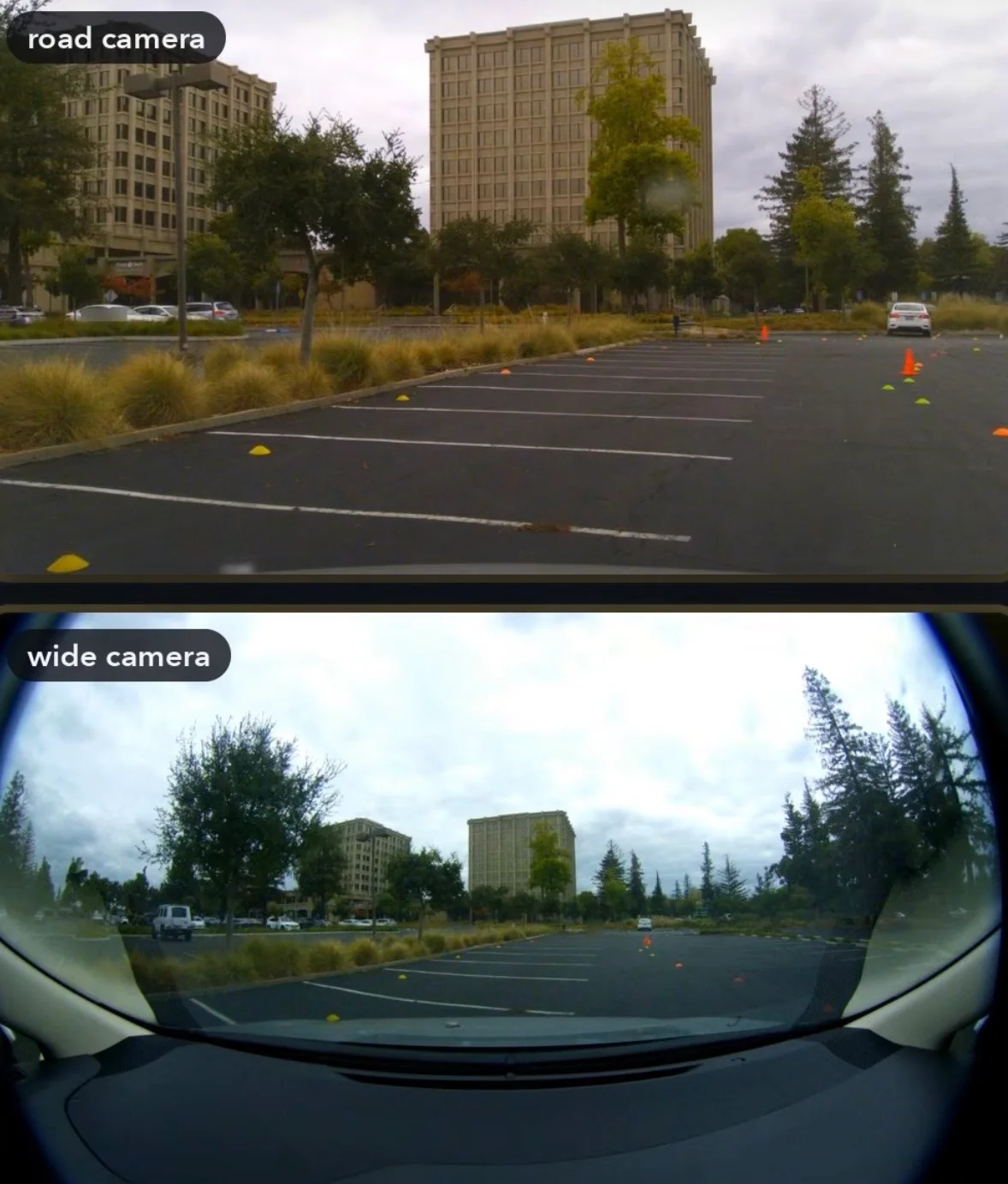
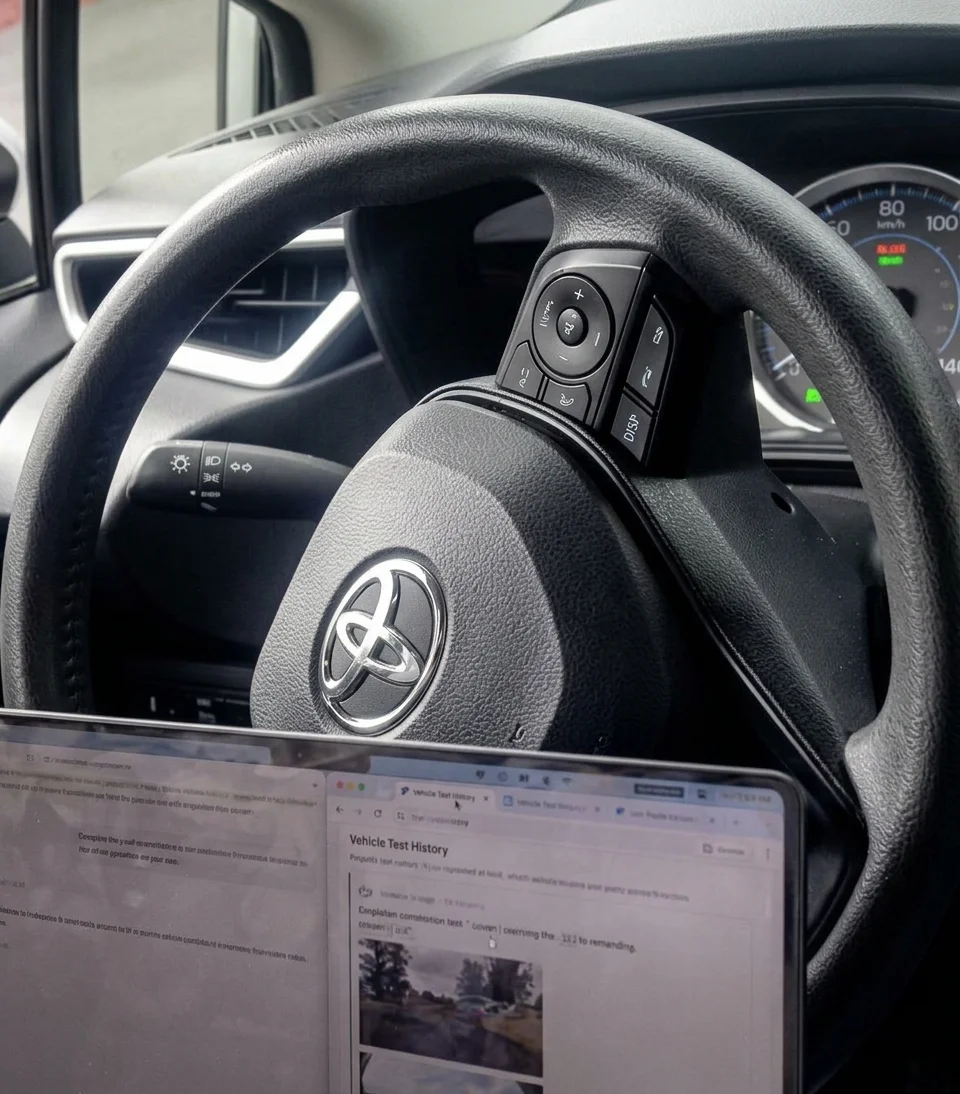
An engineer hooked up four AI large language models (LLMs) directly to the steering, throttle, and braking controls of a real Toyota Corolla in a controlled environment – an empty parking lot – to see how they’d behave.
He did it by hacking a standard Toyota Corolla and hooking its physical controls up to several major AI models
The thing is, these AI models are text-in, text-out prediction engines, and they aren’t built to ‘read’ the environment around them or make split-second braking decisions.
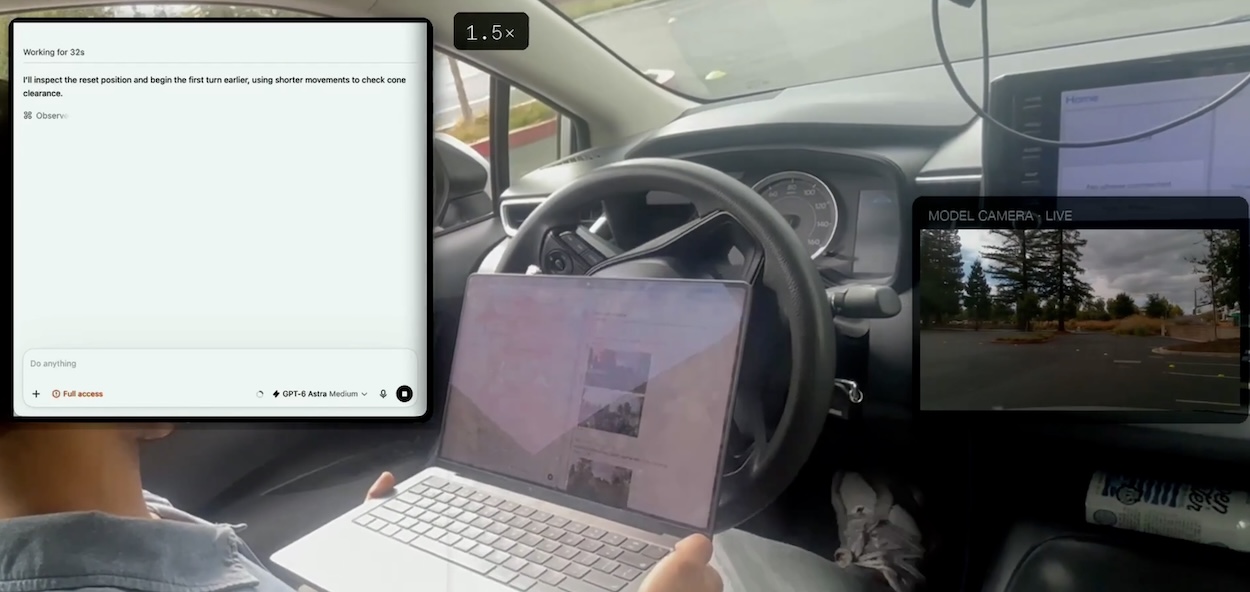
To fix this problem, Wighton set up a system where camera sensors feeds visual data – formatted as prompt context – to the models.
In turn, the LLMs returned text commands specifying steer angles, throttle percentages, and braking power.
Related
This is why the experiment largely failed
He put three major AI contenders to the test: OpenAI’s ChatGPT, Anthropic’s Claude, and xAI’s Grok.
They all performed pretty badly.
Driving requires millisecond-level reaction times, and processing visual input through these models means there’s always a latency gap measurable in seconds.
By the time the AI decides to ‘steer left 15 degrees,’ the car has already traveled dozens of feet off course.
Also, because these models lack 3D spatial awareness, they were really bad at judging distances to obstacles like cones or stop signs.
Also, the models would constantly issue contradictory commands – such as applying 100 percent throttle while simultaneously commanding full brake power.
The results
What’s interesting is that these four AI models failed in different ways.
ChatGPT, for example, was better at understanding what it was looking at, but too slow to react.
By contrast, Grok was almost the opposite because it was very quick to react, but not safe and accurate enough.
Claude was similar to ChatGTP: excellent at identifying potential hazards, but too hesitant.
We gave ChatGPT, Claude, and Grok control of a real Toyota Corolla 🚗, steering/gas/brakes, no human driving (just a foot over the brake).
— DrivingBench (@DrivingBench) September 21, 2026
Only one model was able to complete our entire driving course. Introducing DrivingBench. 🔥⌛️🏁 pic.twitter.com/HhukXrByus
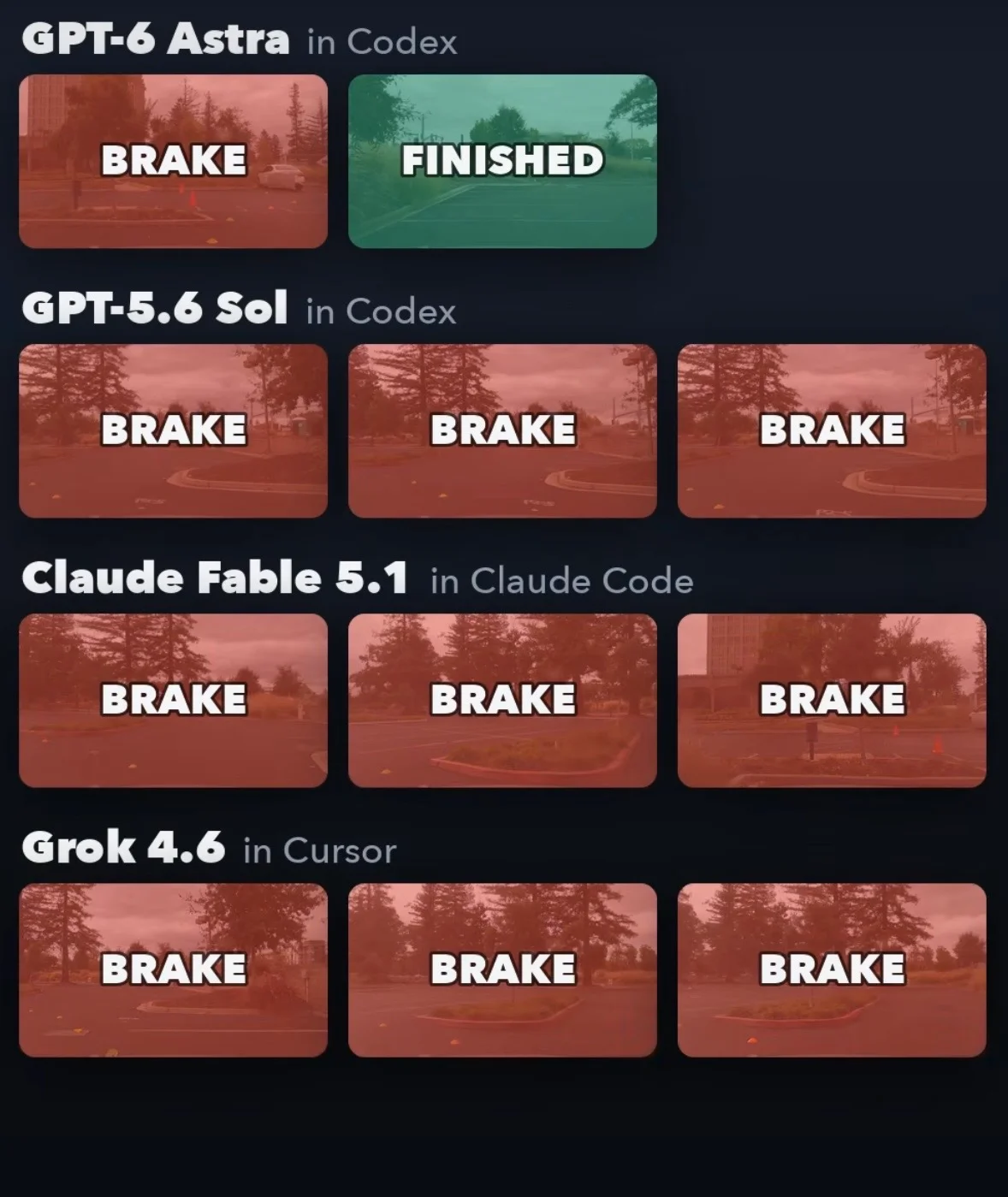
In the end, it’s fair to say that ChatGPT-6 Astra, one of two OpenAI’s models tested here, was the winner.
It did fail on the first attempt, but completed the course on the second attempt in 5 minutes and 22 seconds after ‘learning’ from its previous mistakes.
In second place, Claude Fable 5.1 completed 45% of the course.
Grok 4.6 was abandoned at 11% and GPT-5.6 Sol only managed 6% of the course.
So the takeaway is that autonomous driving engineers at Tesla and Waymo can rest easy for now.
Alessandro is an automotive journalist with 10 years of experience covering supercars, automotive history, emerging vehicle technology, and luxury transportation. He wrote the first article published on SupercarBlondie.com when the website launched in 2022 and has since built a reputation for insightful reporting across the automotive and transportation industries. His expertise is grounded in hands-on experience. Alessandro has driven every Tesla model ever produced, from the original Roadster to the Cybertruck, and regularly covers the latest developments in electric vehicles and automotive innovation. His passion for transportation extends beyond cars, he has even flown a Boeing 787 Dreamliner simulator in Addis Ababa, Ethiopia. His reporting spans everything from classic American muscle cars and rare automotive discoveries to luxury yachts, private aircraft, high-end watches, and cutting-edge vehicle technology. Known for his deep knowledge of automotive history and ability to uncover the stories behind iconic vehicles, Alessandro brings readers a blend of historical context, technical expertise, and first-hand experience.