China carmakers are in prime position to surpass Japan in global vehicle sales this year
Published on Dec 31, 2025 at 10:05 AM (UTC+4)
by Jason Fan
Last updated on Dec 31, 2025 at 10:05 AM (UTC+4)
Edited by
Jason Fan
Global vehicle sales are about to look very different, as China carmakers led by BYD close in on Japan’s decades-long reign at the top.
For the first time in more than 20 years, the global auto leaderboard is on the verge of a major reshuffle.
Industry data compiled from automaker disclosures and S&P Global Mobility figures suggest 2025 will be a breakthrough year for Chinese manufacturers.
If current trends hold, China will officially become the world’s largest vehicle-selling nation.
SBX CARS – View live supercar auctions powered by Supercar Blondie
EVs account for a significant portion of global vehicle sales
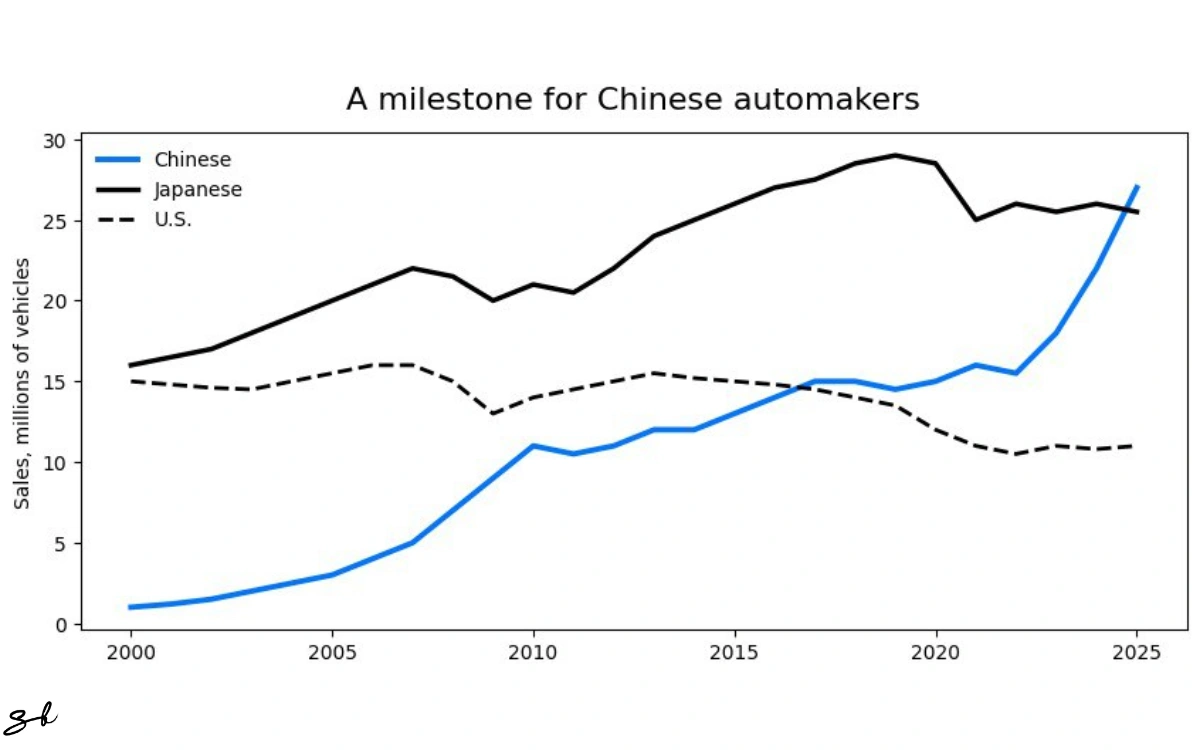
According to Nikkei Asia, China carmakers are projected to sell around 27 million vehicles globally in 2025, representing a 17 percent year-over-year increase.
That surge is enough to push them past Japanese brands, whose worldwide sales are expected to remain relatively flat at just under 25 million units.
What makes this shift even more remarkable is the speed at which it has happened.
As recently as 2022, Japan held an advantage of roughly 8 million vehicles, a gap that has effectively disappeared in just three years.
The engine behind China’s rise is electrification.

Electric vehicles and plug-in hybrids now account for nearly 60 percent of passenger vehicle sales in China.
This was driven by aggressive government support, rapid product development, and intense price competition.
Industry giant BYD sits at the center of this movement, using massive scale to cut costs and undercut rivals.
Its best-selling $8,000 car, the BYD Seagull EV, even has many US automakers worried, although it will likely be more expensive if it ever reaches the States.
It’s also expanding into new markets at a blistering pace, with its cheapest EV already available in Europe.

However, success at home has also created a new problem: excess capacity.
With domestic supply outstripping demand, Chinese automakers are increasingly turning outward.
Southeast Asia has emerged as a critical battleground, where Chinese vehicle sales are projected to jump 49 percent to around 500,000 units this year.
In Thailand, a market long dominated by Japanese brands, their share has fallen from roughly 90 percent five years ago to just 69 percent.
This highlights how quickly the balance of power is shifting, and why China is dominating global vehicle sales.
Not all China carmakers are benefiting
Japanese automakers aren’t standing still.
Companies like Toyota and Nissan are adopting Chinese-style cost controls, sourcing more components locally, and accelerating low-cost EV programs.
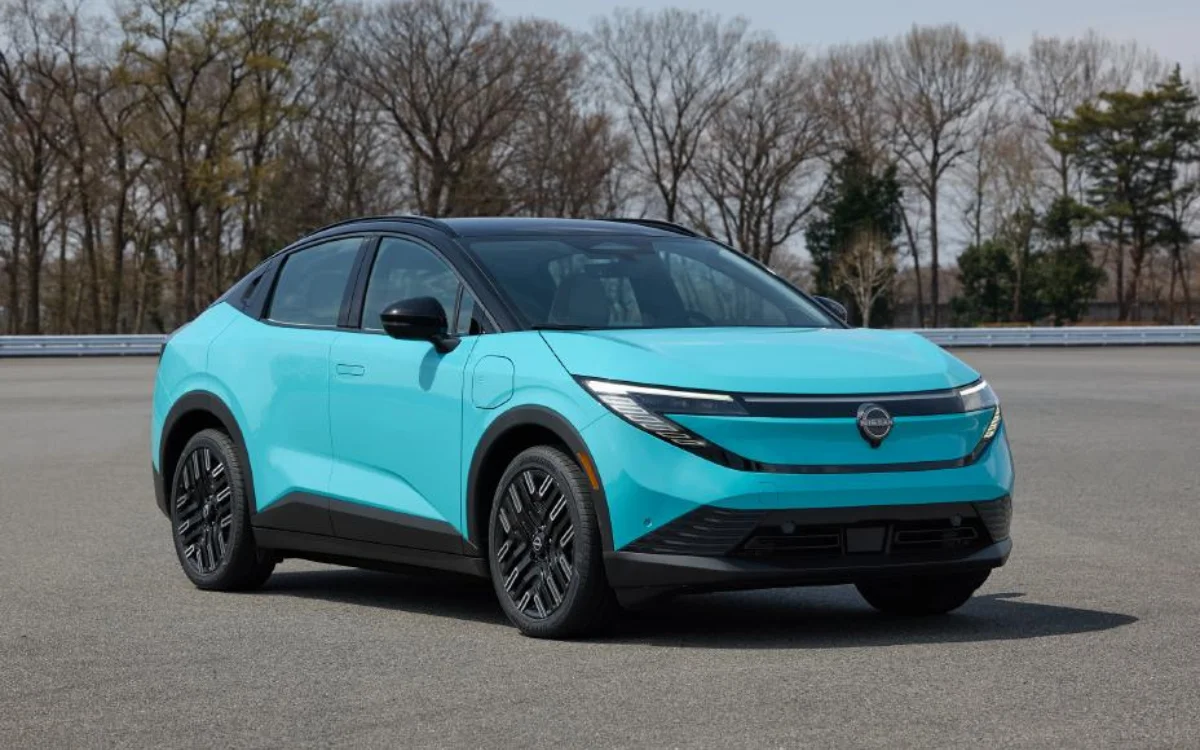
Offerings like the Nissan Leaf EV, which is the cheapest EV available in America, is clearly a response to China’s rising dominance.
For now, it is unclear whether this marks a permanent shift, but the momentum currently clearly favors China.
With prominent industry leaders like Ford CEO Jim Farley admitting that Chinese EVs made him feel ‘humbled’, China’s rise cannot be ignored.
However, China’s rapid growth in the EV industry isn’t without drawbacks.
With how intense competition is, only 15 of the 129 brands that’s currently operating are expected to survive by 2030.
So while the country’s dominance seems all but assured, the China carmakers themselves need to innovate to ensure that they’re the last ones standing.
DISCOVER SBX CARS: The global premium car auction platform powered by Supercar Blondie
Jason Fan is an experienced content creator who graduated from Nanyang Technological University in Singapore with a degree in communications. He then relocated to Australia during a millennial mid-life crisis. A fan of luxury travel and high-performance machines, he politely thanks chatbots just in case the AI apocalypse ever arrives. Jason covers a wide variety of topics, with a special focus on technology, planes and luxury.