World's largest 'super-cold air battery' is set to begin operating in the Gobi desert
Published on Jan 02, 2026 at 9:19 AM (UTC+4)
by Molly Davidson
Last updated on Jan 02, 2026 at 5:15 PM (UTC+4)
Edited by
Kate Bain
China is about to turn on the world’s largest ‘super-cold air battery’ in the middle of the Gobi Desert.
It doesn’t look like a battery, doesn’t use lithium, and doesn’t come in a neat little box.
Instead, it freezes air until it becomes a liquid and stores it in giant white tanks.
And it’s designed to serve a specific purpose.
DISCOVER SBX CARS – The global premium auction platform powered by Supercar Blondie
How China’s super-cold air battery actually works
The facility sits outside Golmud in China’s Qinghai province, right next to the Gobi Desert.
It’s called the Super Air Power Bank, and it was built by China Green Development Investment Group with help from scientists at the Chinese Academy of Sciences.
Here’s the simple version.
When there’s lots of extra power – mostly from the huge solar farm nearby – the system uses that electricity to compress air and cool it down to about -317°F.
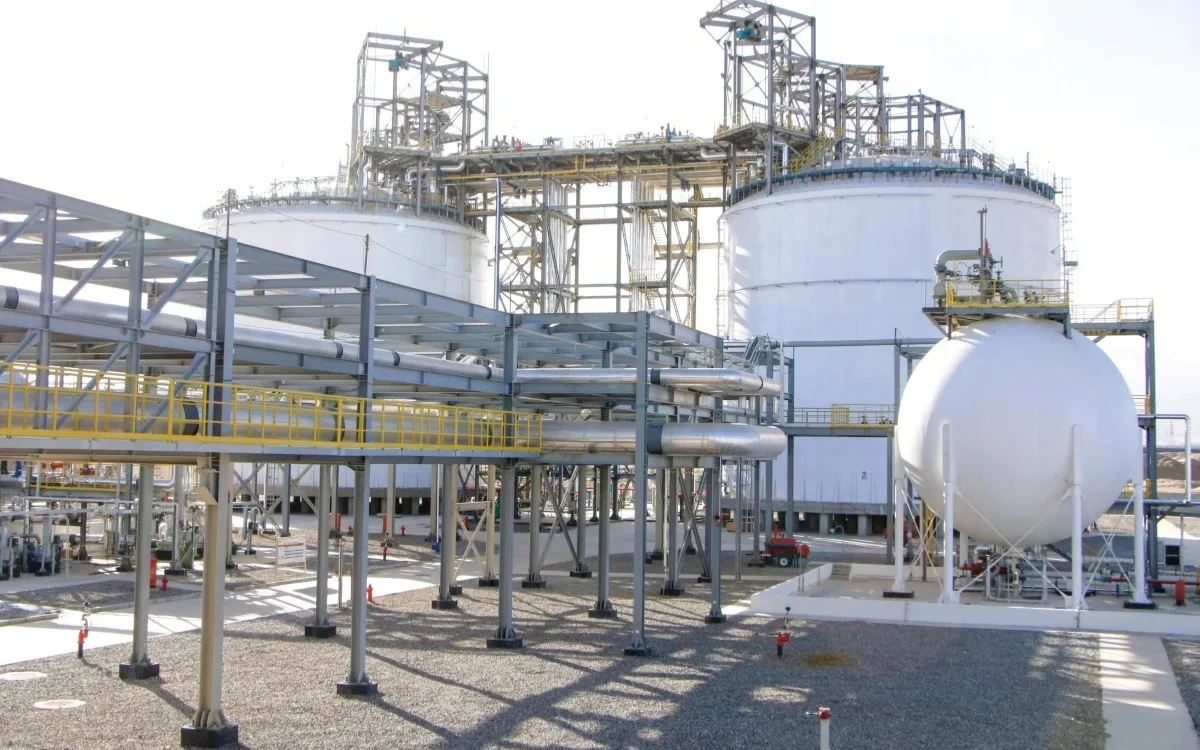
That’s so cold that the air turns into a liquid.
That liquid air gets stored in massive tanks, like a freezer for the grid.
Later, when electricity demand goes up, the liquid air is released.
As it warms back up, it expands like crazy – more than 750 times its original size.
That expansion spins turbines, and those turbines make electricity.
No fuel.
No burning.
Just physics doing its thing.
In one go, the system can deliver up to 600,000kWh of electricity and run for about 10 hours straight.
Over a year, it’s expected to produce around 180 million kWh – enough to power roughly 30,000 homes.
Why China built it and why people are arguing about it
This super-cold air battery exists for one main reason: renewable energy.
But renewable energy doesn’t always show up when people need it.
Solar power peaks during the day.
Wind can be random.
Sometimes there’s too much electricity and nowhere to put it.
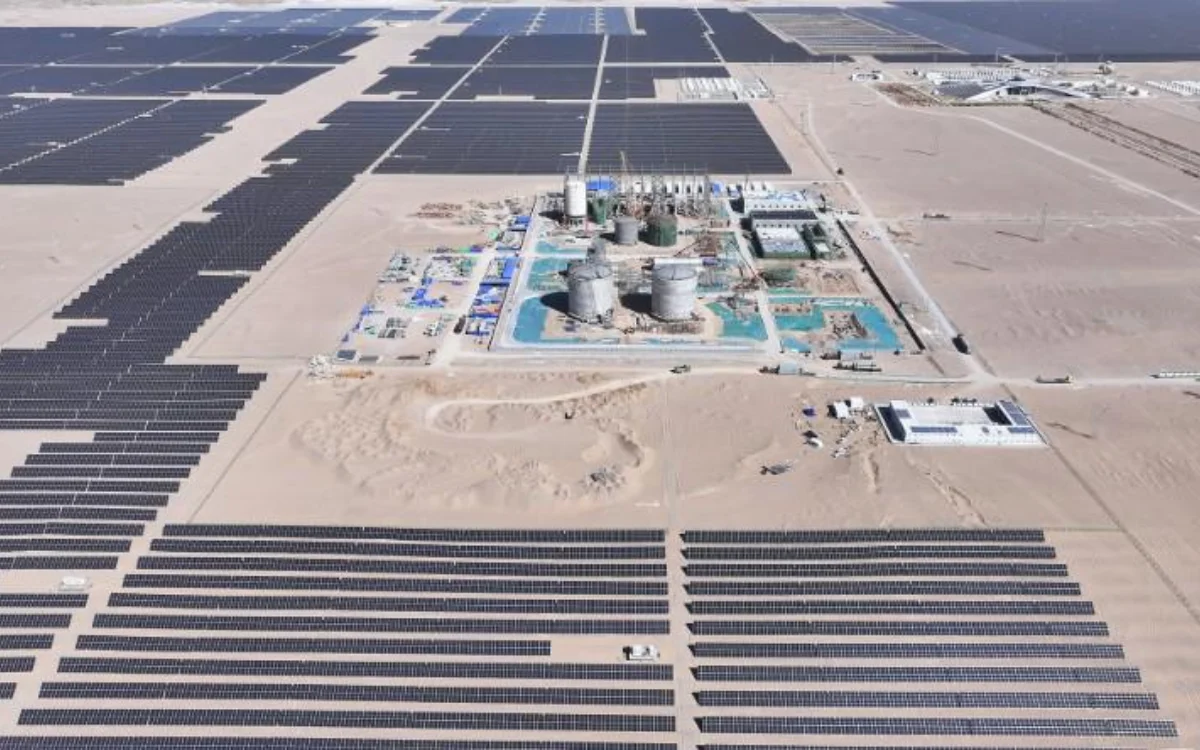
Instead of wasting that power, this system stores it for later.
Online, people have compared it to a steam engine flipped upside down.
Steam uses heat to expand and move turbines.
This uses extreme cold first, then normal warmth to get the same effect.
Not everyone’s impressed.
Some critics say it’s less efficient than regular batteries and loses a lot of energy during cooling.
Others compare it to older ideas, like molten salt storage, that never really took off.
Supporters push back by saying efficiency isn’t everything.
This setup doesn’t rely on rare materials, doesn’t degrade like chemical batteries, and is built to last decades.
Either way, this isn’t a lab experiment anymore.
It’s about to switch on.
And frozen air is about to start powering real homes.
DISCOVER SBX CARS: The global premium car auction platform powered by Supercar Blondie
With roles at TEXT Journal, Bowen Street Press, Onya Magazine, and Swine Magazine on her CV, Molly joined Supercar Blondie in June 2025 as a Junior Content Writer. Having experience across copyediting, proofreading, reference checking, and production, she brings accuracy, clarity, and audience focus to her stories spanning automotive, tech, and lifestyle news.