This Chinese EV lets you sit in the car and play racing games using the actual steering wheel
Published on Jan 03, 2026 at 9:03 PM (UTC+4)
by Jason Fan
Last updated on Dec 24, 2025 at 1:48 PM (UTC+4)
Edited by
Kate Bain

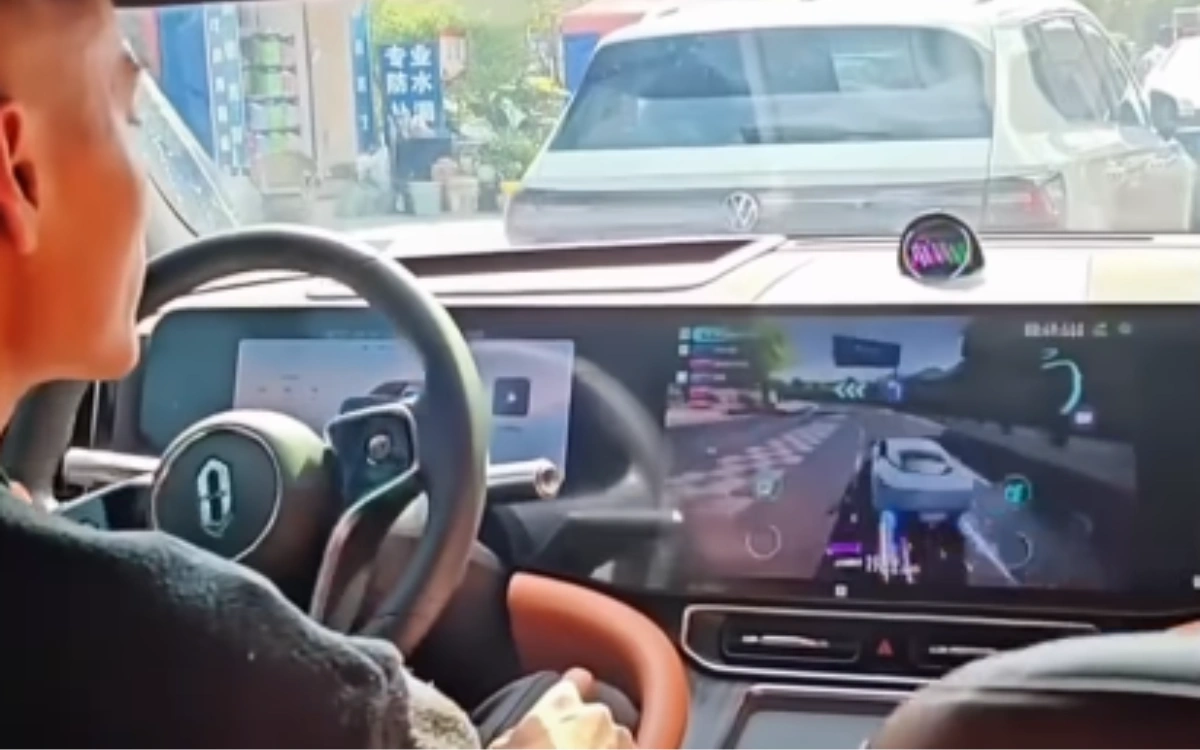
If you’ve ever wanted to sit behind the wheel and pretend you’re on a racetrack, the Huawei AITO M9 lets you play racing games using the actual steering wheel.
While the car is safely parked, the steering wheel and pedals can double as a game controller, turning the cabin into a full-scale driving simulator.
It’s yet another sign that modern cars are evolving into computers on wheels, rather than being machines that get you from place to place.
And while it might seem wholly unnecessary, it has the potential to change how we use our cars.
SBX CARS – View live supercar auctions powered by Supercar Blondie
Huawei vehicles are packed with crazy tech
The AITO M9 is the flagship SUV from AITO, a brand born out of a partnership between Huawei and Chinese automaker Seres.
Positioned as a luxury, tech-first family SUV, the M9 sits firmly in the same space as vehicles like the Li Auto L9 and Mercedes-Benz EQS SUV.
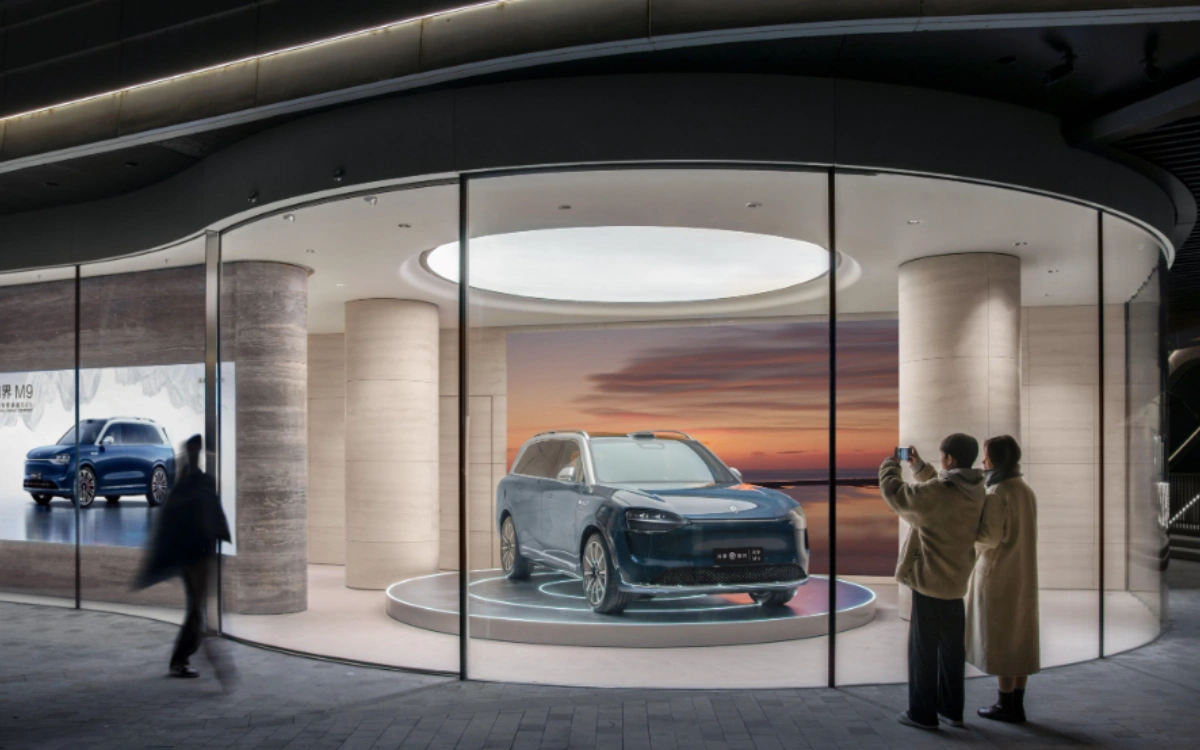
In fact, the car has been dubbed the ‘Chinese Mercedes-Maybach’, featuring automatic valet technology to match.
In China, prices start at around 470,000 yuan (roughly $65,000 USD) and climb toward 570,000 yuan ($78,000 USD), depending on the configuration.
Buyers can choose between a full battery-electric version and an extended-range electric (EREV) model.
The pure EV variant uses dual motors with all-wheel drive, producing around 390 kW (over 500 horsepower), and offering up to roughly 630 km (391 miles) of range on China’s CLTC test cycle.
The EREV version pairs electric motors with a small petrol engine that acts solely as a generator, pushing total driving range beyond 1,200 km (745 miles).
Performance is brisk too, with 0–60mph times in the mid-four-second range.
Inside, the Huawei AITO M9 leans heavily into Huawei’s tech expertise.
The cabin features multiple large digital displays, including a massive central infotainment screen, a passenger display, and a digital instrument cluster.
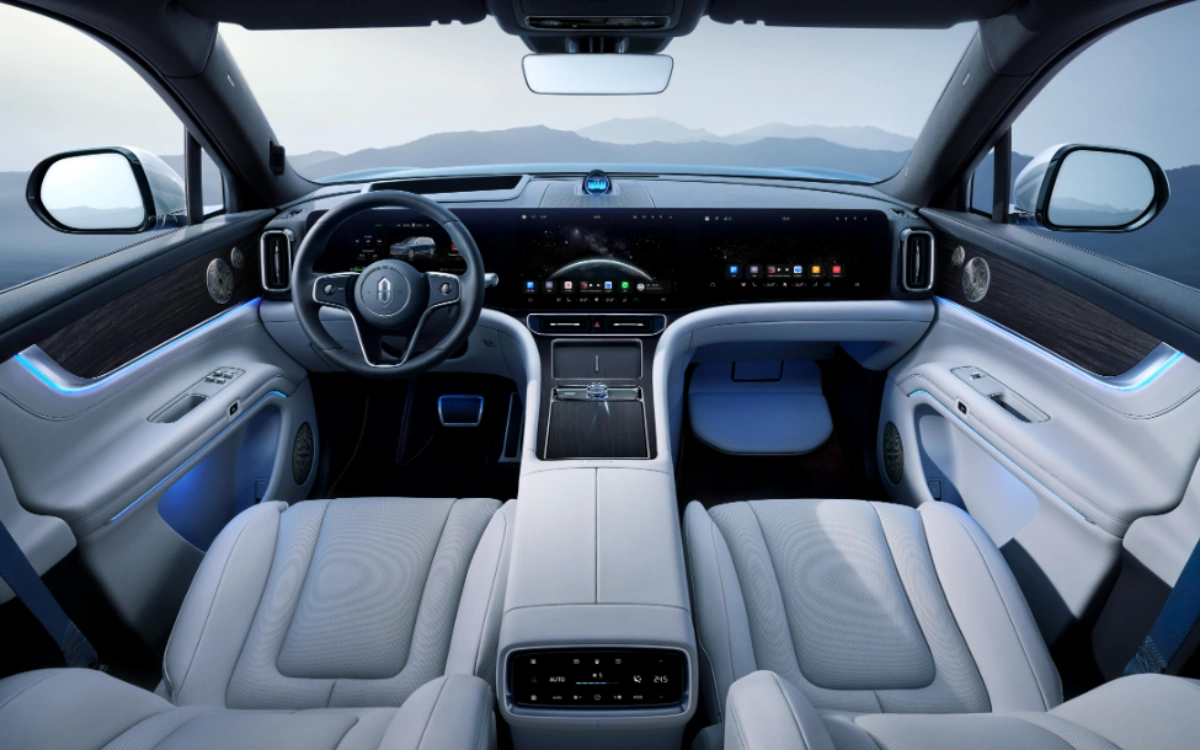
There’s also advanced driver-assistance hardware, including LiDAR, cameras, and radar, enabling high-level semi-autonomous driving features in supported areas.
Add premium materials, ambient lighting, and a high-end sound system, and it’s clear this SUV is designed to impress.
Not everyone’s a fan of the in-car racing game
Features like in-car racing games are also raising a bigger question: do modern cars have too many screens?
For some drivers, the idea of constant digital stimulation feels excessive, even distracting.
Touchscreens now control everything from climate settings to mirrors, and adding gaming to the mix can feel like overkill.
In fact, Bugatti goes out of its way to avoid screens as much as possible, although it finally put a screen in its latest car.
Others argue that as long as these features are locked out while driving, there’s no harm in turning a parked car into an entertainment lounge.
No matter which side of the fence you are on, there’s no denying how far cars have drifted from simple, distraction-free driving machines.
Whether cars like the Huawei AITO M9 are considered progress, or a step too far, depends on how much screen time you think is appropriate inside the car.
DISCOVER SBX CARS: The global premium car auction platform powered by Supercar Blondie