New digital twins of patients could revolutionize surgery and provide unique benefits
Published on Mar 10, 2026 at 12:08 PM (UTC+4)
by Claire Reid
Last updated on Mar 10, 2026 at 12:08 PM (UTC+4)
Edited by
Mason Jones
A doctor has been using ‘digital twins’ of his patients and believes that these virtual clones could guide surgery and help provide better outcomes.
The idea of a ‘digital twin’ might sound a little like something from an episode of Black Mirror.
However, Doctor John Pandolfino has been using them to model how patients will respond to surgery.
And he believes that the technology could help to revolutionize surgery in the future.
Click the star icon next to supercarblondie.com in Google Search to stay ahead of the curve on the latest and greatest supercars, hypercars, and ground-breaking technology
What are digital twins?
There have been some exciting developments when it comes to technology and medicine in recent years, including the potentially life-changing Neuralink implantable brain chips and a first-of-its-kind remote robotic surgery.
More recently, the director and chief of gastroenterology and hepatology at the Northwestern Medicine Digestive Health Institute, Dr. Pandolfino, has been using digital twins in his work.
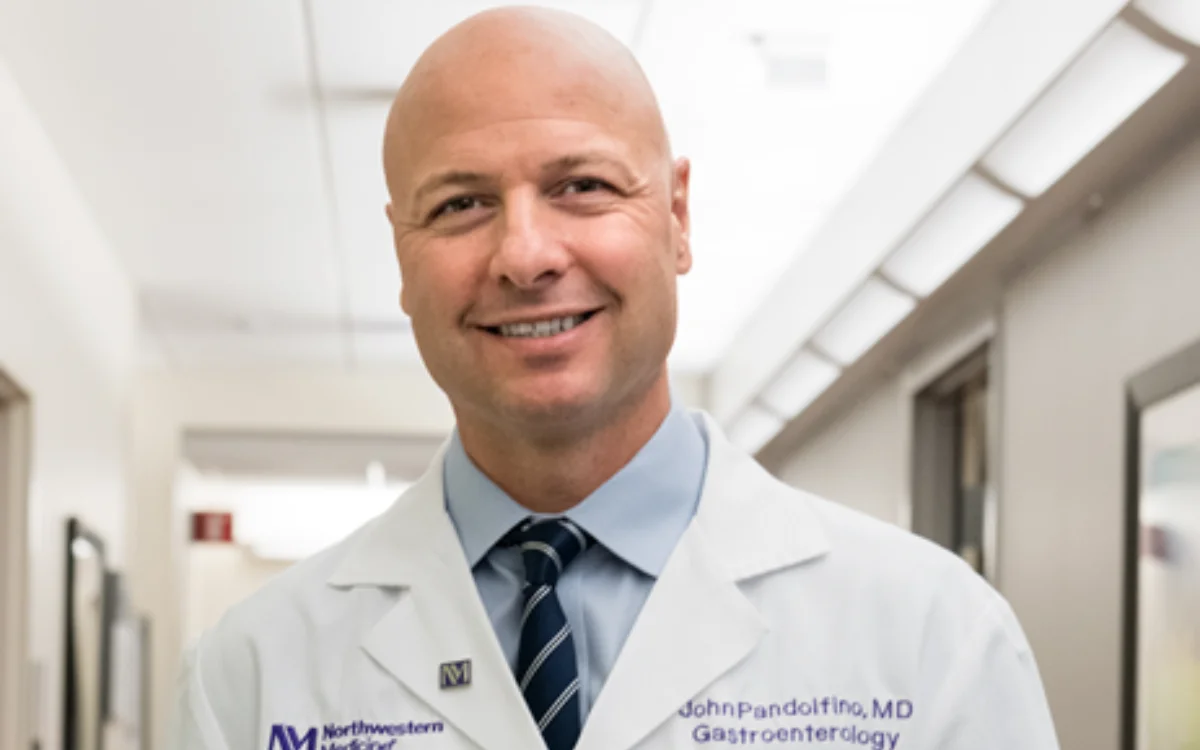
In an interview with Live Science, the doctor explained he was using the digital twins to model how patients with a swallowing disorder called achalasia would react to myotomy surgery, in which the esophagus is cut.
Unlike the concept of some ‘digital twins’, which involve gathering massive amounts of data from wearables and blood tests, the ones used by Dr. Pandolfino and his team are a little less complicated and instead use dimensionally accurate virtual models that can precisely mimic both the pressure and the motion of the esophagus.
The ‘digital twin’ virtual modeling allowed Dr. Pandolfino and his team to run ‘millions and millions of scenarios’ to determine which surgery would provide the best outcome for patients.
The team is now running a trial to look at two different types of surgery: the standard one and the one picked out by the ‘virtual esophagus’.
“We believe we’ve modeled the study so that they look equivalent, but we believe the new one will have less reflux and less diverticulum development,” he told Live Science.
How this model could be used across ‘all organ systems’ in the future
As well as having the potential to be revolutionary in esophageal surgeries, Dr. Pandolfino thinks that in the future, similar virtual modeling could be used across all organ systems in the body.
“The great thing is that this approach can be adopted across all organ systems - the bladder, the aorta, the left ventricle,” he told the publication.

“These processes, where you rely completely on the mechanics of transport, now, we can take this and apply it across those.”
He went on to say that, alongside being used for surgeries, it’ll also have value when it comes to prognostics.
And that it could also reduce the need to use animals for surgical testing.
DISCOVER SBX CARS: The global premium car auction platform powered by Supercar Blondie
With a background in both local and national press in the UK, Claire has covered a range of topics, including technology, gaming, and cryptocurrency, since joining the editorial team at Supercar Blondie in May 2024. Her ability to be first to a story has been integral to making SB’s coverage of scientific discovery, AI, and global tech news a slick 24/7 operation.