500,000 EV batteries from companies including Tesla, Ford and BMW tested in massive experiment lasting 5 years to see which ages the best
Published on Sep 06, 2026 at 12:09 PM (UTC-4)
by Ben Thompson
Last updated on Sep 06, 2026 at 12:09 PM (UTC-4)
Edited by
Mason Jones
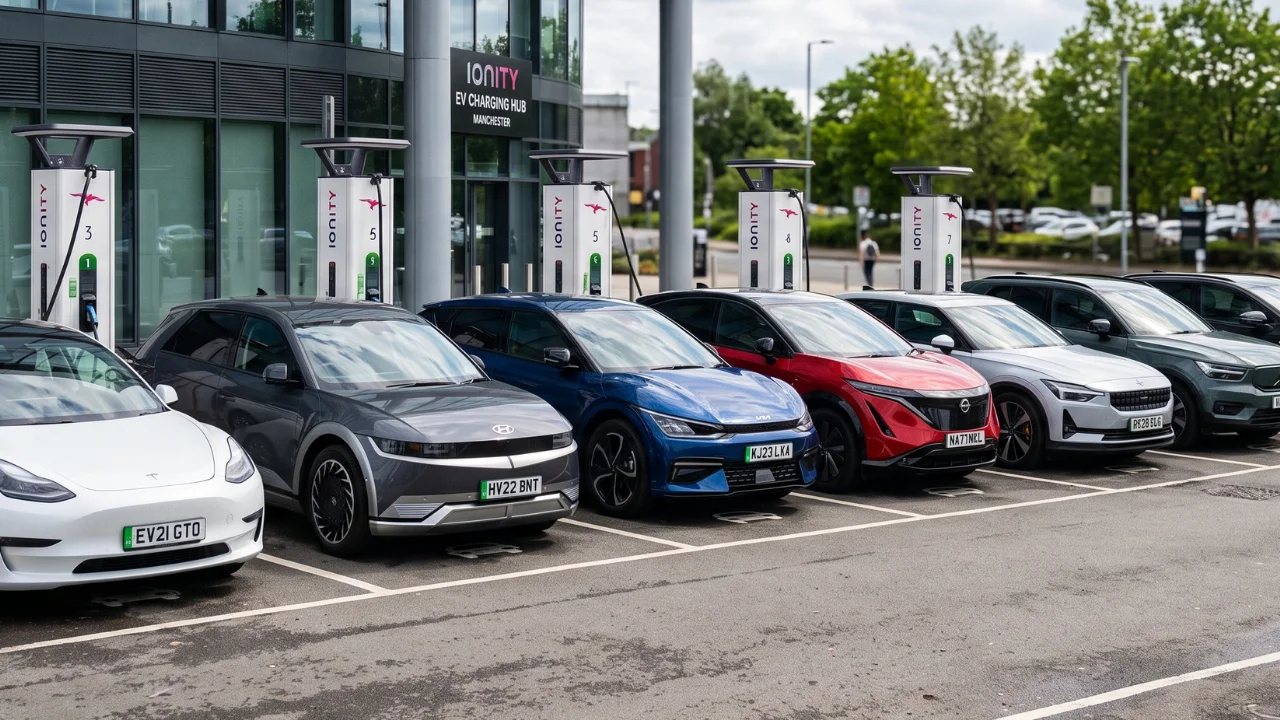

This study examined 500,000 EV batteries from a variety of companies to see which stood the test of time best over a 5 year period.
The study was undertaken by Aviloo, an EV battery diagnostics company, and included batteries from 20 popular electric car models.
Aviloo’s scores reflected the percentage of a battery’s original usable capacity that was still available by the end of the 5 year period.
So which brand came out of this test looking the best?
As EVs grow in popularity, different brands are constantly being compared
Over the last few decades, EVs have moved from the periphery to very much being part of the mainstream car scene.
And with that increased profile has come increased scrutiny.
Plenty of reports have been released examining practically every facet of these vehicles.
We’ve seen them being compared against gas cars in terms of reliability – both in 2023 and 2024, during which they made improvements.
Then there was the surprising study which revealed how often EV owners replaced their cars.
And then there was the test that subjected 12 EVs to a 1.25 million-mile test to see which batteries degraded the least.
In a similar vein, this study from Aviloo was looking at which EV batteries held up best after a 5 year period.
The cars were all measured at different points in their life journeys: after 50km, after 100km, and after 150km.
Related
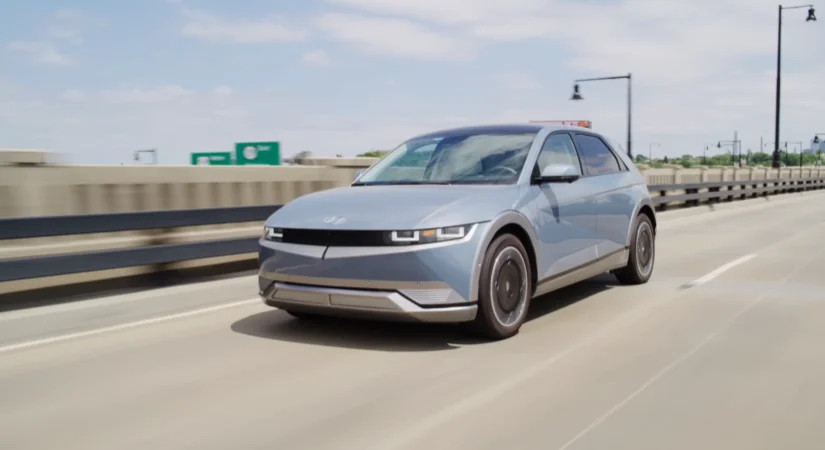
The top car at 50km: The Hyundai Ioniq 5
The Hyundai Ioniq 5 came out on top with the most capacity remaining, with a median battery capacity of 97 percent.
Following behind it was the Mercedes-Benz EQA, with a narrowly close score of 96.56 percent.
To be fair, all cars tested earned median scores above 90 percent, which is commendable.
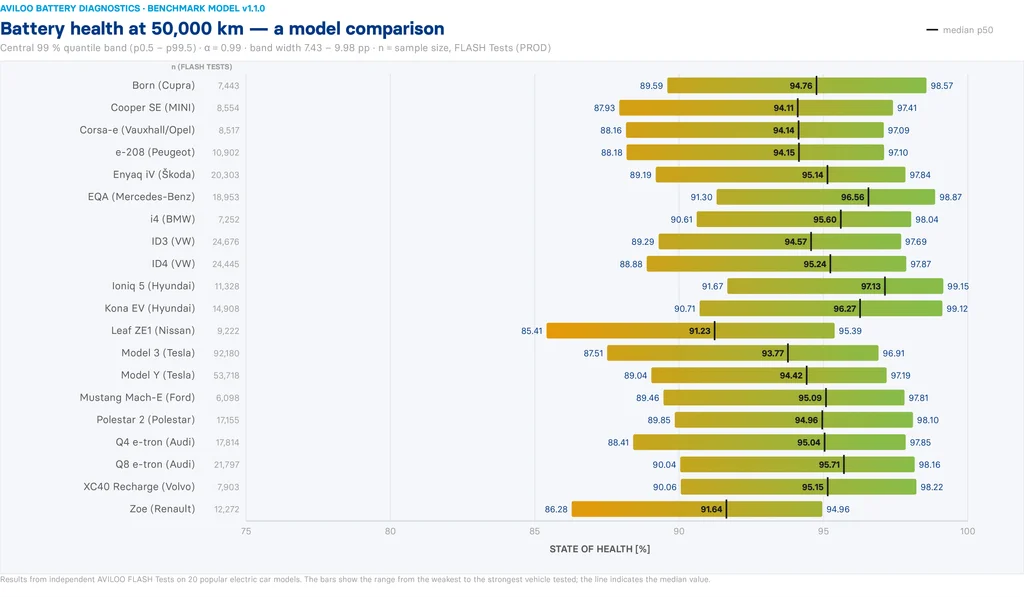
In fact, all but two of the cars – the Renault Zoe and the Nissan Leaf – scored 94 percent or higher.
Aviloo noted that vehicles with smaller batteries, like the Zoe and Leaf, tended to see faster rates of degradation, as they often require more top-ups to reach the same distances.
Those extra charging cycles take their toll over time.
The top car at 100km: The Hyundai Ioniq 5 once again
The Ioniq 5 remained in the top spot, with more than 95 percent capacity remaining.
Other high flyers included the EQA (95 percent), Hyundai Kona Electric (94.3 percent), BMW i4 (94.3 percent), and Ford Mustang Mach-E (93.45 percent).
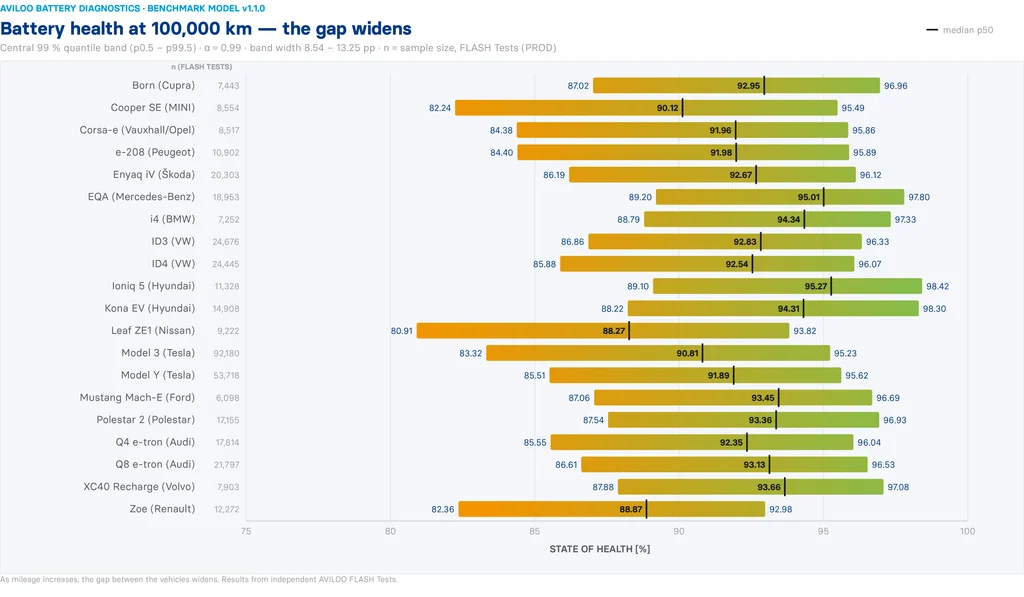
Excluding the previous outliers, all cars tested here scored at least 90 percent.
The top car at 150km: The Mercedes-Benz EQA snags the top spot – by a hair
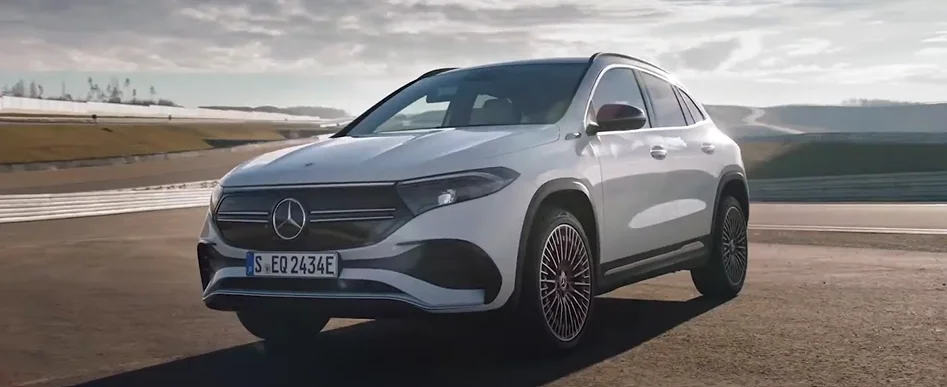
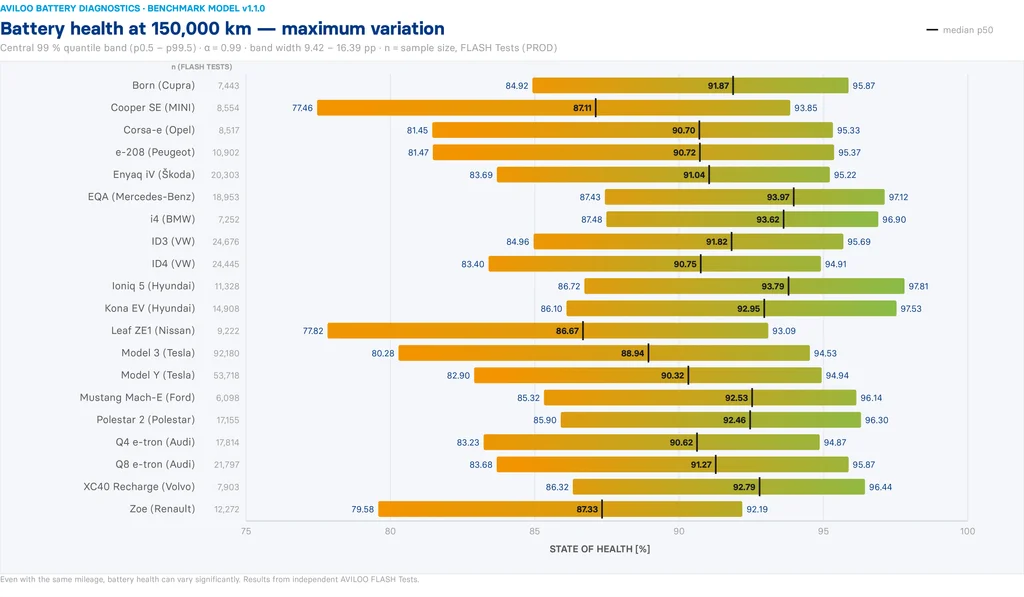
Talk about a tight race – the Mercedes-Benz EQA won by 0.18 percent points, at 93.97 percent.
By comparison, the Ioniq 5 was knocked down into second place at 93.79 percent.
It’s practically a tie, but it’s still a technical win for the EQA.
Following in close succession was cars like the i4 (93.62 percent), Kona EV (92.95 percent), and Volvo XC40 Recharge (92.79 percent).
It just goes to show that there’s stiff competition among EV batteries.
Ben joined Supercar Blondie in February 2025 after being published by international organizations including LADbible, The Sun, the New York Post, and the Daily Mail. He covers supercars, rare and collectible vehicles, aviation, luxury assets, and the fascinating people behind them. His reporting has explored everything from seven-figure supercars and historic Ferrari collections to unusual aircraft adventures and extraordinary automotive discoveries from around the world. Ben has also gained first-hand insight into vehicle craftsmanship and customization, including visiting specialist workshops to see bespoke vehicles up close.