Ferrari reveals the inner workings of its first EV, showing what lies beneath as we await the exterior reveal
Published on Oct 10, 2025 at 8:30 AM (UTC-4)
by Alessandro Renesis
Last updated on Oct 10, 2025 at 11:20 AM (UTC-4)
Edited by
Emma Matthews
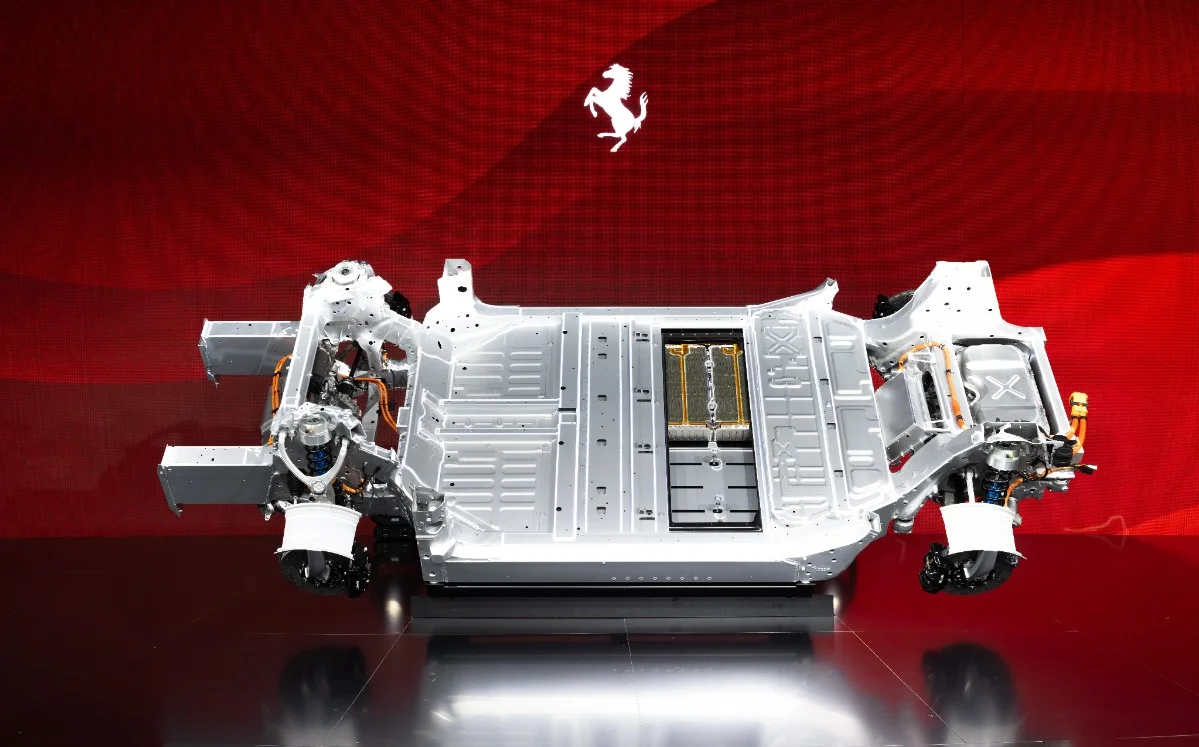

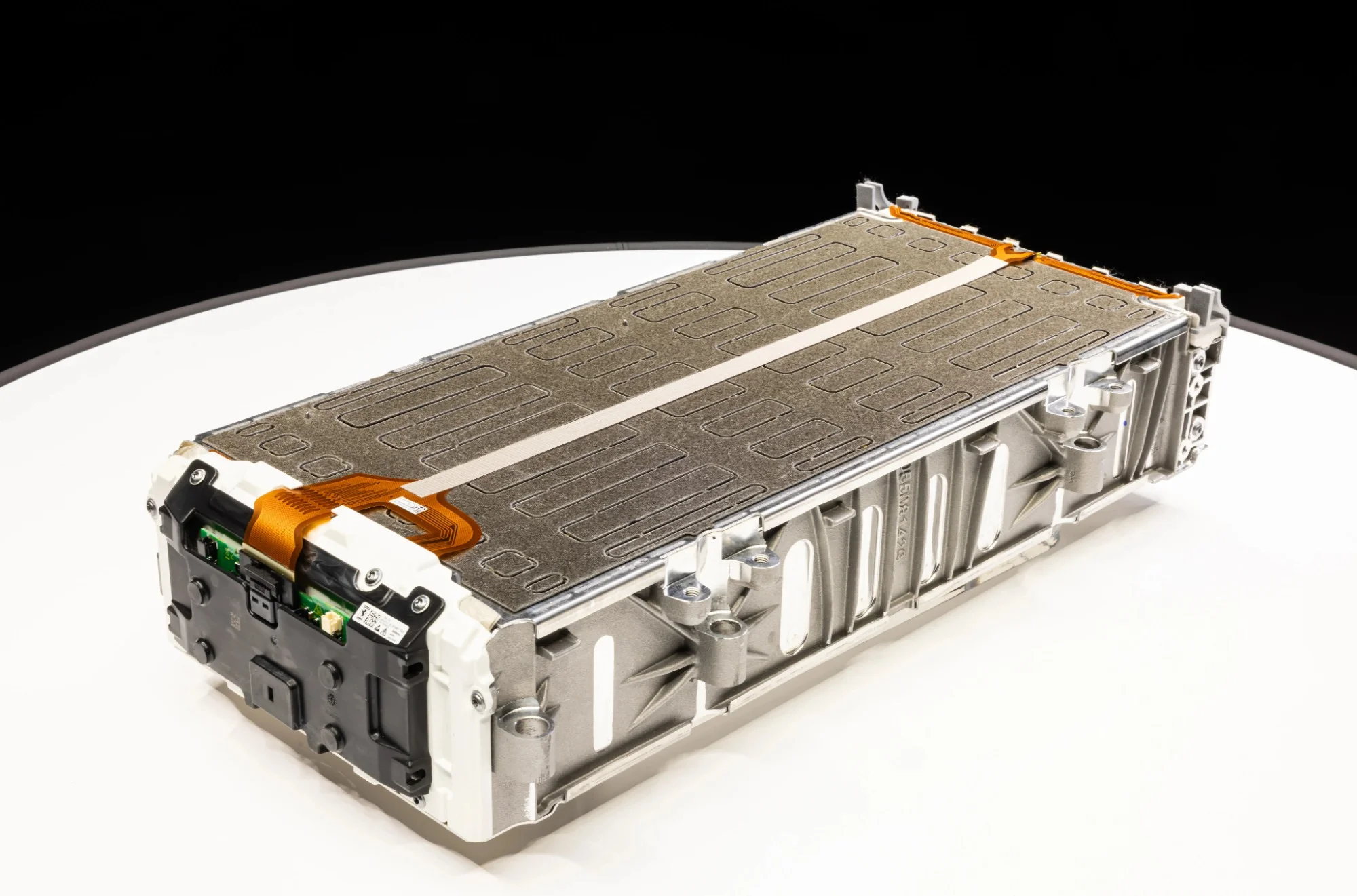
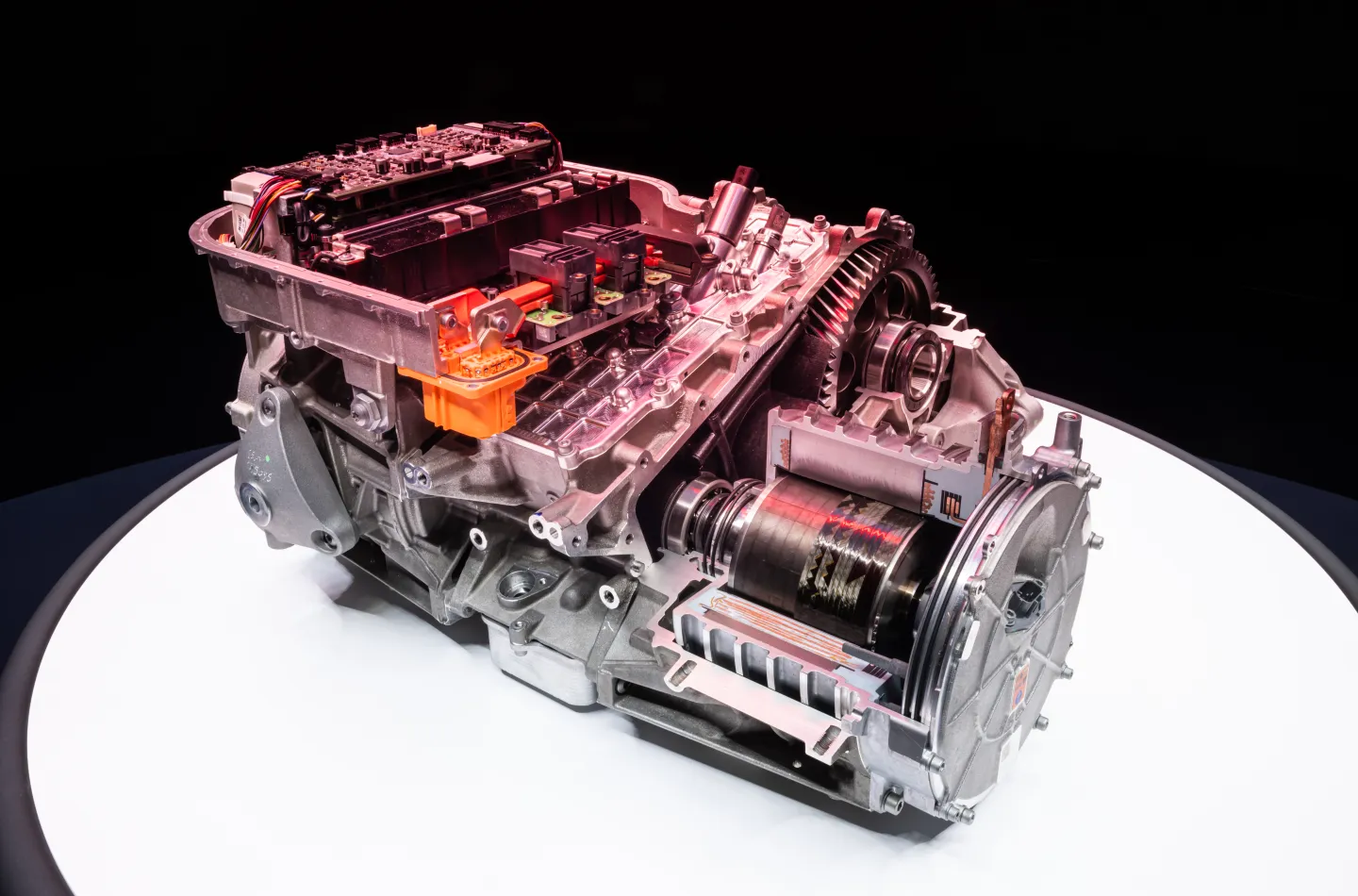
Ferrari just revealed the battery pack, powertrain, and chassis of the upcoming Ferrari Elettrica.
Everyone was expecting to see the supercar, or at least a teaser.
This, though, is all we got.
But there’s one thing that Ferrari did that no one else thought of.
DISCOVER SBX CARS: The global premium car auction platform powered by Supercar Blondie
This’ll be a sizable vehicle
Ferrari’s CMD (Capital Markets Day) was something akin to a ‘soft launch’ event for the Elettrica.
There are a few things we learned, but even more things we still don’t.
For starters, we don’t know what the new car looks like, but we can hazard a guess.
We’ve seen the spy shots and, based on those, this doesn’t look like a supercar in the conventional sense of the word.
It’s around 5 meters long and it has roughly the same wheelbase as a Range Rover Sport.
For reference, the Ferrari Elettrica has a wheelbase of 296cm, whereas the Sport has a wheelbase of 299cm.
With that in mind, it could potentially be a sedan or an SUV.
The supercar manufacturer also revealed a few key details about the chassis and powertrain, both of which are fully built and developed in-house.
The battery pack is built right into the chassis, and it provides 330 miles of range.
In terms of performance, its 1,000hp powertrain should propel it from 0-62mph in 2.5 seconds, and give it a top speed of 310kph (192mph).
Related



This is what Ferrari did that no one else thought of
Fake engine noise for EVs doesn’t really work.
People who want EVs don’t really care, and people who want internal combustion generally want a V8, not an electric engine that sounds like V8.
This is why Ferrari did something completely radical.
Instead of creating artificial noises, the Italian automaker decided to amplify existing sounds coming from the powertrain.
The company has created and patented a system that uses sensors to capture vibrations coming from components moving inside the engine, the chassis, and the battery pack.
These sounds are then ‘played’ via the exhaust system.
No one has any idea how it’s going to work yet, because they explained it, but didn’t provide a sample.
It sounds like a hit-or-miss idea, but if it works, other manufacturers will probably do the same thing.
Alessandro is an automotive journalist with 10 years of experience covering supercars, automotive history, emerging vehicle technology, and luxury transportation. He wrote the first article published on SupercarBlondie.com when the website launched in 2022 and has since built a reputation for insightful reporting across the automotive and transportation industries. His expertise is grounded in hands-on experience. Alessandro has driven every Tesla model ever produced, from the original Roadster to the Cybertruck, and regularly covers the latest developments in electric vehicles and automotive innovation. His passion for transportation extends beyond cars, he has even flown a Boeing 787 Dreamliner simulator in Addis Ababa, Ethiopia. His reporting spans everything from classic American muscle cars and rare automotive discoveries to luxury yachts, private aircraft, high-end watches, and cutting-edge vehicle technology. Known for his deep knowledge of automotive history and ability to uncover the stories behind iconic vehicles, Alessandro brings readers a blend of historical context, technical expertise, and first-hand experience.