Man welds four cars together into one of the weirdest automotive creations of all time and actually drives it
Published on Aug 21, 2026 at 10:06 PM (UTC-4)
by Alessandro Renesis
Last updated on Aug 21, 2026 at 10:06 PM (UTC-4)
Edited by
Mason Jones

A long time ago, the Top Gear team glued two cars together to create a two-sided car.
They called it the Salfaab – or Salfa Romeab – and it was a ‘blend’ of an Alfa Romeo and a Saab.
It was a crazy idea, but it worked.
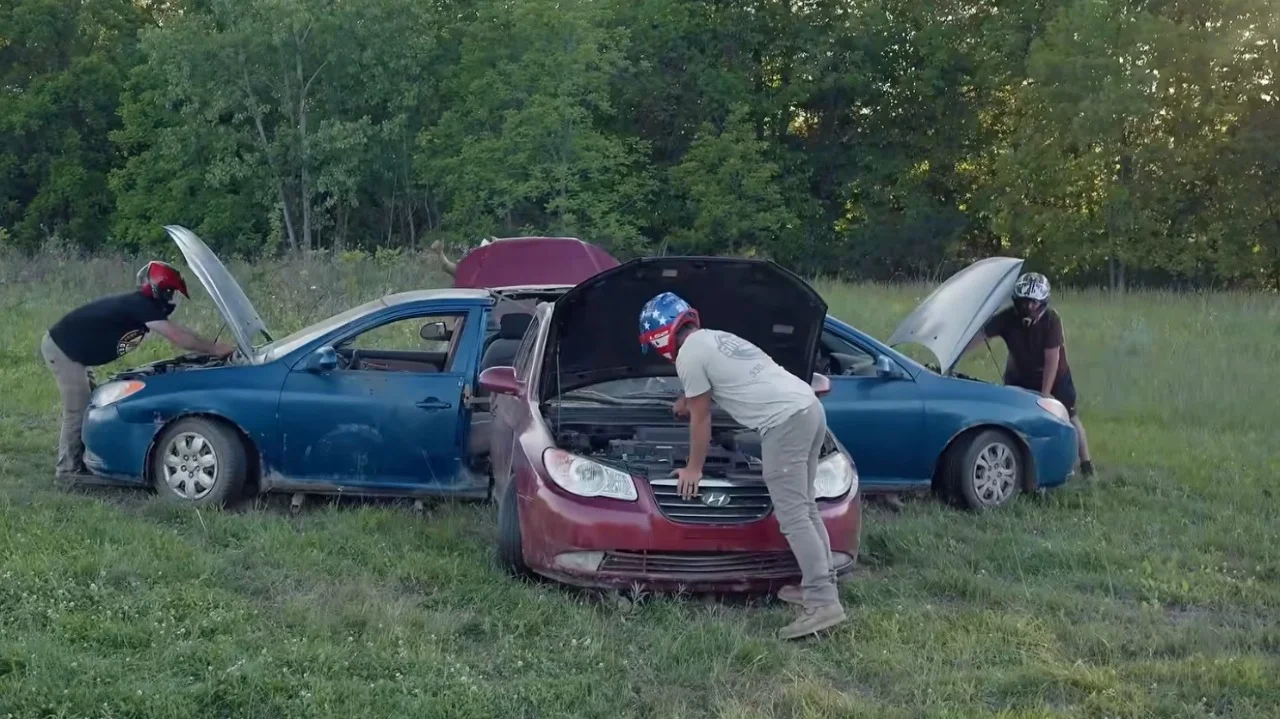
20 years later, these YouTubers have gone further: they have glued four cars together.
These are the four ‘donors’ for this four-sided car
All those years ago – in 2007 – James May built a two-sided car as part of the Top Gear ‘homemade’ Limo Challenge.
The idea was to create a DIY stretch limo, and all three were pretty mad.
Jeremy Clarkson built a stretch limo out of a Fiat Panda, Richard Hammond made a stretch limo from a convertible MG, and James built a two-sided car that was long enough to be called a limousine.
The car in question used the front end of an Alfa Romeo 164 and, at the back, the front end of the Saab 9000.
This meant that James ended up with a car with two sets of front wheels and two sets of pedals, two hoods, two steering wheels, and two engines.
Amazingly, it worked just fine.
In fact, it worked better than both the MG and the Fiat Panda, and the only reason he didn’t win the challenge was that his proverbially bad sense of direction betrayed him.
Interestingly, the team behind the Airborne Entertainment YouTube channel chose a different path.
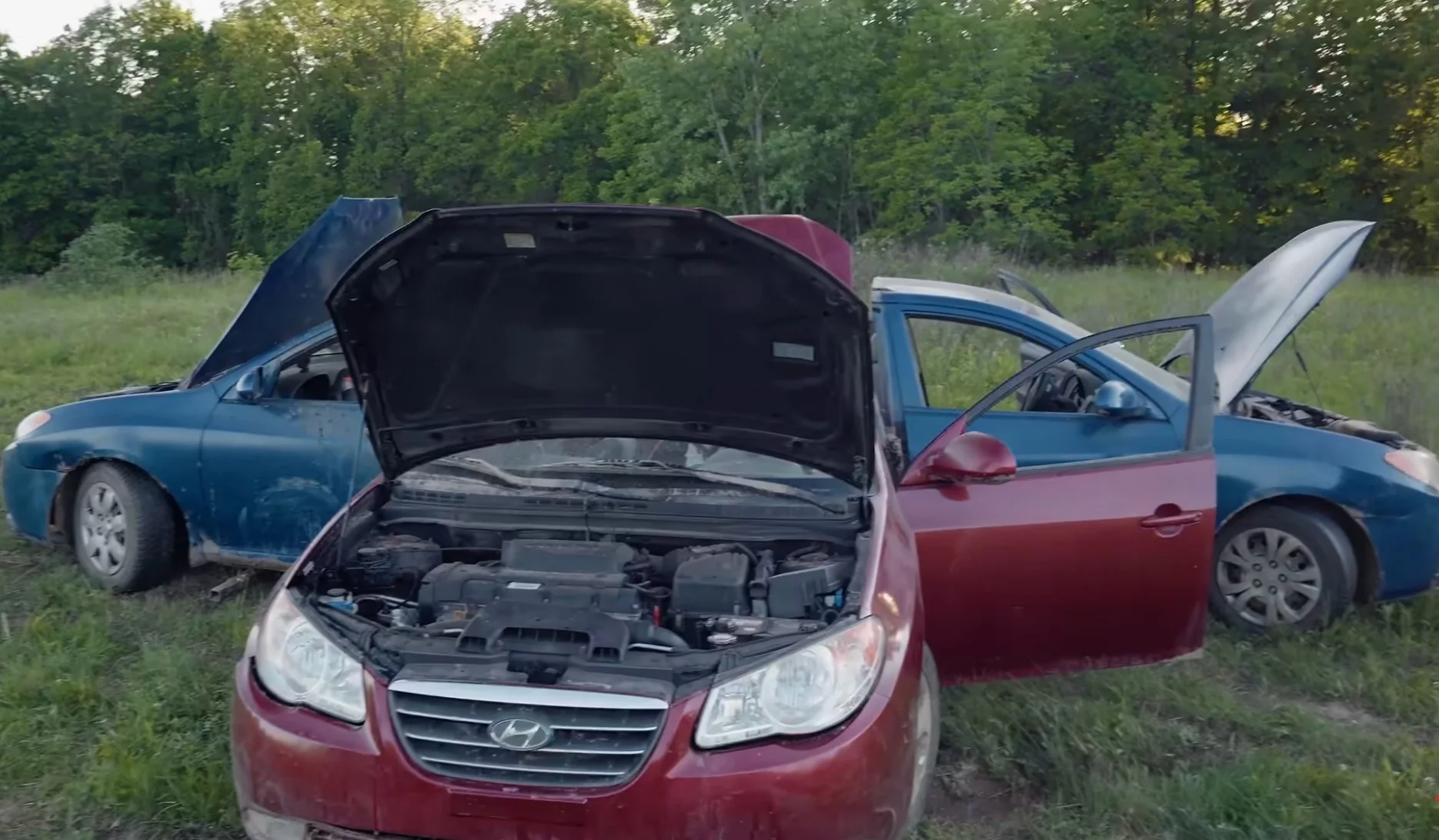
Rather than using different models for their DIY build, they used four identical 2008 Hyundai Elantras.
They did it because they’d already created a two-sided car with two Elantras, and it made sense to add two more rather than going crazy with different models.
Also, the Elantra is a no-nonsense sedan that’s very easy to find in the used market, and also very cheap – so it was a win-win.
Related
This is how they welded all four cars together
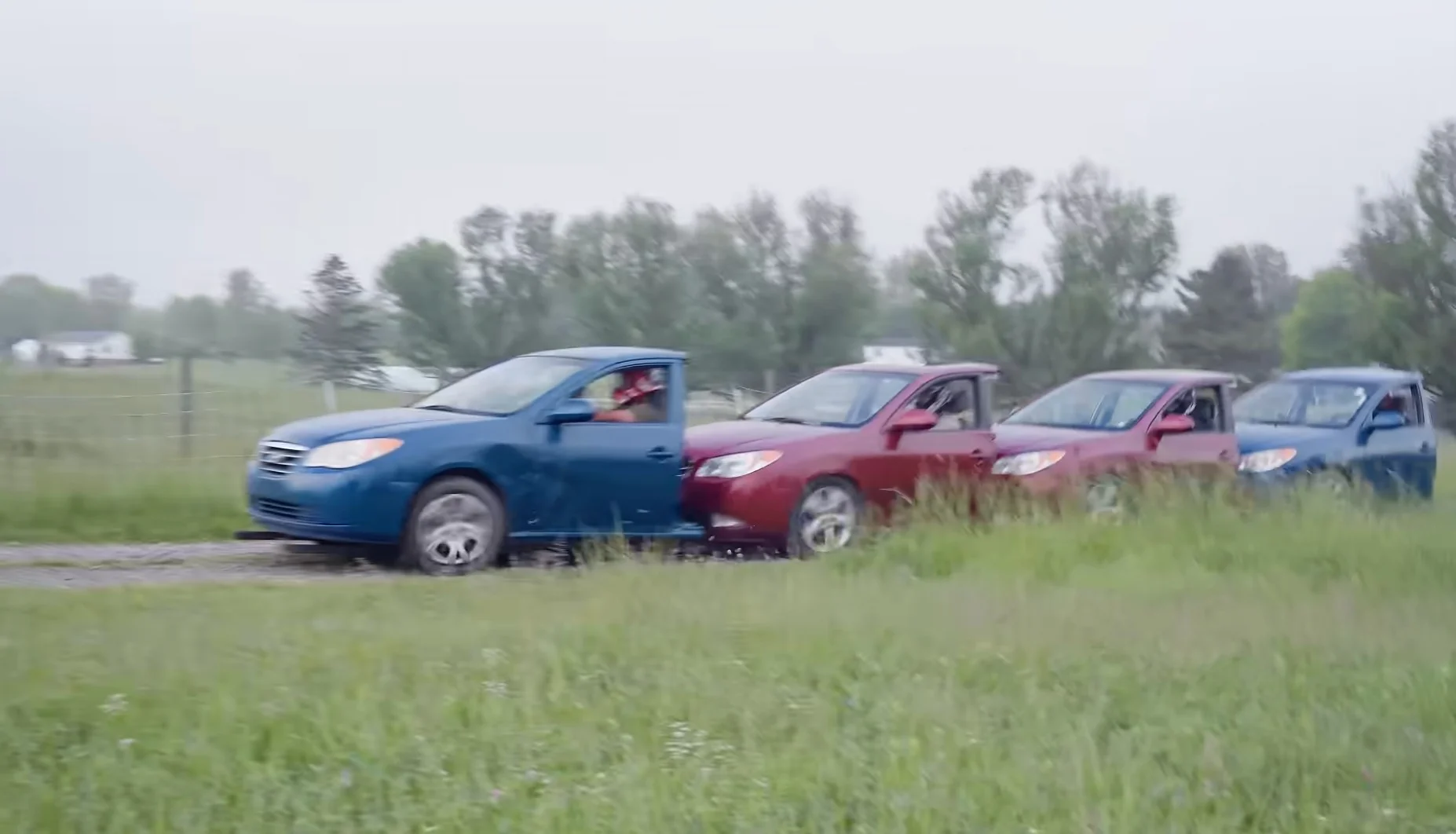
The team used four identical Elantras, two of which were already in their garage.
Not long ago, they’d bought two Elantras to build a two-sided car – like the one on Top Gear – and they figured it’d make sense to use it for this experiment.
At that point, they decided two buy two more Elantras, and then cut the ones they already had in two halves.
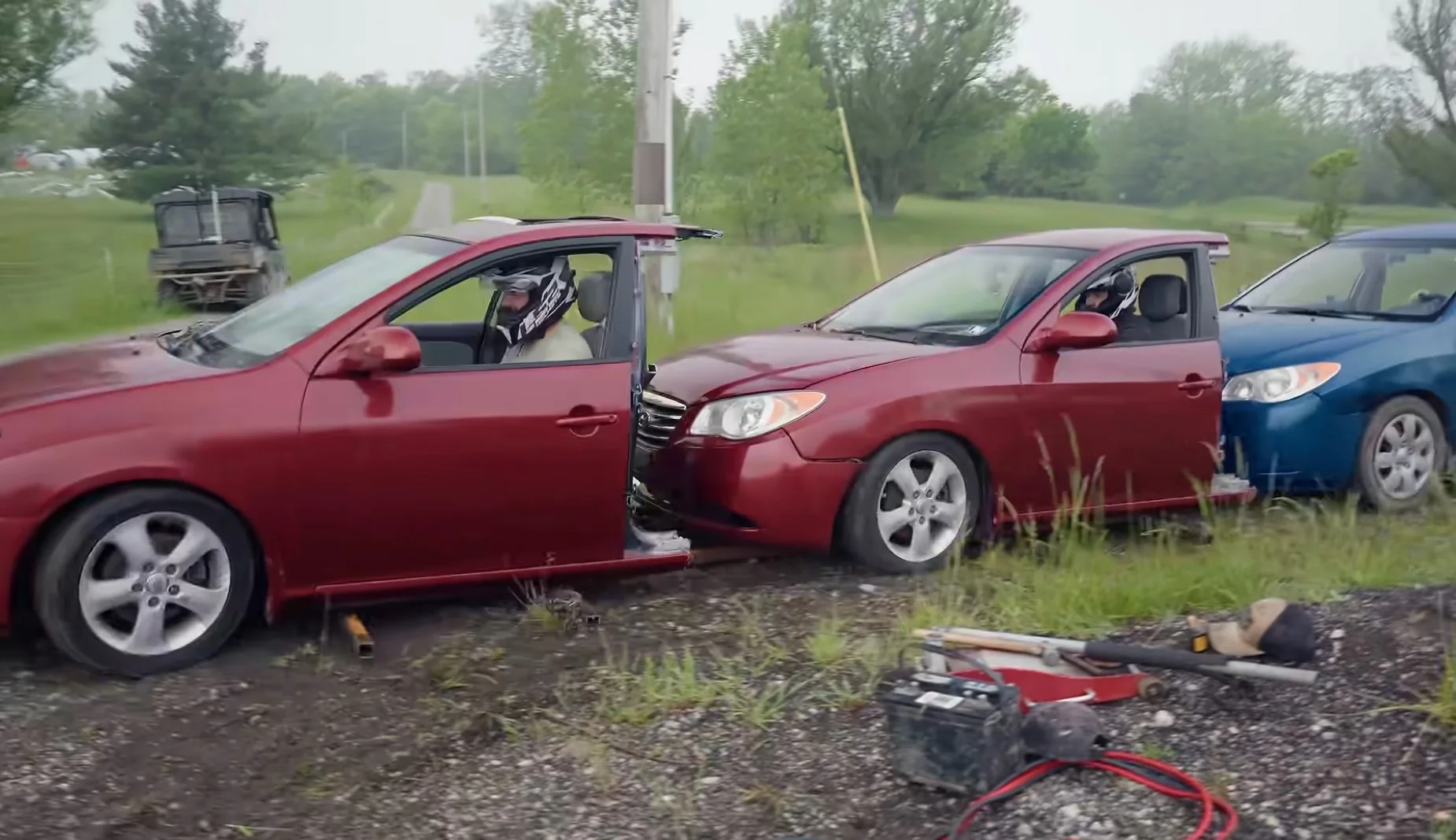
Each car was surgically cut in half to isolate the front engine, drivetrain, and driver compartment, leaving four functional ‘front-half’ units that could be welded together.
In theory, each front end came with its own steering wheel, pedals, seats, wheels, and engines.
The crazy part was that the car remained drivable on all four sides not just in theory but also in practice.
It all went well, but there were two minor catches, and then a massive one.
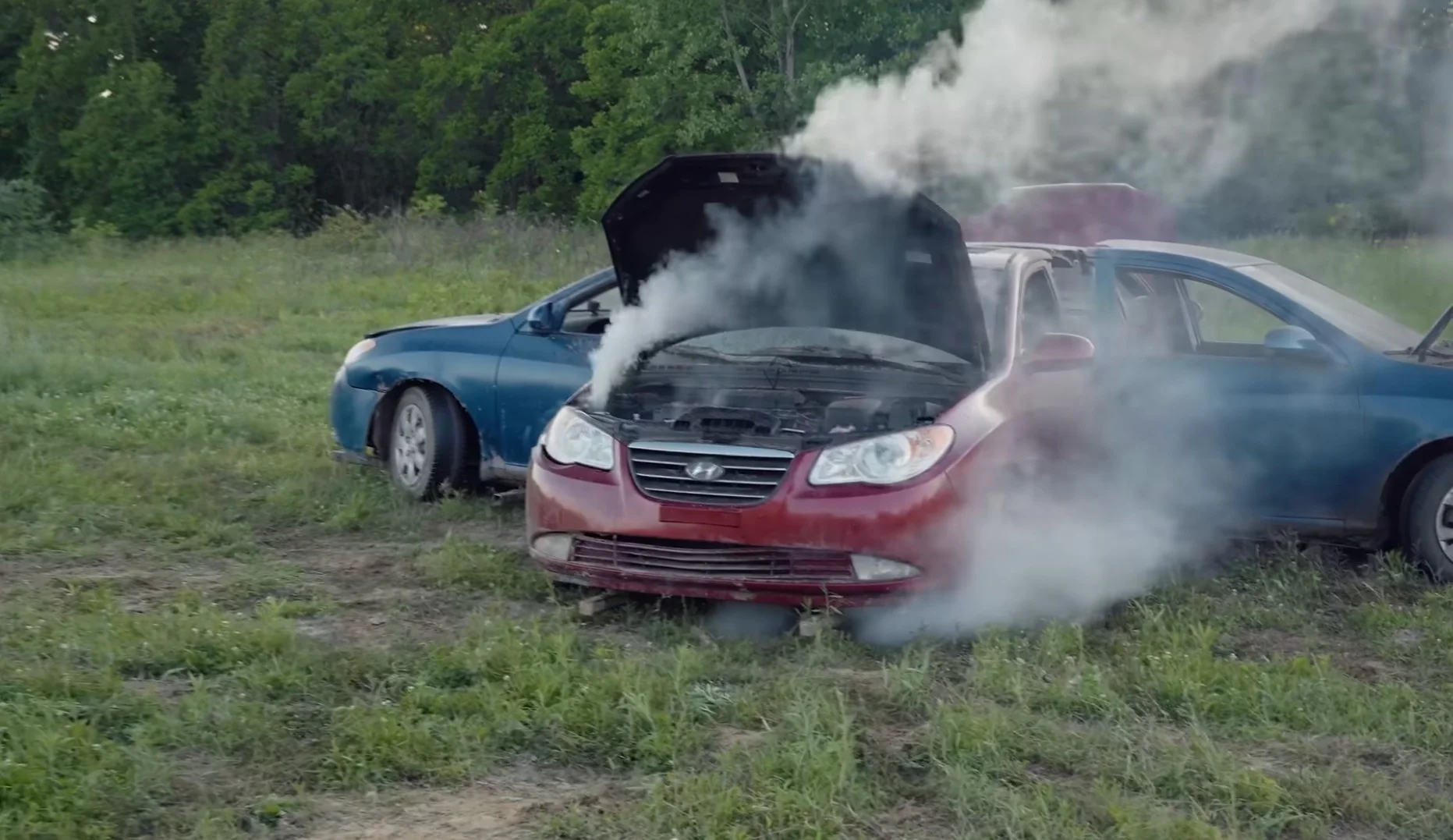
For obvious reasons, steering remained virtually non-existent due to the car’s weight and drag, which means they basically had to ‘drift’ everywhere.
Also, the engine(s) stalled quite regularly.
These were the two minor catches.
The massive one was a bit more serious: the car(s) caught on fire.

All in all, then, a fairly successful experiment – if you ignore the bit where it caught fire.
Alessandro is an automotive journalist with 10 years of experience covering supercars, automotive history, emerging vehicle technology, and luxury transportation. He wrote the first article published on SupercarBlondie.com when the website launched in 2022 and has since built a reputation for insightful reporting across the automotive and transportation industries. His expertise is grounded in hands-on experience. Alessandro has driven every Tesla model ever produced, from the original Roadster to the Cybertruck, and regularly covers the latest developments in electric vehicles and automotive innovation. His passion for transportation extends beyond cars, he has even flown a Boeing 787 Dreamliner simulator in Addis Ababa, Ethiopia. His reporting spans everything from classic American muscle cars and rare automotive discoveries to luxury yachts, private aircraft, high-end watches, and cutting-edge vehicle technology. Known for his deep knowledge of automotive history and ability to uncover the stories behind iconic vehicles, Alessandro brings readers a blend of historical context, technical expertise, and first-hand experience.