These guys turned a cheap Italian summer bicycle into a minibike using an engine but it didn't go to plan
Published on Apr 15, 2026 at 11:30 AM (UTC-4)
by Alessandro Renesis
Last updated on Apr 16, 2026 at 12:29 PM (UTC-4)
Edited by
Emma Matthews
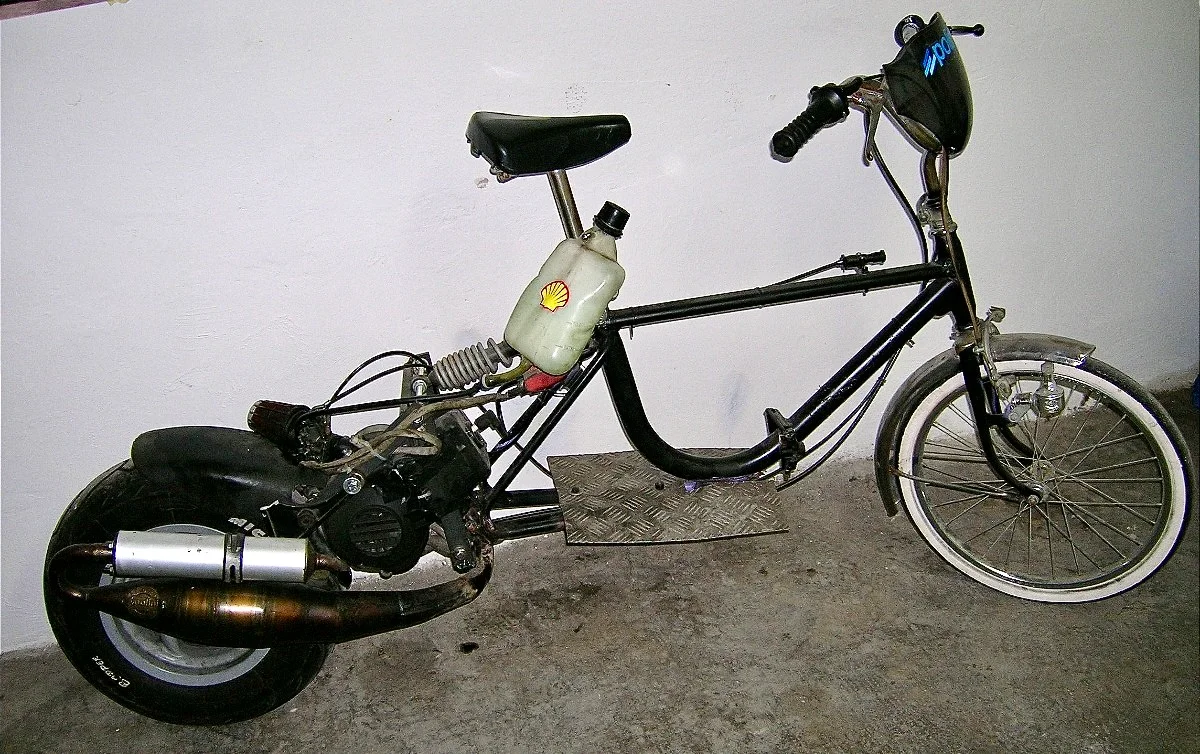

A group of friends in Italy decided that putting a 70cc engine from a scooter onto a cheap Italian summer bicycle would be a good idea.
It really wasn’t, and the list of reasons why this DIY project didn’t work was even longer than expected.
The problem is that motorizing things that clearly shouldn’t be motorized isn’t a new thing, and it didn’t start with the internet.
It’s fun, but for reasons you’re about to discover, it never really works.
Can you turn a bicycle into a scooter?
Back in the 1990s and 2000s, European youngsters – including yours truly – spent a significant amount of money and time ‘pimping’ their rides.
The idea was simple: you’d take a regular 50cc scooter, and turn it into a more powerful – and noisier – motorcycle.
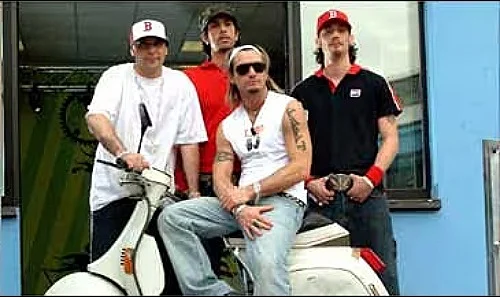
This used to be so popular that it spawned a spin-off show based on Pimp My Ride titled Pimp My Wheels, which aired on the Italian version of MTV for about a year.
True story; it really happened.
Pimp My Wheels followed the exact same format as Pimp My Ride, but featured scooters instead of cars. The presenters were the popular Italian rap group, Gemelli DiVersi.
These guys decided to go even further and use a 70cc engine to power a ‘Graziella’, a type of folding bicycle that used to be super popular in Italy in the ’60s, ’70s, and ’80s.
Did it work?
No, not really.
Related

The bike was undrivable, uncomfortable, and thirsty – and that’s the good news
At the time, it seemed like a good idea.
That’s what happens with most DIY ideas – at least at first.
We began with a cheap bicycle we retrieved from a scrapyard.
We cut the frame in half, removed the rear wheel, and welded the rest of the frame to a powertrain borrowed from a Piaggio Zip, an ancient scooter built by the same company that gave the world the Vespa.
Nearly all of the original components were replaced with aftermarket ones, including a new – and bigger – engine, a new air filter, a new exhaust, a new clutch and single-speed transmission, and a single-spring suspension system.
We then attached the fuel tank to the chassis, and the bike was good to go.
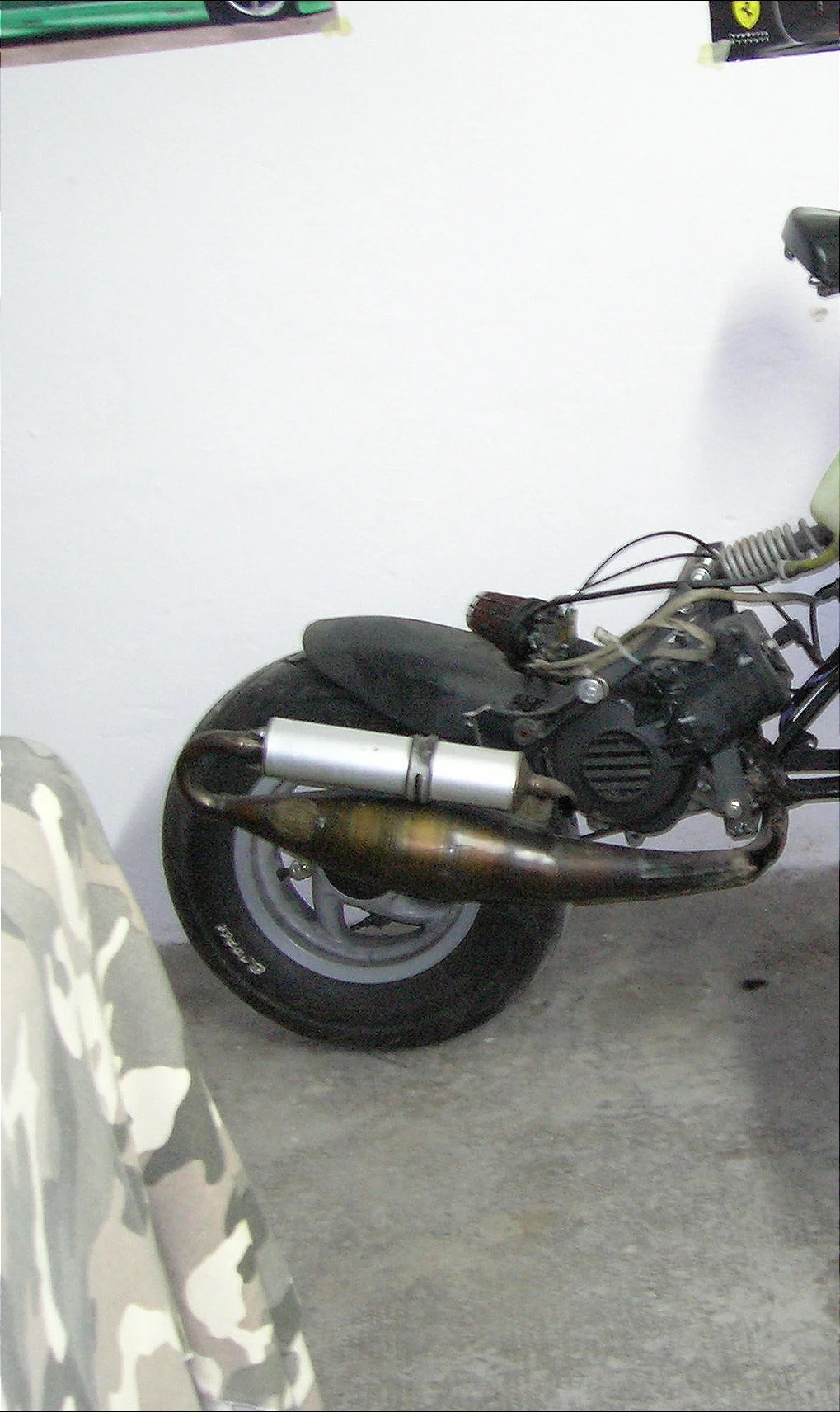
Except that it wasn’t; it was pretty undrivable.
For starters, the bike was significantly longer than it was intended to be, and much heavier at the back, which meant the frame bent and the ride was super wobbly.
On top of that, the bike also had a lot more power but not enough stopping power, because both the front (bicycle) and rear (scooter) brakes were actually drum brakes.
That’s one step better than using the soles of your feet to slow down, like The Flintstones, but it was still not enough.
And that was the good news, because the really bad news was the fact that it was also not street-legal, and clearly impossible to homologate, which is why we only used it a few times in a private parking lot and then parked it in a garage.
Today, sadly, the bicycle is resting in DIY paradise along with other fumbled DIY vehicles.
Just a few years after the build, the owner of the garage where the bike had been parked asked us to clear everything out.
And, well, we don’t have to spell out what happened to this poor bike.
Alessandro is an automotive journalist with 10 years of experience covering supercars, automotive history, emerging vehicle technology, and luxury transportation. He wrote the first article published on SupercarBlondie.com when the website launched in 2022 and has since built a reputation for insightful reporting across the automotive and transportation industries. His expertise is grounded in hands-on experience. Alessandro has driven every Tesla model ever produced, from the original Roadster to the Cybertruck, and regularly covers the latest developments in electric vehicles and automotive innovation. His passion for transportation extends beyond cars, he has even flown a Boeing 787 Dreamliner simulator in Addis Ababa, Ethiopia. His reporting spans everything from classic American muscle cars and rare automotive discoveries to luxury yachts, private aircraft, high-end watches, and cutting-edge vehicle technology. Known for his deep knowledge of automotive history and ability to uncover the stories behind iconic vehicles, Alessandro brings readers a blend of historical context, technical expertise, and first-hand experience.