Honda is set to begin testing wireless EV chargers built directly into a highway that charge your car as it drives
Published on Oct 16, 2026 at 10:06 AM (UTC-4)
by Daisy Edwards
Last updated on Oct 16, 2026 at 10:06 AM (UTC-4)
Edited by
Daisy Edwards
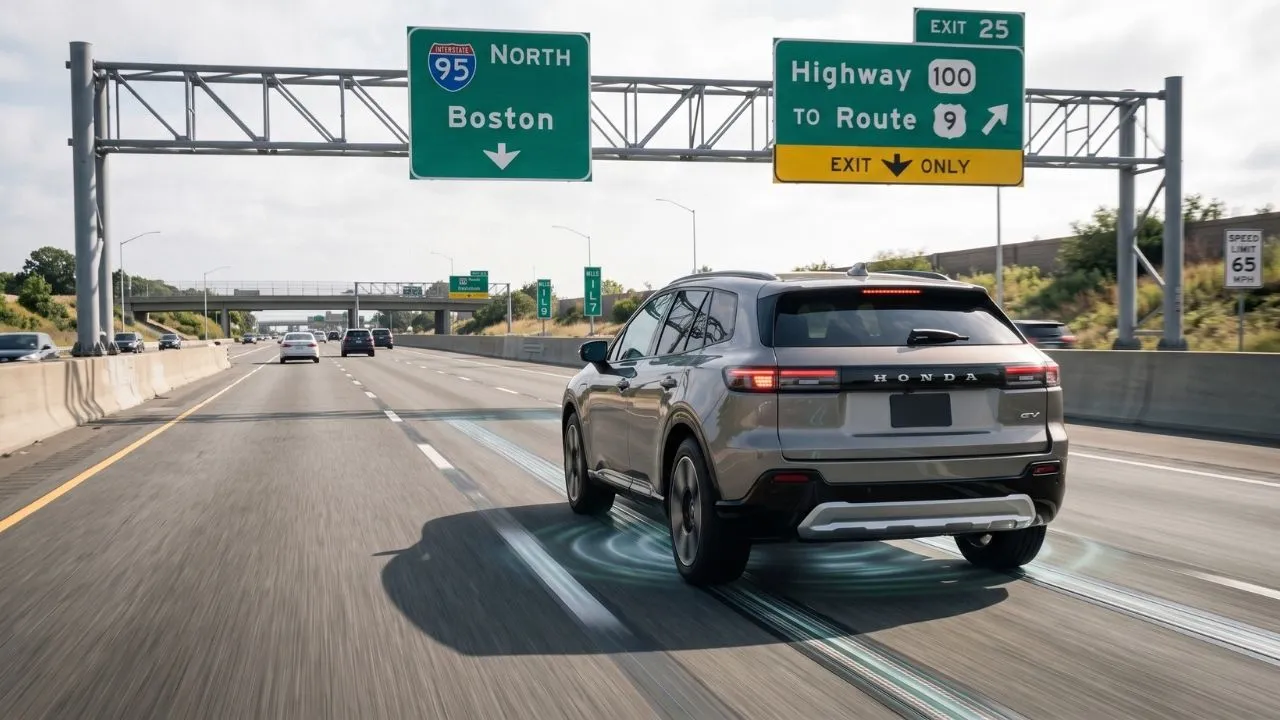

Your EV could one day top up its battery without you ever having to stop at wireless chargers, you just have to drive on the highway.
Honda is developing technology that would allow vehicles to recharge wirelessly as they travel along specially equipped roads.
The Japanese automaker is working with two construction companies to bring the idea closer to reality.
And public-road testing is planned for Japan in 2027.
Honda wants to turn highways into giant wireless chargers
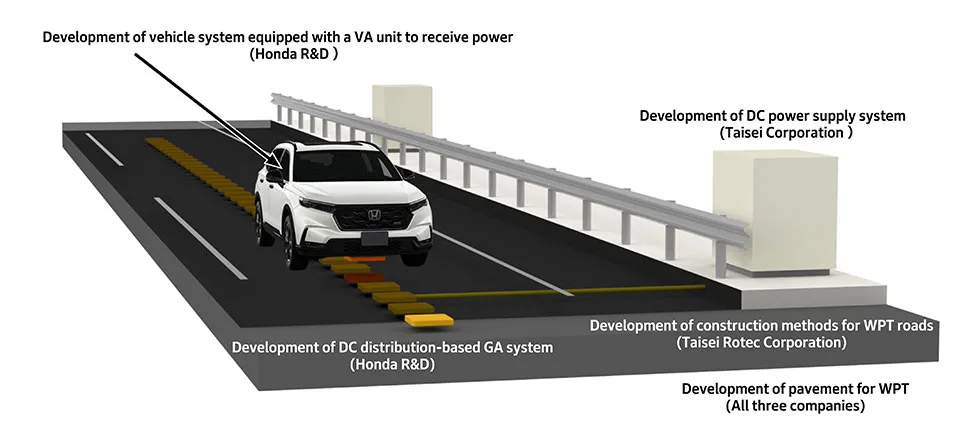
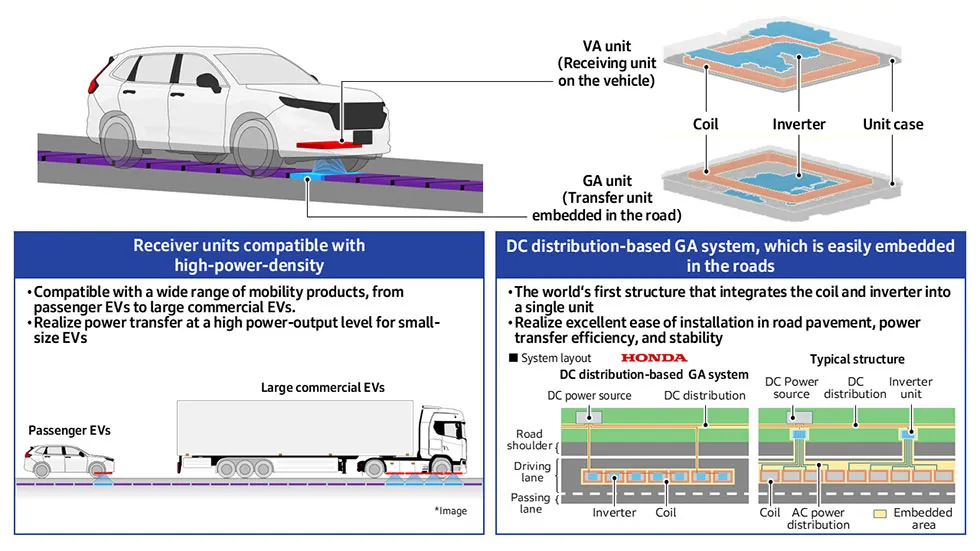
Honda has been working on a system that transfers electricity from equipment buried beneath the road to a receiver fitted underneath an EV.
The technology uses magnetic fields to send power between the road and the vehicle without the two physically connecting.
Think of it like a wireless charging pad for your phone, except the charging pad is part of the highway and your car can drive straight over it.
Honda R&D has developed the technology alongside Japanese construction companies Taisei Corporation and Taisei Rotec Corporation.
The system is designed to supply electricity while vehicles are moving, potentially reducing how often drivers need to stop to recharge.
The companies are initially focusing on logistics and commercial transport, where charging stops can eat into delivery schedules and large electric vehicles need plenty of energy to keep moving.
Related
The technology could make your EV more convenient
One of the biggest challenges with electric vehicles is finding the time to recharge, particularly during long journeys.
Even with increasingly powerful charging stations, drivers still need to pull over and wait for their batteries to fill up.
Honda’s idea could help tackle that problem by allowing compatible vehicles to receive electricity as they travel along equipped roads.
The technology could also open the door to electric vehicles with smaller batteries, potentially making them lighter and less expensive to build.
However, regular electric cars will not automatically be able to use the system. Vehicles need compatible receiving equipment, and the technology must be tested to establish how reliably it works in real-world driving conditions.
Honda and its partners plan to construct a dedicated test roadway from late 2026 to assess the system’s durability, wireless power transfer and electromagnetic-field leakage.
They also intend to investigate power delivery of up to 150 kW for potential use with large commercial vehicles, alongside reliable operation at higher driving speeds.
These are targets for future testing rather than confirmed results from a completed public-road trial.
Japan could see public-road testing begin in 2027
Honda and its partners are preparing to take the technology beyond their existing test facilities.
The companies plan to participate in a demonstration project on Japan’s Tateyama Expressway in Chiba, with public-road testing expected to begin in the Japanese 2027 fiscal year, which starts in April.
The project will help determine whether wireless charging can work safely and reliably under real-world road conditions.
There is still plenty to figure out before drivers can expect to charge their cars simply by cruising down the highway, including the cost of installing the equipment and how well it performs at speed.
But if the battery technology proves successful, it could change how electric vehicles are designed and how drivers plan longer journeys.
For now, Honda is concentrating on proving the system works, with commercial vehicles among its first intended applications.
The prospect of a future where your car charges while you drive is getting closer, even if it is not quite ready for everyday drivers yet.
Daisy is a technology and automotive journalist covering artificial intelligence, consumer tech, Apple news, cryptocurrency, emerging technologies, and transportation innovation. Since joining the team in 2025, she has reported on everything from AI-powered startups and major iOS updates to viral car stories and the latest developments shaping transportation and the digital economy. Drawing on her background in automotive journalism and a degree in History and Journalism from Goldsmiths, University of London, Daisy specializes in breaking down complex topics into clear, engaging reporting for a global audience. Her work spans cutting-edge technology, innovative vehicles, and the people driving change across both industries. Daisy has gained first-hand access to some of the world's most talked-about technologies and innovators, including meeting Tesla's Optimus humanoid robot during its first European appearance in London. She has also discussed the future of space exploration with an astronaut, bringing unique insights and real-world perspectives to her coverage of emerging technology.