$20,000,000,000 bridge includes four artificial islands and has turned four-hour journeys into 30 minutes
Published on Dec 28, 2025 at 10:44 PM (UTC-5)
by Molly Davidson
Last updated on Dec 29, 2025 at 2:48 AM (UTC-5)
Edited by
Kate Bain
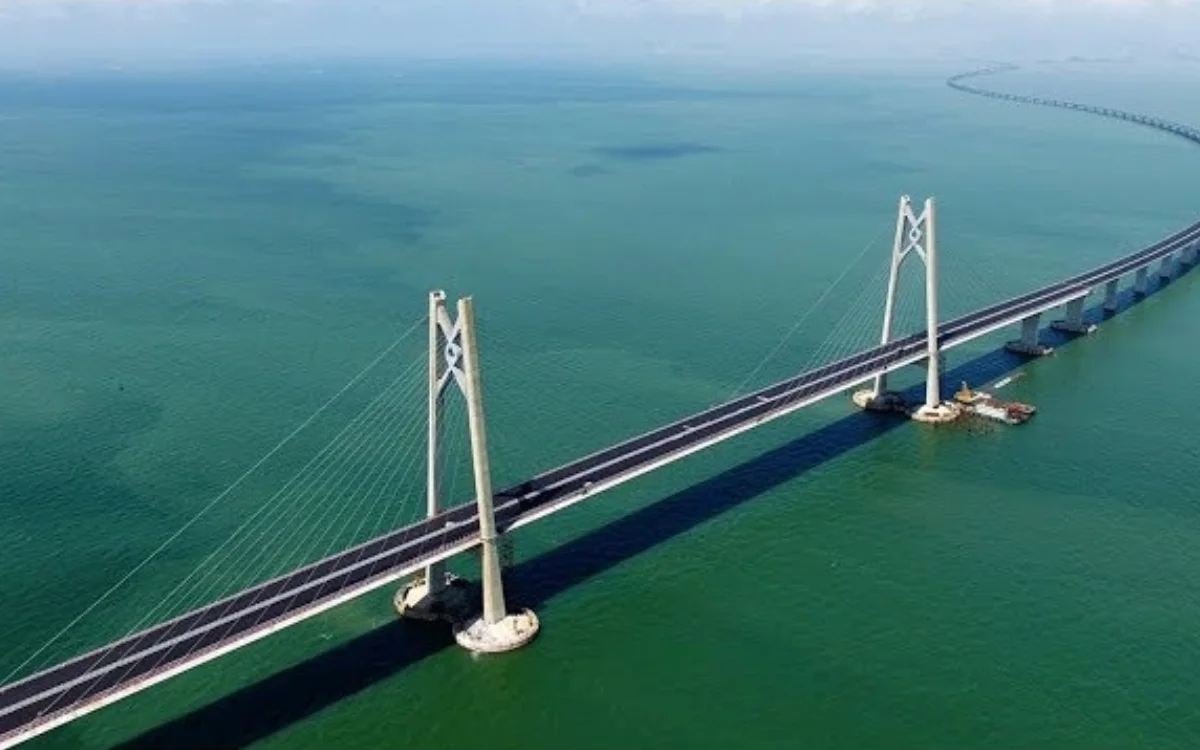

A $20,000,000,000 bridge now connects three major cities that once felt frustratingly far apart.
It stretches for miles across open water, then vanishes beneath the sea before resurfacing again.
For decades, this journey was something you planned your day around.
Now it barely takes longer than your commute to work.
DISCOVER SBX CARS – The global premium auction platform powered by Supercar Blondie
How this bridge turned a four-hour trip into 30 minutes
The Hong Kong-Zhuhai-Macau Bridge isn’t just long, it’s complicated in a way most bridges never had to be before.
Spanning roughly 34 miles across the Pearl River Delta, it forms the first direct road link between Hong Kong, Zhuhai, and Macau.
And it doesn’t do it with one continuous strip of concrete.
Instead, the system stitches together three cable-stayed bridges, a four-mile undersea tunnel, and four artificial islands that act as transition points between bridge and tunnel sections.
Those man-made islands are the secret sauce.
They allow ships to pass overhead while cars dip below the seabed, keeping one of the world’s busiest shipping corridors fully operational.
Before the bridge opened in October 2018, traveling between Hong Kong and Zhuhai could take up to four hours using a mix of ferries and roads.
Today, the same trip takes around 30 to 40 minutes.
Since opening, the bridge has facilitated more than 93 million passenger trips, quietly reshaping how the region moves.
Related
The scale came with serious trade-offs
For all its ambition, the project wasn’t without drawbacks.
Costs exceeded early estimates, construction took close to a decade, and environmental groups raised concerns about the impact on marine life in the Pearl River Delta, including Chinese white dolphins.
Even so, for people crossing it today, the experience is striking.
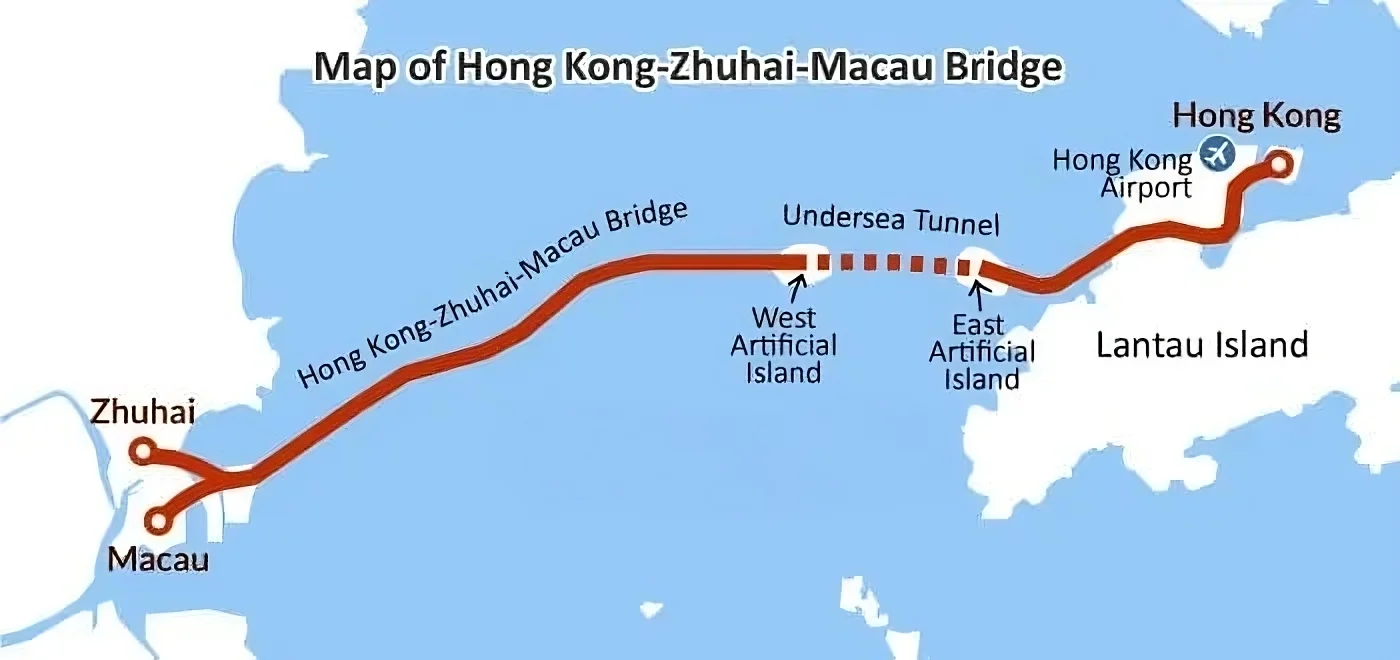
You drive above open water, dip beneath the sea, reappear on reclaimed land, and roll straight into another city.
All in under an hour.
Four artificial islands and billions of dollars later, the bridge delivered on its core promise: turning a four-hour journey into about 30 minutes.
With roles at TEXT Journal, Bowen Street Press, Onya Magazine, and Swine Magazine on her CV, Molly joined Supercar Blondie in June 2025 as a Junior Content Writer. Having experience across copyediting, proofreading, reference checking, and production, she brings accuracy, clarity, and audience focus to her stories spanning automotive, tech, and lifestyle news.