A humanoid robot has learned to drive a car and it could become the norm sooner than we think
Published on Sep 11, 2026 at 5:45 AM (UTC-4)
by Ben Thompson
Last updated on Sep 16, 2026 at 5:38 AM (UTC-4)
Edited by
Ben Thompson


Back in 2024, a humanoid robot learned to drive a car and it even though that appeared to be a one-off gimmick, this could clearly become the norm sooner than we realize.
At first glance, this story sounds like something straight out of a sci-fi movie.
But with driverless cars already making their way through the streets of world capitals, is a robot driver coming sooner than we anticipate?
Let’s take a look at what’s already out there.
A humanoid robot driver isn’t just the stuff of movies anymore
It feels like robots are everywhere you look these days.
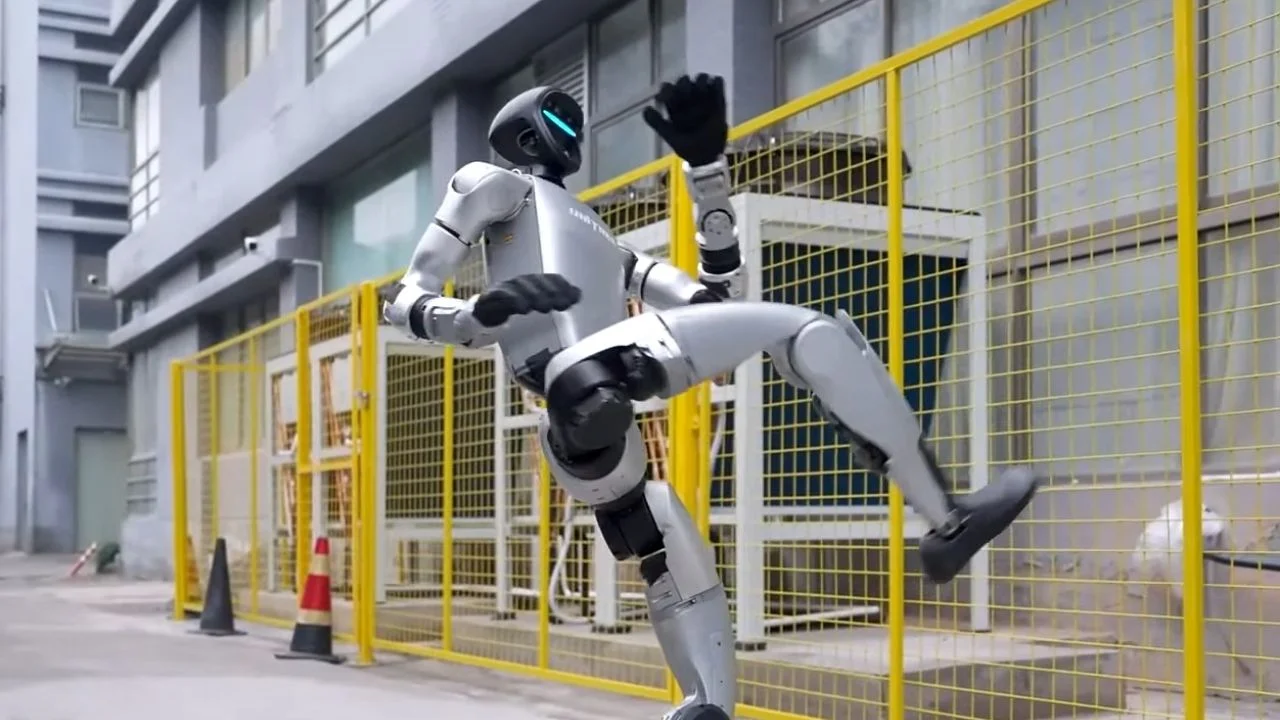
Whether it’s working alongside humans in car factories or assisting the police out in China, these cyborgs are making their mark on society.
But is a robot driver a step too far?
Scientists in Japan certainly don’t think so.

Back in 2024, a team of scientists at the University of Tokyo developed a humanoid robot that could drive a regular car.
Named Musashi, this humanoid robot was designed with a human body in mind.
If rolled out en masse, robots like Musashi could make robotic chauffeurs a reality.
Thanks to Musashi’s intricate design, the robot is capable of turning a steering wheel, pressing pedals, and even using indicators.
Some humans haven’t actually gotten that last one right.
When Musashi first made headlines back in 2024, it was still in the early stages of development and could only reach top speeds of 3 mph.

So evidently, there was still a ways to go before it’d be out in the big wide world.
However, a paper published earlier this year indicates that the technology is still being worked on.
A paper written by Kento Kawahkarazuka, Kei Okada, and Masayuki Inaba in Advanced Intelligent Systems confirmed that the robot ‘successfully recognized traffic signals, operated the pedals using a dynamic body schema with vehicle speed as input and output, and turned the steering wheel to navigate through intersections’.

Related
When might this become the norm?
Short of having a very accurate crystal ball on us, it’d be hard to give an exact year that robot drivers become the norm.
But plenty of signs indicate that that it’s on its way, and it may become a common sight on our streets sooner than we think.
Take a look at Google DeepMind’s Gemini Robotics 2, which means that we can control a humanoid robot’s entire body.
If we’ve developed a robot that can be controls from its feet to its fingertips, a driving robot might not be too far behind.
There’s also the fact that Daimler Truck has filed a patent for a humanoid robot capable of driving a truck.
And lest we forget, we already have driverless cars roaming the streets of cities around the world, from Austin to London.
Ben joined Supercar Blondie in February 2025 after being published by international organizations including LADbible, The Sun, the New York Post, and the Daily Mail. He covers supercars, rare and collectible vehicles, aviation, luxury assets, and the fascinating people behind them. His reporting has explored everything from seven-figure supercars and historic Ferrari collections to unusual aircraft adventures and extraordinary automotive discoveries from around the world. Ben has also gained first-hand insight into vehicle craftsmanship and customization, including visiting specialist workshops to see bespoke vehicles up close.