Man who broke the sound barrier on land has set a brand new speed record with 1,600HP hydrogen vehicle
Published on Aug 12, 2026 at 8:24 AM (UTC-4)
by Henry Kelsall
Last updated on Aug 17, 2026 at 11:17 AM (UTC-4)
Edited by
Mason Jones
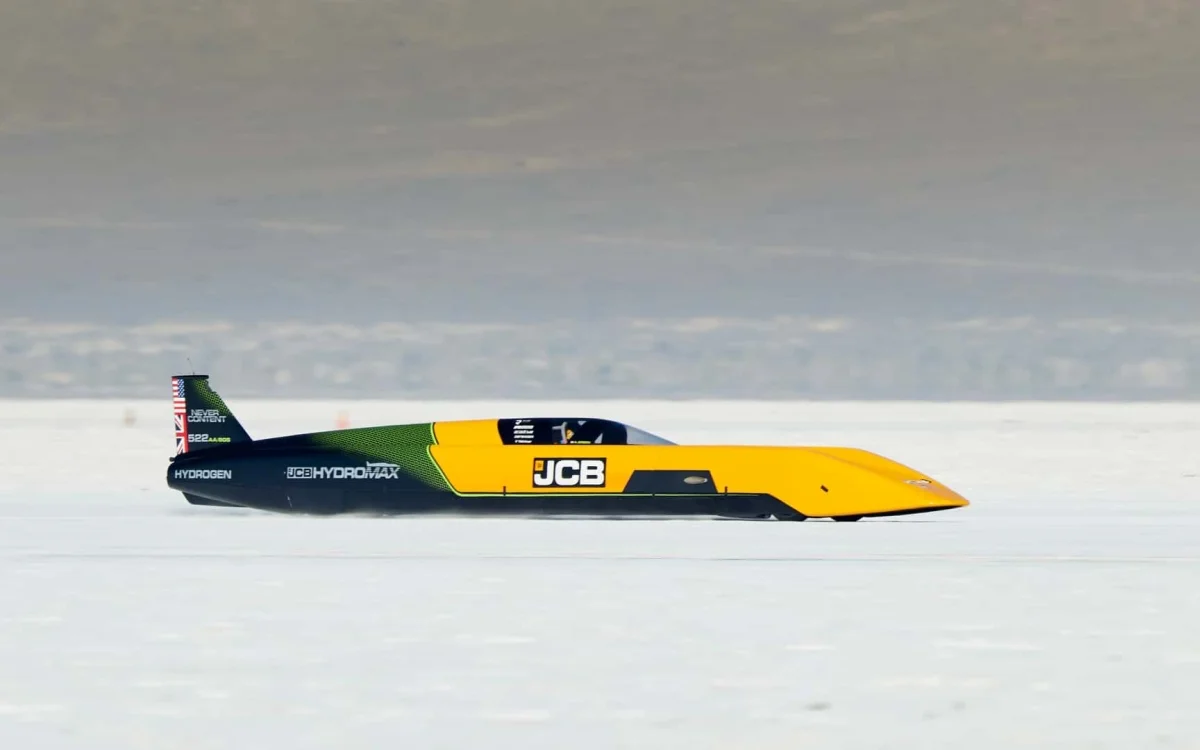

The man who broke the sound barrier on land has now set a new speed record with JCB’s 1,600hp hydrogen land-speed record car.
Andy Green OBE, a former RAF pilot, broke the sound barrier on land in 1997, driving Thrust SSC to 763.035mph.
He is the only man to have broken the sound barrier on land, and is now tasked with driving the hydrogen JCB Hydromax to a new world record.
Amazingly, he had already broken a new record before he attempted the official world record run.
The hydrogen record that Andy Green has broken
Green had actually broken a record before the official world record attempt that took place at Bonneville.
The former RAF pilot averaged a speed of 368.347mph.
This was enough to give the Hydromax the SCTA Blown Gas Streamliner (AA/BGS, 500-plus cubic inches) class record at Bonneville.
Green and the car beat the previous record of 348.342mph, set in 2010 by the Spectre Streamliner.
Now, he has officially broken the hydrogen FIA world record, with a top speed of 406mph across the Bonneville Salt Flats in Utah.
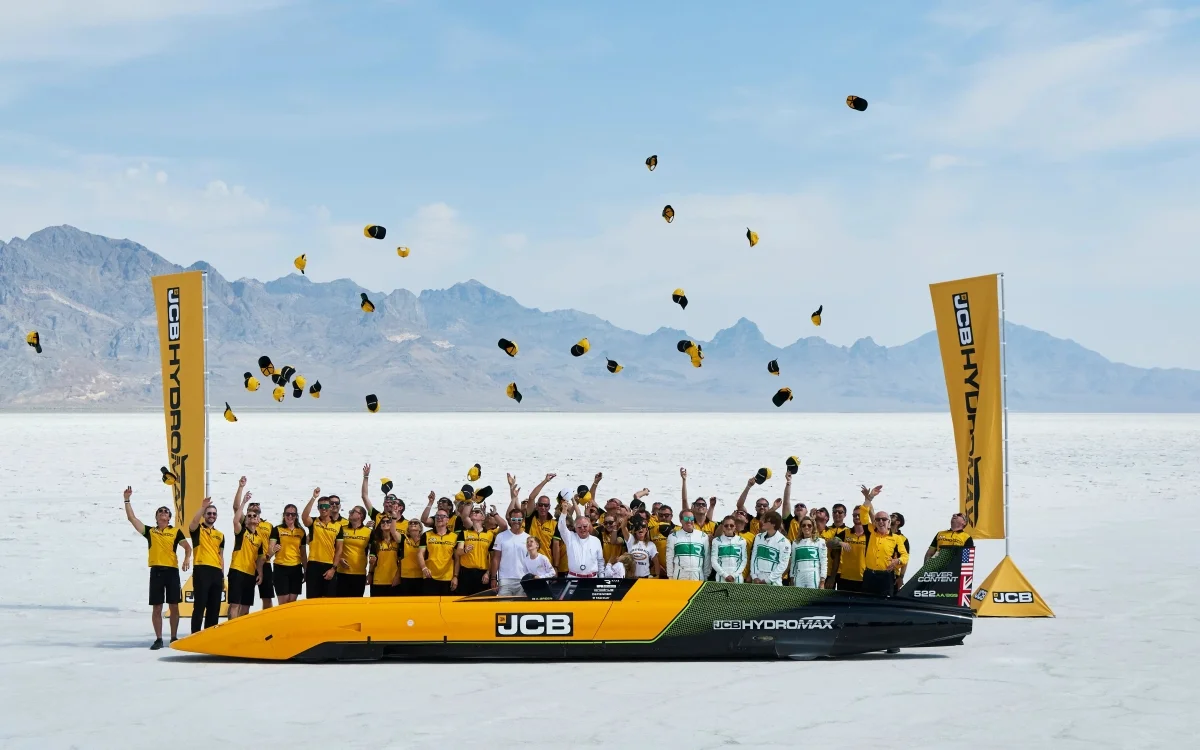
It comes 20 years after Green set the world land speed record for a diesel vehicle.
He did so in the JCB Dieselmax with a speed of over 350mph.
“Setting a world land speed record with hydrogen power, 20 years after Dieselmax, is a huge privilege,” Green said.
“This record is a huge achievement by a world-class team and superb technology,” Green added.
Related
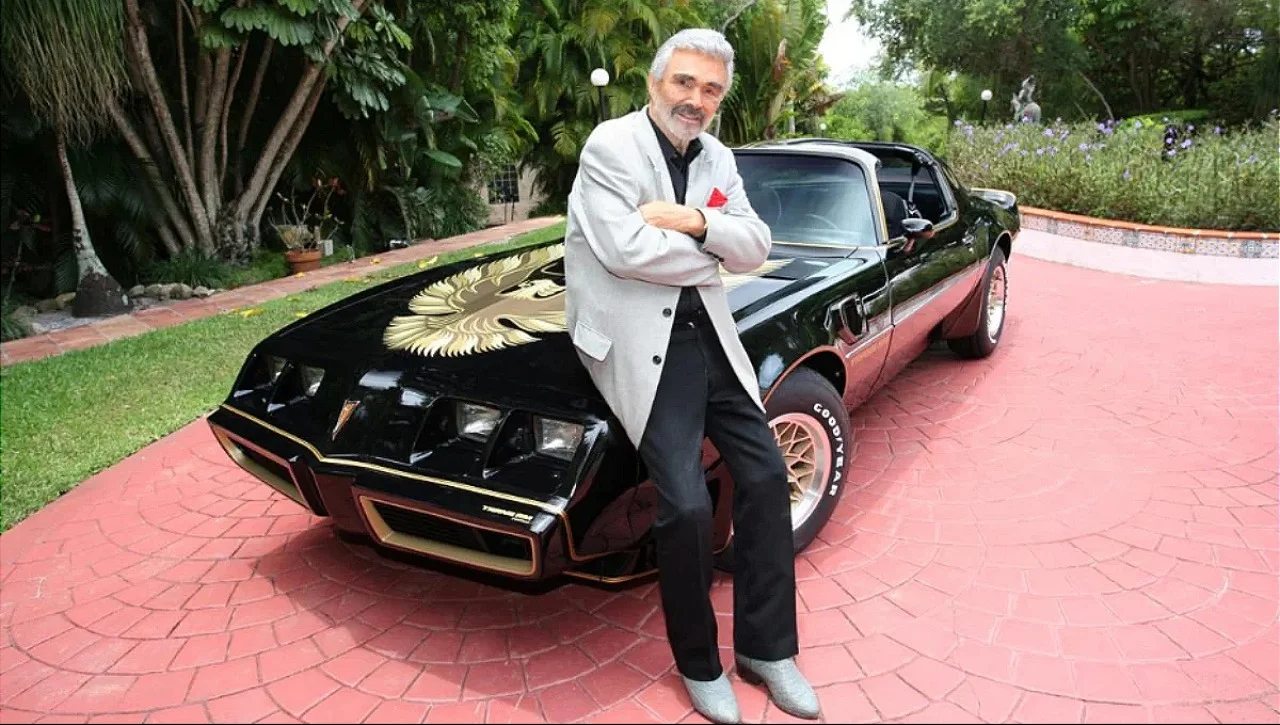
Green is the only man to go supersonic on land
The record is another that Green can add to his impressive CV.
In 1997, Green drove Thrust SSC across the Black Rock Desert in Nevada.
He achieved an average speed of 763.035mph, becoming the first man to go supersonic on land.
The former RAF pilot is still the only man to do so.

Thrust SSC’s record still stands, nearly 30 years on from its record-breaking run.
Green had also been tasked with driving Bloodhound LSR to 1,000mph before funding for that project dried up.
He did, however, drive Bloodhound to nearly 700mph in test runs a few years ago.
The Hydromax is still a very new hydrogen vehicle
JCB only unveiled its Hydromax record breaker at its global headquarters in May 2026.
Since then, it has gone through extensive testing.
This culminated in its record-breaking runs at Bonneville in the summer of 2026.
In May, testing saw the car reach a top speed of 208mph at RAF Wittering in Cambridgeshire, England.
“Bonneville is the spiritual home of the world land speed record, and JCB Hydromax has just written itself into that history,” Green added after his world record run.
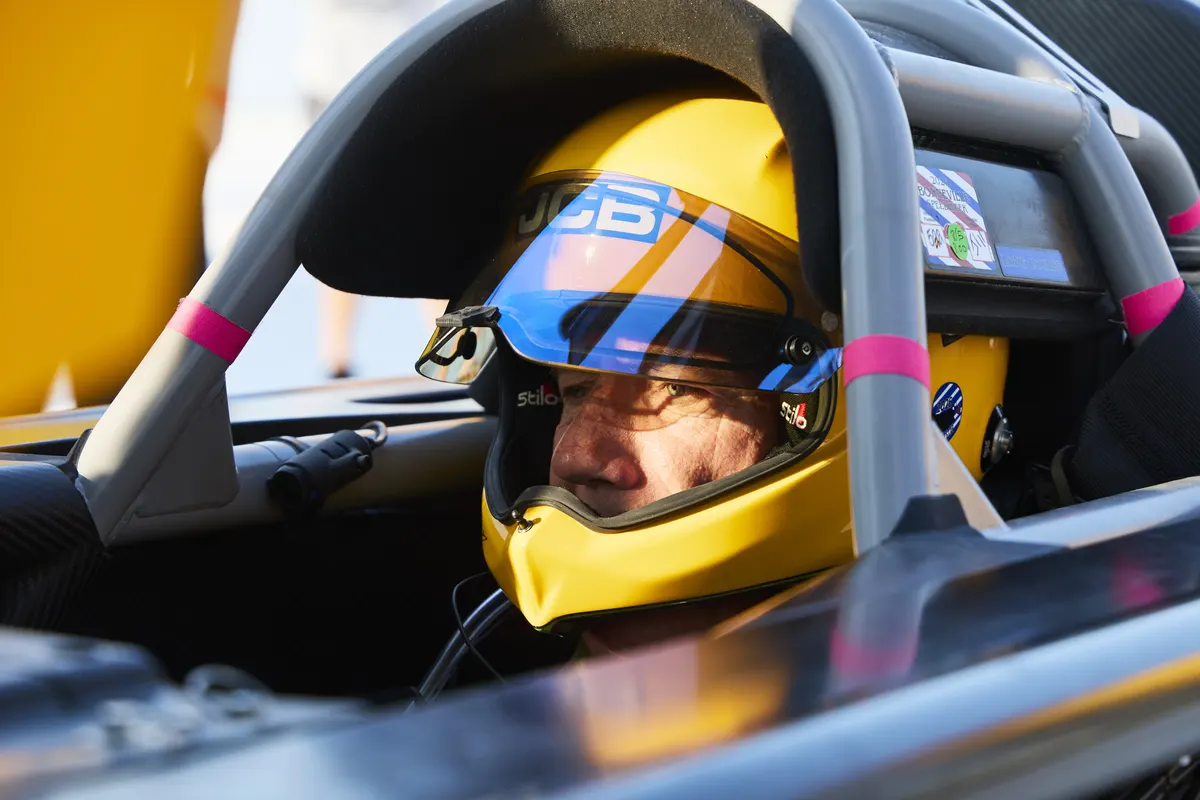
He credited the vehicle’s speed and stability, as well as the team that had built the car.
The 406mph run smashed the previous hydrogen record, set by the BMW H2R in 2004 at 185,5mph.
JCB used two hydrogen ‘digger’ engines in the Hydromax, which had been tuned to a staggering 1,600hp.
Land speed record timeline
1898: Gaston de Chasseloup-Laubat sets the first officially recognized mark at 39.24 mph driving an electric vehicle
1899: Camille Jenatzy breaks the 100 km/h barrier in a torpedo-shaped electric car famously named La Jamais Contente
1927: Henry Segrave surpasses 200 mph driving the twin-engined Sunbeam 1000 hp across the sands of Daytona Beach
1947: John Cobb reaches 394 mph in the piston-driven Railton Mobil Special, setting a benchmark that stood for over a decade
1964: Craig Breedlove hits 526 mph in the turbojet-powered Spirit of America, ushering in the era of jet-propelled vehicles
1970: Gary Gabelich rockets to 622 mph in the Blue Flame, utilizing a highly volatile liquefied natural gas rocket engine
1983: Richard Noble achieves 633 mph in the jet-propelled Thrust2 across the stark expanse of the Black Rock Desert
1997: Andy Green drives the massive ThrustSSC to 763 mph, officially breaking the sound barrier on the ground for the first time in history
Dig deeper into hydrogen cars with Supercar Blondie
These three related stories take a closer look at hydrogen-powered cars, and whether fuel-cell vehicles could have a future alongside EVs and traditional gas engines.
Everything you need to know about hydrogen cars and if they’ll be the next big thing
Supercar Blondie looks at the difference between an FCEV and a BEV, including the main reason hydrogen cars aren’t catching on.
First hydrogen energy car packs 932-mile range and takes just 5 seconds to refuel
With hydrogen fuel cells powering it, the NamX has a ton of benefits attached to it, from zero carbon footprint to instant refueling.
Driver shows what it’s actually like to refuel a hydrogen car
This Toyota Mirai owner in the US wanted to show critics how long it takes to fill up the tank of a hydrogen car, and the result is impressive.
Henry joined the Supercar Blondie team in February 2025, and since then has covered a wide array of topics ranging from EVs, American barn finds, and the odd Cold War jet. He’s combined his passion for cars with his keen interest in motorsport and his side hustle as a volunteer steam locomotive fireman at a heritage steam railway.