Japan has spent an eye-watering amount of money trying to stop its record-breaking $20 billion airport from sinking into the sea
Published on Apr 16, 2026 at 6:25 AM (UTC-4)
by Ben Thompson
Last updated on Apr 20, 2026 at 6:32 AM (UTC-4)
Edited by
Emma Matthews
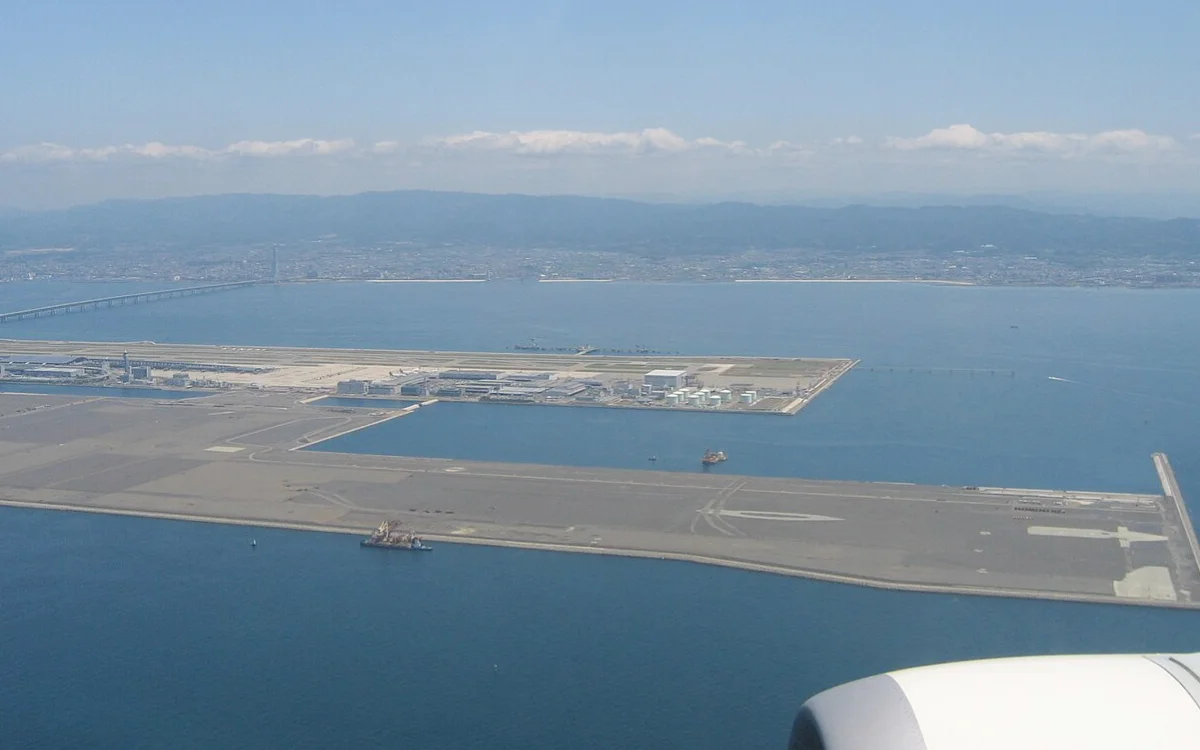

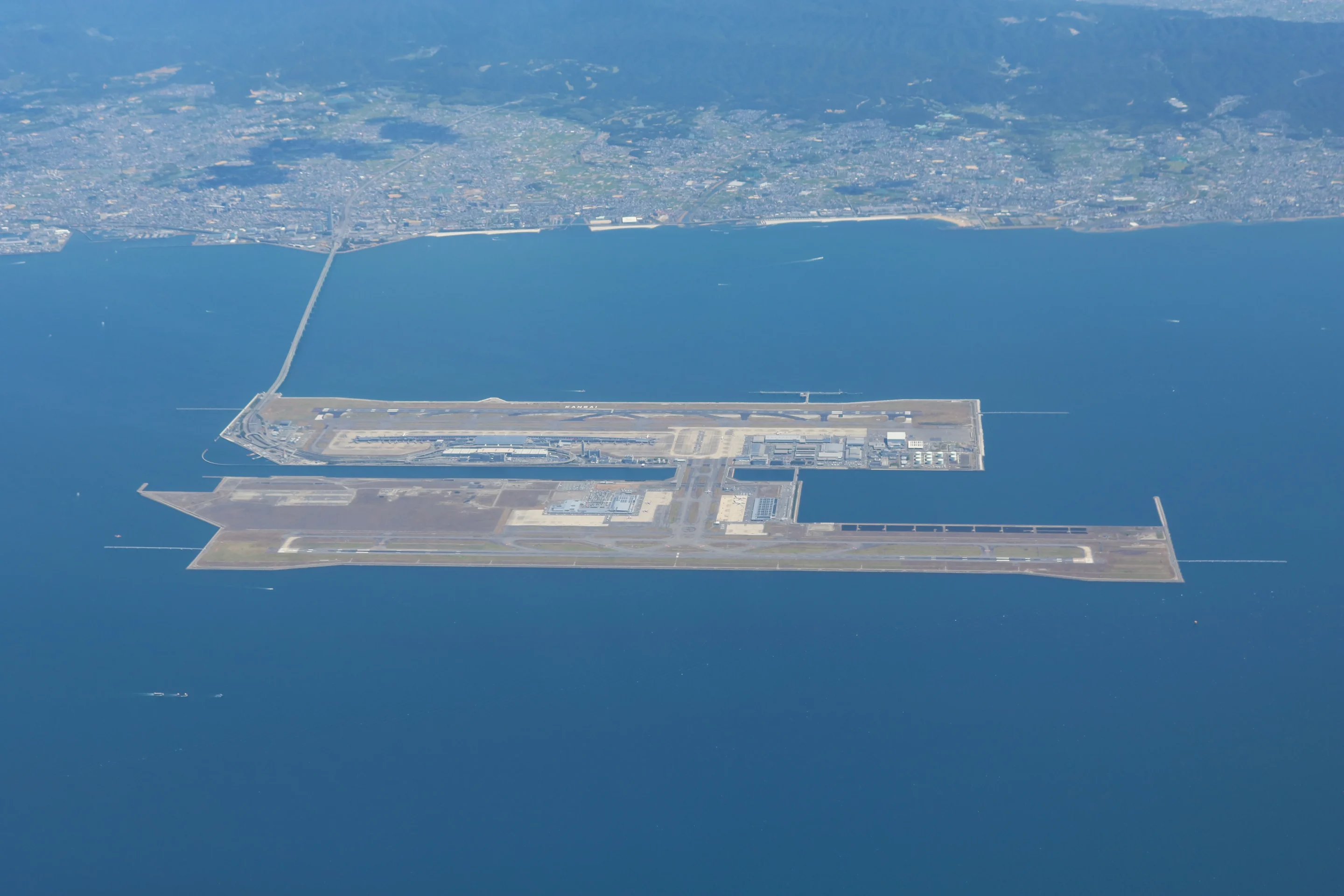
This $20 billion airport in Japan is reportedly sinking into the sea, but Japan’s government is spending an absolute fortune to keep Kansai International Airport afloat.
Kansai International Airport was opened in 1994 and serves around 26 million flyers each year.
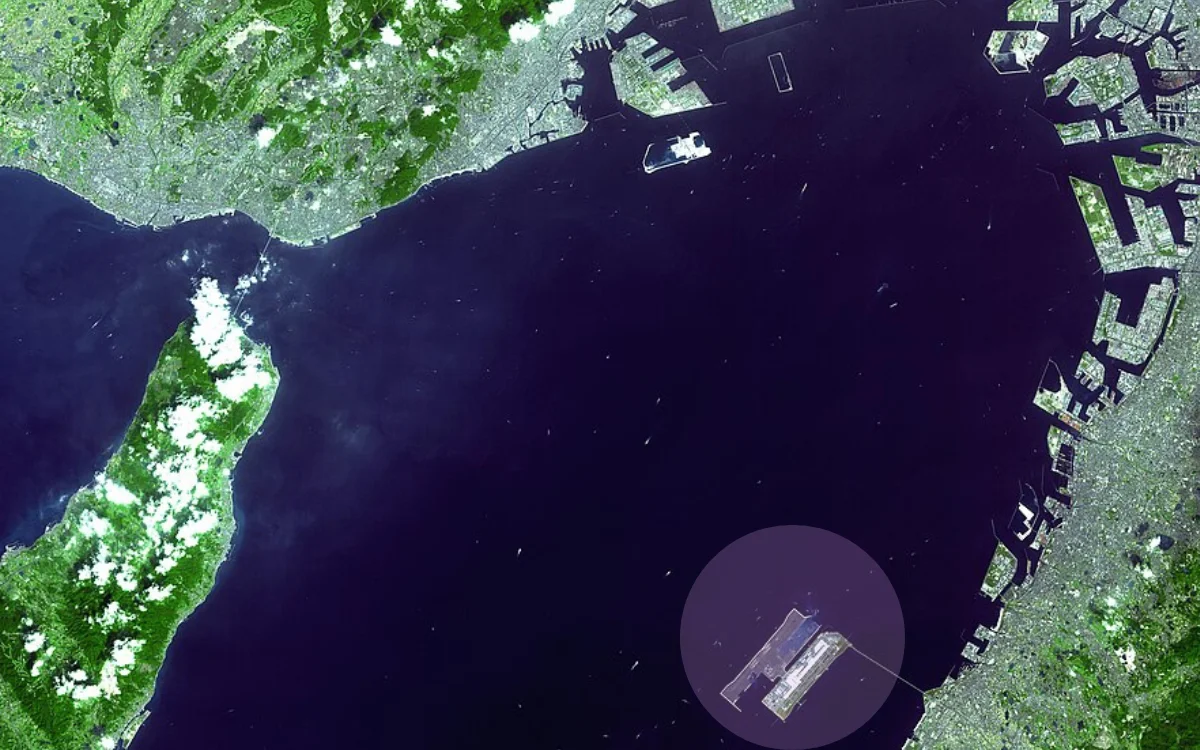
Located on its own island, it certainly makes for an impressive sight, despite the fact that it’s slowly being engulfed by the surrounding waters.
With it projected to sink beneath the waves by 2056, how much is being spent in total to keep the airport above the water?
This $20 billion airport in Japan may be unique – but it’s extremely costly too
Built to relieve overcrowding at Osaka Itami, Kansai has seen hundreds of thousands of planes come and go in the decades since it was opened.
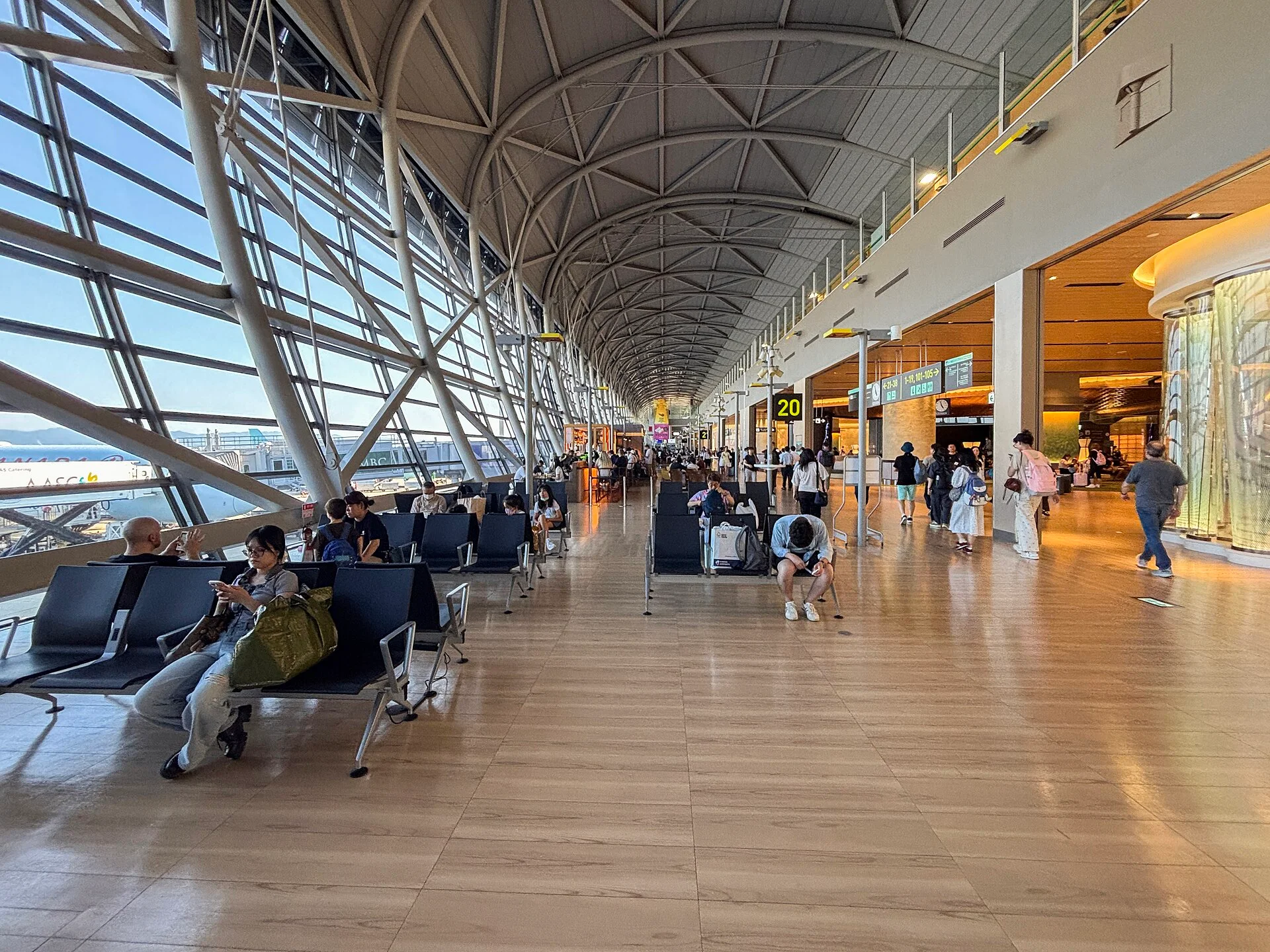
At first glance, this airport is very well maintained and world-class, having been voted the best in the world for baggage delivery efficiency.
That’s good, right? Who wants to be waiting around at luggage claim?
Blogger Andrew Tidmarsh, the host of Japan Unravelled, has had positive experiences at the airport.
“It’s incredibly easy to use.
“I can get from my train to the check-in desk in five minutes if I’m using Terminal 1. You can’t say that about most large international airports. It’s been designed with simplicity in mind,” he told Supercar Blondie.
However, there’s one issue – and it’s a biggie.
Have you ever heard the phrase ‘A house built on sand’?
First used in the Bible, this metaphor is often used to describe something with an unstable foundation.
That perfectly encapsulates the issue with Kansai Airport.
Even as this airport was being built, it was sinking.
Work began in 1987, and it had sunk 27 feet three years later, which was way more than engineers had originally anticipated.
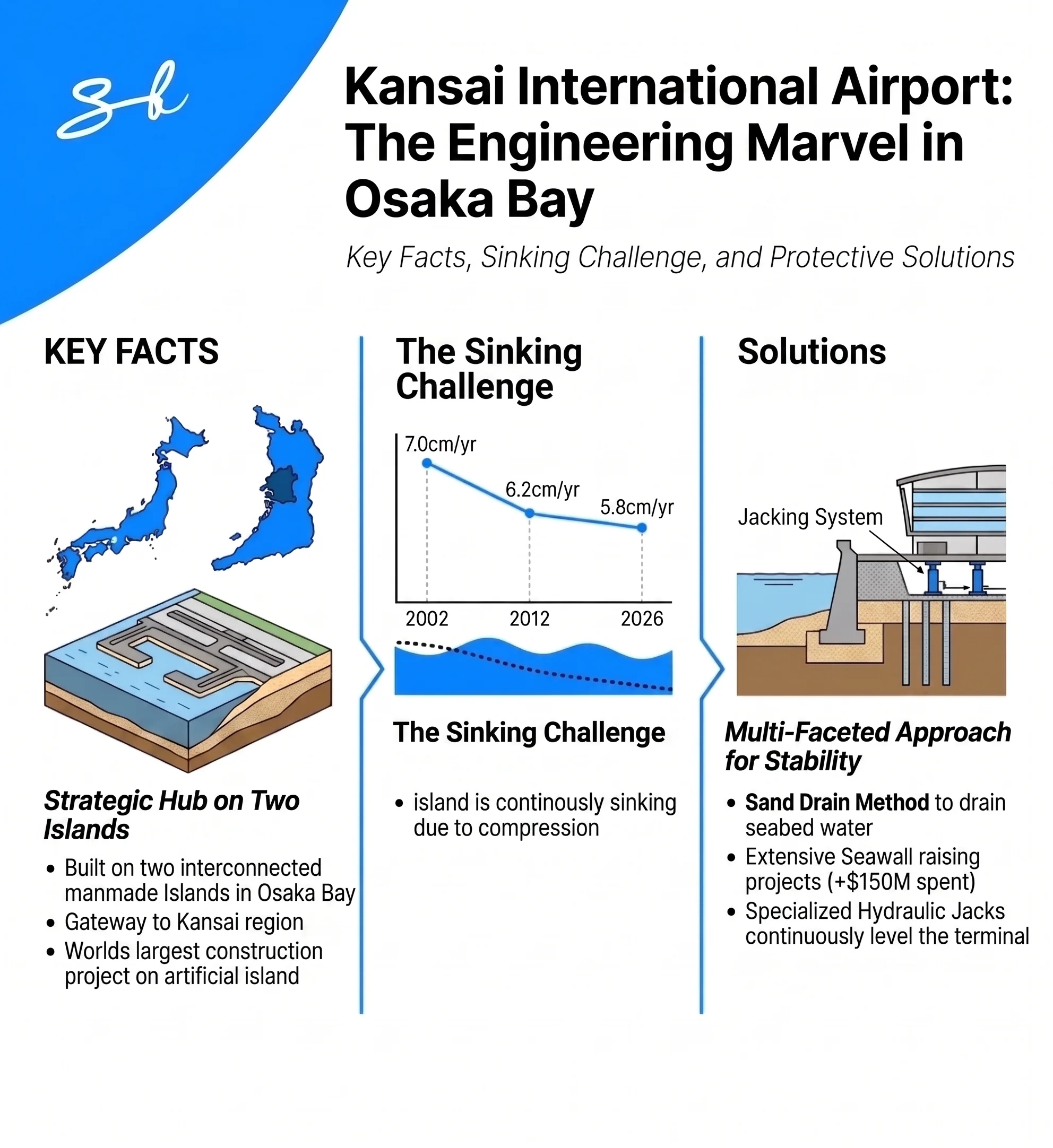
In response, $150 million was spent to strengthen the seawall surrounding the island.
The $20 billion airport was opened in 1994 and served passengers from all over the world, but issues still lingered.
Experts predicted that it would sink roughly 13 feet over the next 50 years.
However, it’s sunk far quicker than that – 42 feet in the space of two decades, The Mirror reported.
In 2018, the airports’ former communications director, Yukako Handa, said that engineers had been taken aback by this.
“When the Kansai Airport was constructed, the amount of soil to reclaim the land was determined based on necessary ground level and subsidence estimation over 50 years after the construction,” Handa told the Smithsonian Magazine.


How much has Kansai International Airport cost to keep afloat?
When you think about it, 2056 isn’t all that far away.
In fact, it’s closer to us than 1994 is, when Kansai Airport was first opened to the public.
But that’s the year that the airport is expected to go below sea-level.
Costs are currently ballooning with regard to defensive infrastructure spending.
While it cost $20 billion to construct, the overall cost of the airport will undoubtedly be much, much higher than this.
You only need to take mitigation and expansion costs into account to come to that conclusion.
And that’s not forgetting debts accumulated along the way.
In 1999, The Guardian reported that the airport had accumulated debt that would equal $18.295 billion in today’s money.
But the more pressing question here is – will this airport still be above water level come 2056?
It’s been claimed that the rate of subsidence is ‘lessening’.
An expert quoted by The South China Morning Post claimed that the sinking ‘remained within acceptable levels’.
“It is sinking by less than 10cm [4 inches] a year now, but that is slowing and manageable,” Hiroo Ichikawa, a professor of urban planning at Meiji University, said.
“Engineers are constantly monitoring conditions at KIX and are working to limit the subsidence, but nothing is impossible, and it really is just a question of cost.”
Despite the headlines, Tidmarsh said the airport still maintains a good reputation in Japan.
“Generally people like how Kansai Airport is really easy to use and uncomplicated, in contrast to the huge Haneda and Narita Airports,” he explained.
“If it went away, a lot of people would miss it. Locally it’s somewhat affectionately known as kanko – a shortened version of Kansai Kuuko (Kansai Airport), and even the local railways use this nickname.”
As far as airports go, this is certainly one of the more unconventional.
But there are plenty around the world that are notorious.
Down in Indonesia, the Domine Eduard Osok Airport is notable for having no fencing, meaning it’s totally accessible for anybody to walk onto.
Then there’s St. Maarten airport in the Caribbean, which is so close to the sea that beachgoers can be blown away by descending planes.
Maybe sinking into the sea isn’t the weirdest thing an airport can do after all.
Kansai International Airport timeline
1987: Construction officially begins on the massive artificial island in Osaka Bay
1989: The protective seawall surrounding the future airport is finished
1994: This $20 billion airport officially opens to all commercial air traffic
1995: The structure survives the devastating Great Hanshin earthquake with minimal damage
2001: The American Society of Civil Engineers names it a Civil Engineering Monument of the Millennium
2007: A newly constructed second runway opens for expanded flight operations
2012: Terminal 2 opens specifically to accommodate the rapid growth of low-cost carriers
2018: Typhoon Jebi severely floods Kansai, and a tanker damages the only connecting bridge
Ben joined Supercar Blondie in February 2025 after being published by international organizations including LADbible, The Sun, the New York Post, and the Daily Mail. He covers supercars, rare and collectible vehicles, aviation, luxury assets, and the fascinating people behind them. His reporting has explored everything from seven-figure supercars and historic Ferrari collections to unusual aircraft adventures and extraordinary automotive discoveries from around the world. Ben has also gained first-hand insight into vehicle craftsmanship and customization, including visiting specialist workshops to see bespoke vehicles up close.