Kawasaki's four-legged robot horse vehicle that was once a 2050 pipe dream is now going into production decades early
Published on Jan 08, 2026 at 9:19 PM (UTC+4)
by Daisy Edwards
Last updated on Jan 09, 2026 at 12:18 PM (UTC+4)
Edited by
Emma Matthews
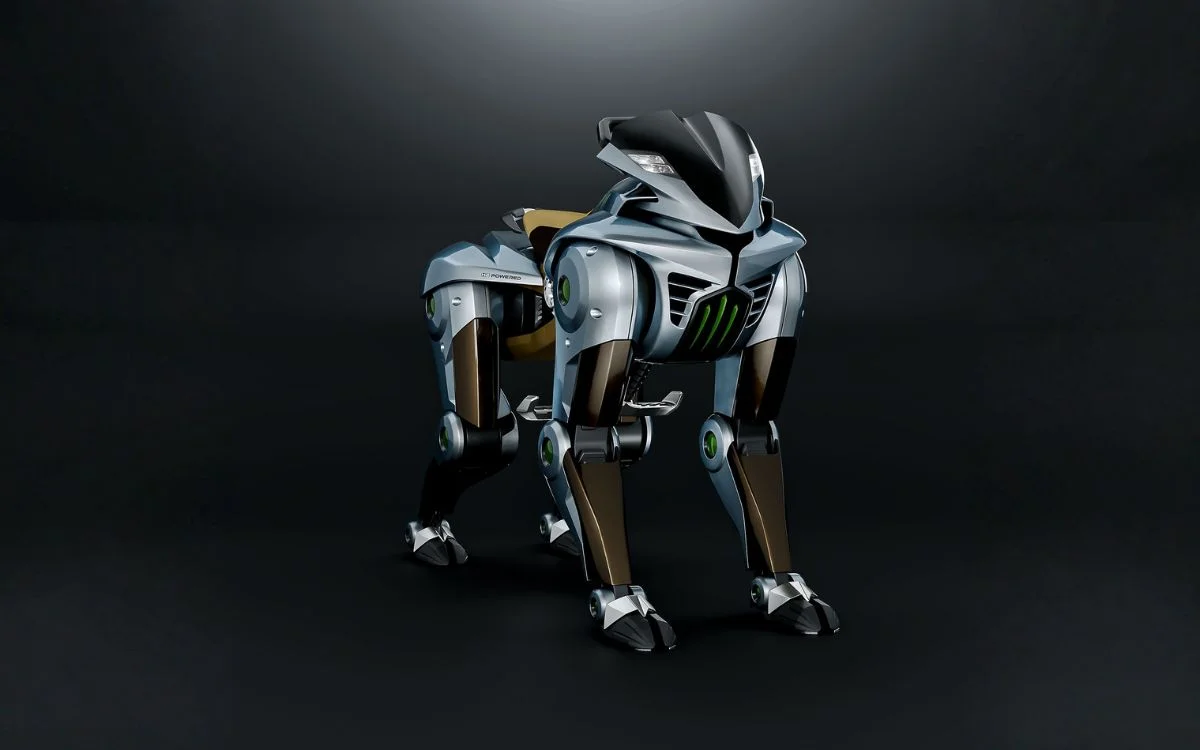

Much to every tech lover’s joy, Kawasaki’s four-legged robot horse vehicle that was once a 2050 pipe dream is now going into production decades early.
The company’s hydrogen-powered robo-horse, called Corleo, has gone from weird CGI concept to something Kawasaki is actively building.
A first real-world model is now expected to debut in just four years, with consumer sales targeted for 2035.
Kawasaki is even aiming to have Corleo ready for visitor rides at Expo 2030 in Riyadh, proving this isn’t just a futuristic dream anymore.
EXPLORE SBX CARS – Supercar auctions starting soon powered by Supercar Blondie
2050 pipe dream becomes a reality decades early
Kawasaki originally framed Corleo as a far-off 2050 tech vision when it appeared around Expo 2025 in Osaka, Japan, but that timeline has been dramatically pulled forward.
The company has now set up a dedicated operation called the Safe Adventure Business Development Team, specifically to push the project toward real-life.
Corleo is expected to make its first public real-world appearance in 2030 at Expo Riyadh, where Kawasaki hopes it will be able to carry visitors on rides.
If that happens, it will mark one of the earliest large-scale demonstrations of robots with legs being used as a personal mobility vehicle rather than a lab prototype.
Kawasaki’s four-legged robot horse vehicle is built for the wild
Kawasaki’s Corleo is being designed as a true all-terrain mobility machine, built to go places that even hardcore off-road bikes struggle with.
Instead of wheels, it uses four independently operated legs with shock absorption, giving it the ability to tackle rocky slopes, steep climbs, and even water crossings.
Kawasaki says riders will guide the robo-horse by shifting their body weight, similar to horse riding but without reins.
That movement system is expected to have advanced AI, helping Corleo adapt to unpredictable terrain in real time.
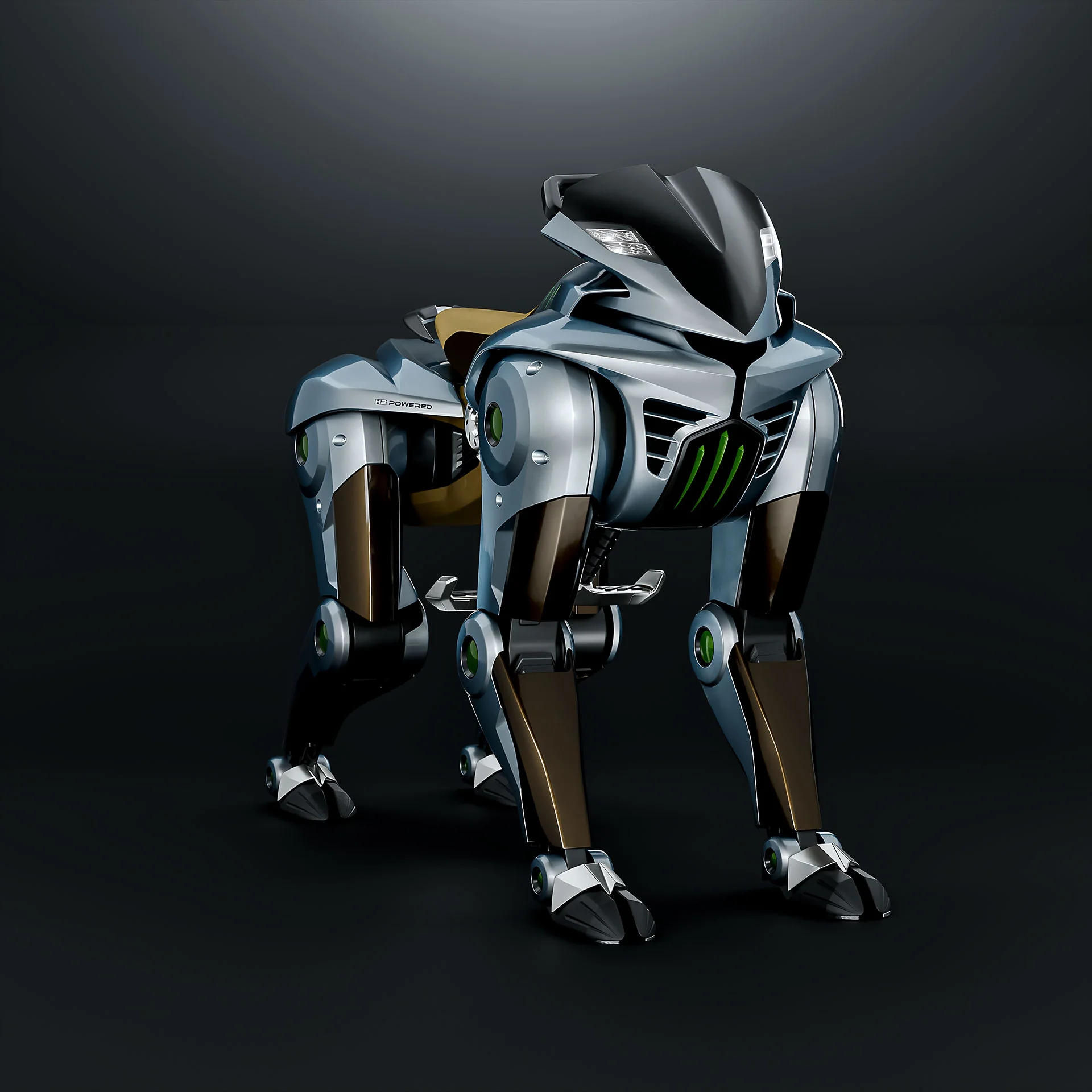
The goal is to combine motorcycle stability and robotics precision, creating a ride that feels controlled even on rough, uneven ground.
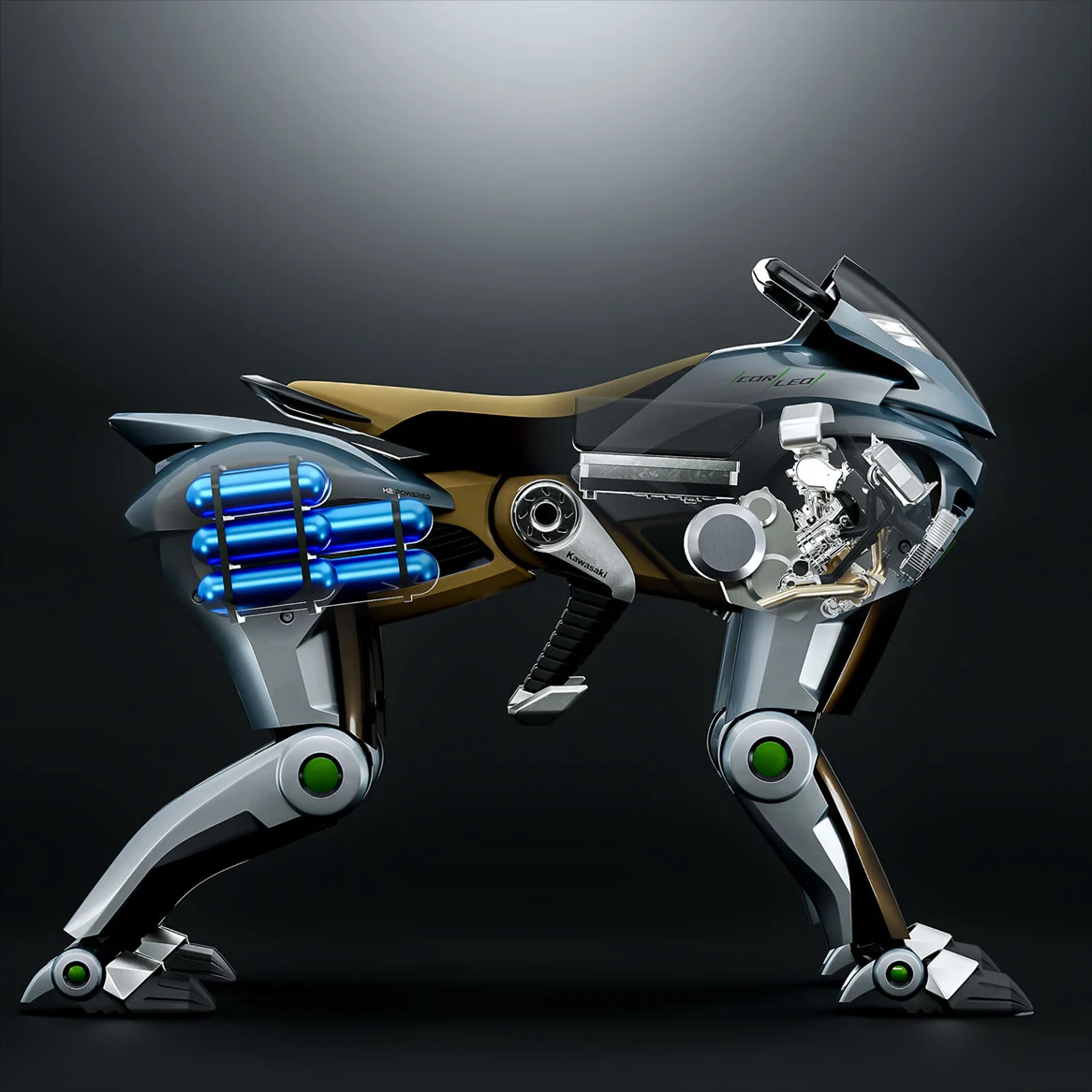
Corleo isn’t just a robotics demo; it’s also being developed with a hydrogen-powered drivetrain.
Kawasaki’s robohorse is expected to run on a hydrogen engine that generates electricity to move the legs, with rear-mounted hydrogen canisters designed for low emissions and quiet operation.
It is also expected to include a GPS navigation screen, helping riders map out routes while keeping their center of gravity stable.
Kawasaki has not revealed how many will be built or how much it will cost, but the shift from ‘2050 concept’ to a planned 2035 finished product is a massive leap.
Corleo has officially moved into the category of projects that could actually end up on sale, and it might be the strangest vehicle/robot horse that the company has ever put its name on.
DISCOVER SBX CARS: The global premium car auction platform powered by Supercar Blondie