Supercar Blondie breaks down the 1-of-70 $4M Koenigsegg CCGT1 and shares what makes it such a special hypercar
Published on Aug 20, 2026 at 11:48 AM (UTC-4)
by Ben Thompson
Last updated on Sep 02, 2026 at 9:46 AM (UTC-4)
Edited by
Mason Jones
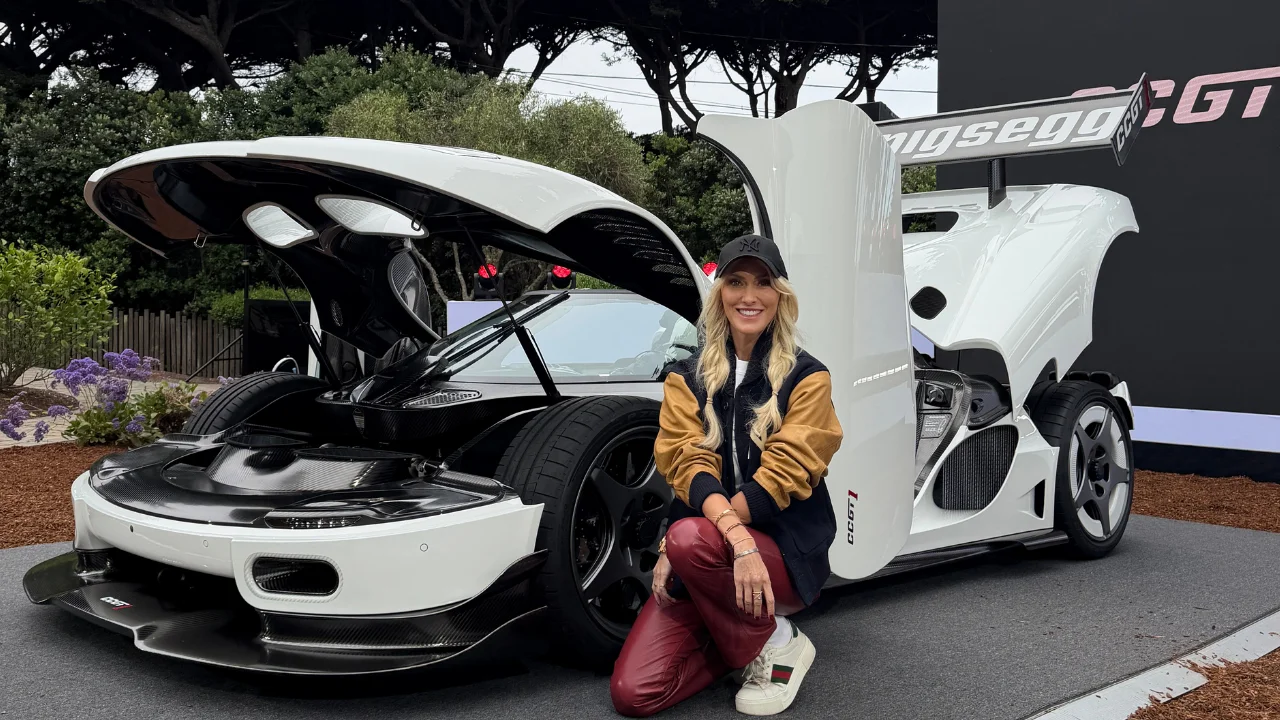

Supercar Blondie has taken a closer look at the 1-of-70 $4 million Koenigsegg CCGT1 to find out what makes it such a special hypercar.
Inspired by the original CCGT, which was built back in 2007, the CCGT1 is a standout first and foremost for its white carbon fiber exterior.
This material is exceptionally difficult to manufacture, compared to the black carbon fiber often utilized in hypercars.
But as you will see, the standout details of this car go far deeper than its surface.
Supercar Blondie got acquainted with the Koenigsegg CCGT1
Alex Hirschi, aka Supercar Blondie, was at Monterey Car Week when she got an up-close-and-personal look at the Koenigsegg CCGT1.
This came after a busy week in which she’d taken a look at a 1-of-150 Aston Martin Valen, and the $2 million Czinger 21C Spyder.
The first feature that Alex called attention to was the car’s color.
Traditionally, we’re used to seeing cars decked out in black carbon fiber, but this hypercar is all in white.
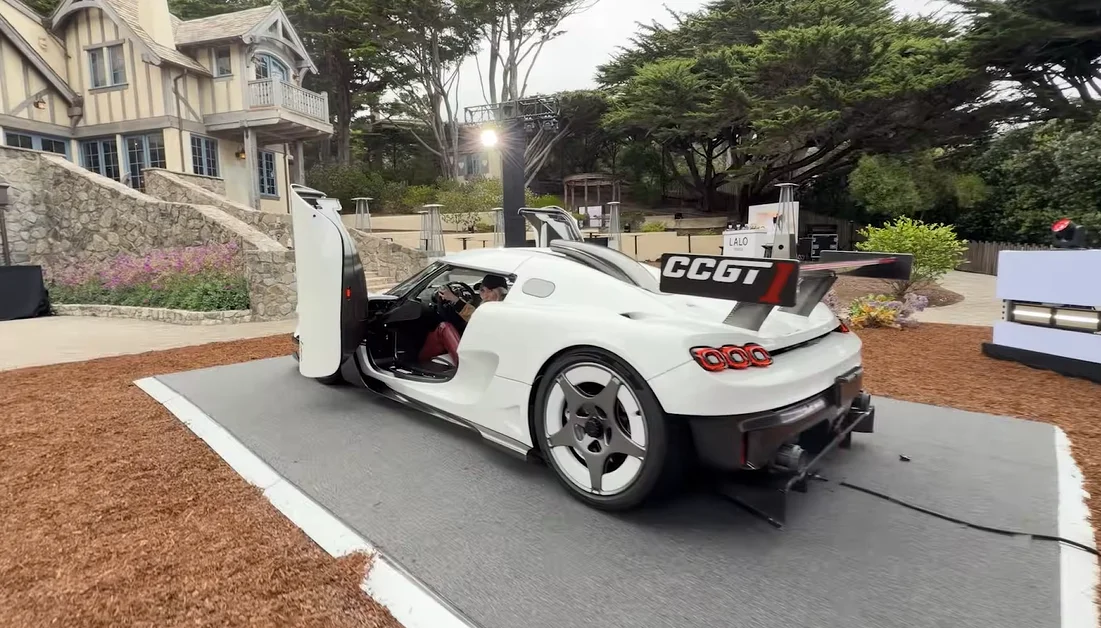
Its ‘ghost fiber’ is exceptionally difficult to manufacture, due to the unique response it has to heat and pressure during the molding process.
“It actually contracts differently to black carbon fiber when it’s in the oven, when it’s being heated,” Alex explained.
And it’s not just in exterior visuals that the car lends itself to the ghost moniker.
‘Ghost Mode’, when activated, performs an automated sequence in which the car’s doors, windows, and engine cover all open, while the rear wing and front body panels adjust.
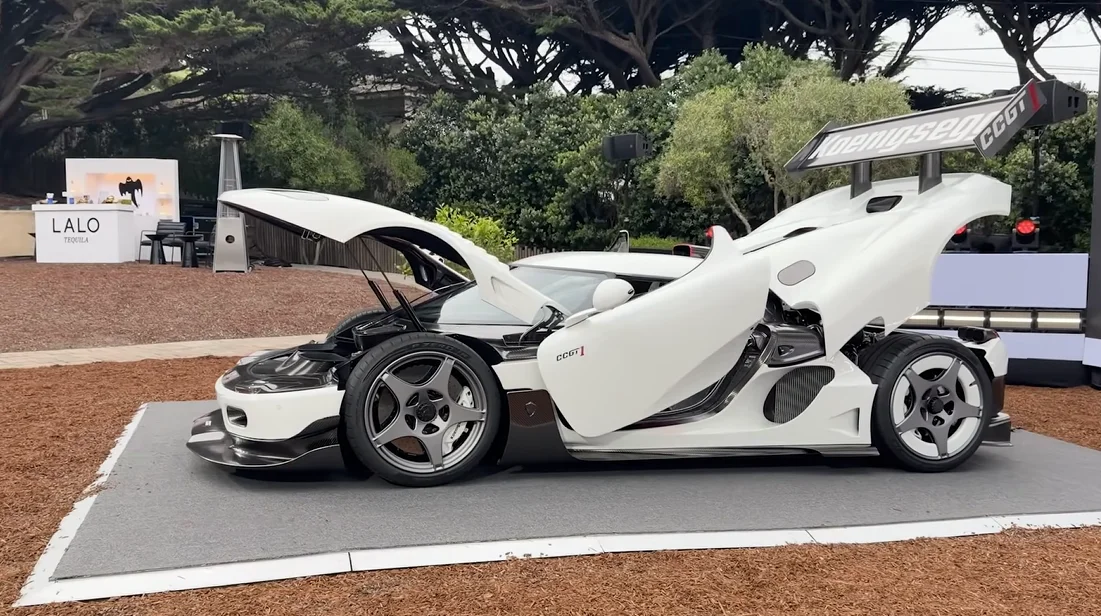
“This wins the show mode, it’s unreal,” Hirschi said.
This allowed Alex ample opportunity to get a look at the engine, which was sitting at the car’s rear.
Related

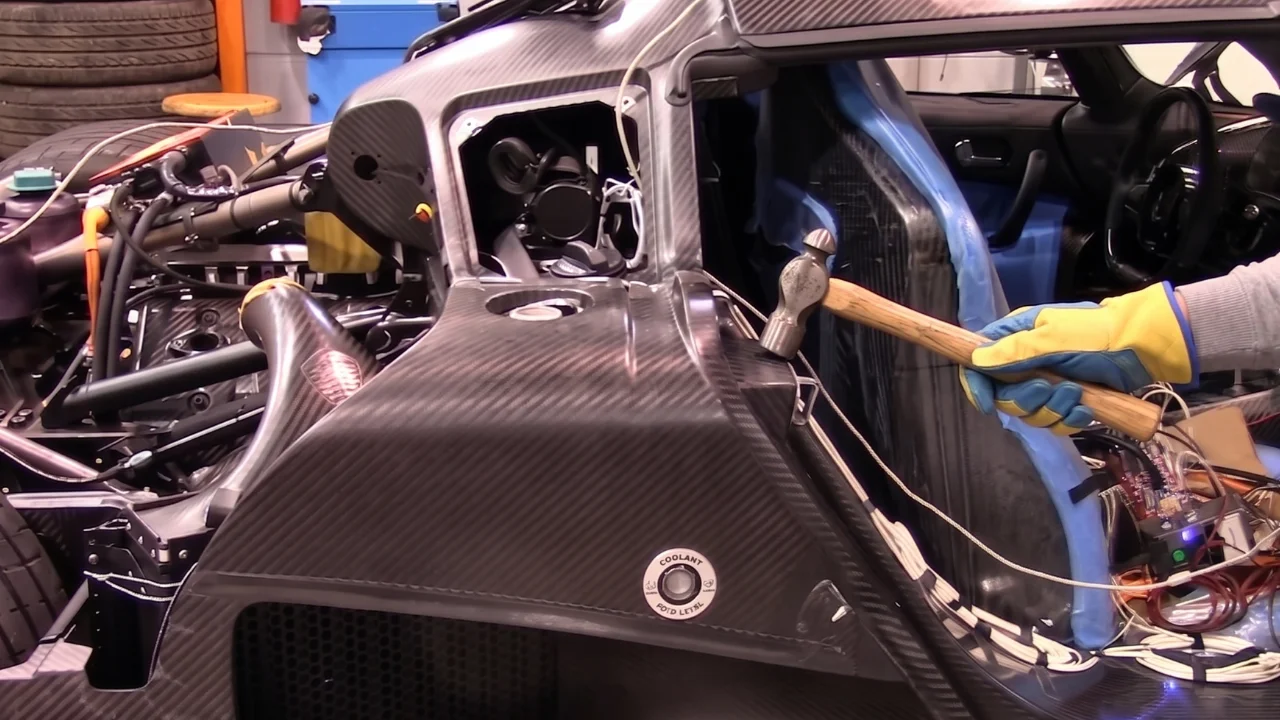

The beating heart of this Koenigsegg is a real beast
The car’s engine was a twin-turbo V8, capable of just under 1,300hp.
When using biofuel, this is upped to 1,600hp.
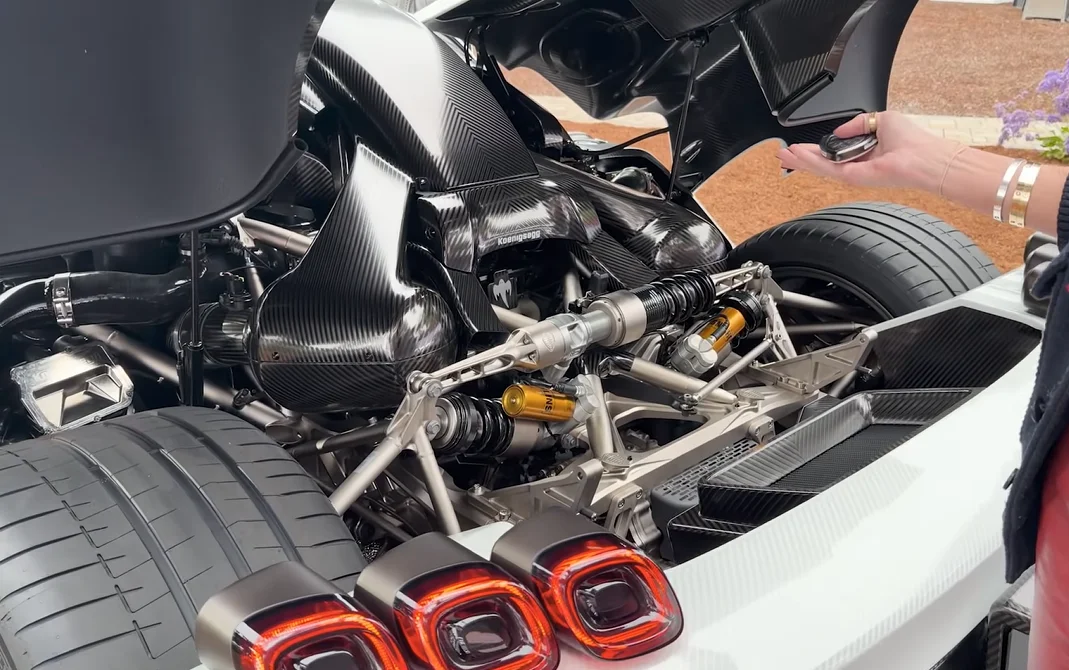
While designed for road use, there’s an optional track package, in which the wing can be adjusted for increased downforce.
This is the fastest-lapping Koenigsegg ever built.
And if you thought the outside was exemplary, just wait until you get a look at the interior.
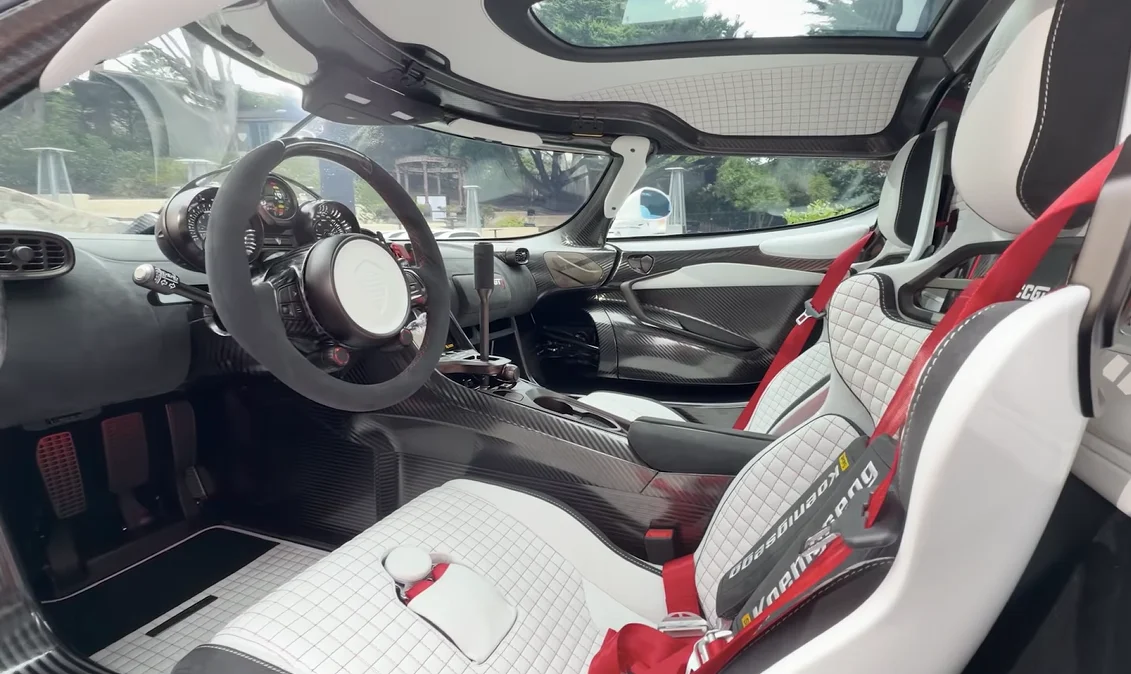
The interior is white with red stitching, while analog dials dominate the dashboard.
In the column, there’s a slot in which the key can be placed to start the car.
“I love that, I wish more cars had that,” Alex noted.

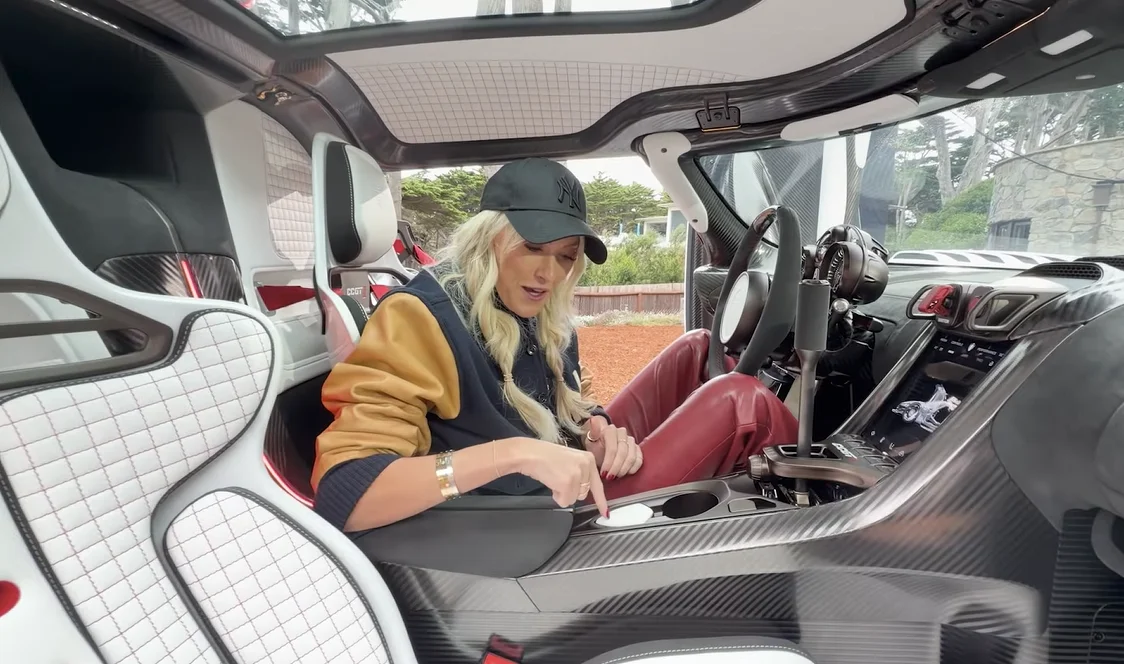
There’s not much in the way of storage, with two slots behind each of the seats and a small compartment in the column.
“This is not a weekend getaway car, this is a track-focused everyday runabout car,” she explained.
The car makes use of a sequential shifter branded with the acronym ‘ASMR’.
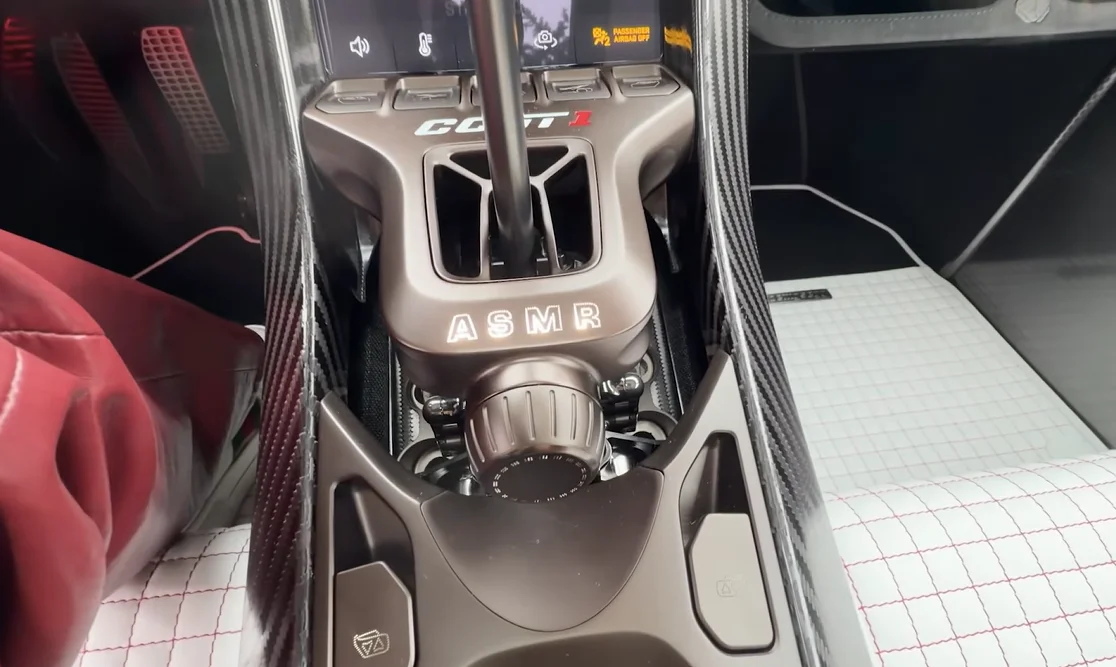
It turns out this name has a double meaning.
In the literal sense, it stands for ‘Auto mode, Sequential mode, Manual Mode, and Reverse’.
But it also produces a ‘clicky click sound’, which serves as ASMR in the way that most of us have become accustomed (sounds that relax us in some way).

Speaking of pleasing noises, the car revs up like a dream.
And here’s the final twist in the tale – this car has a removable roof.
How did it look ‘topless’? Pretty good, if we do say so ourselves.
“Now you can really see that stitching with the beautiful white exterior, the carbon fiber. Gorgeous,” Alex said.
Ben joined Supercar Blondie in February 2025 after being published by international organizations including LADbible, The Sun, the New York Post, and the Daily Mail. He covers supercars, rare and collectible vehicles, aviation, luxury assets, and the fascinating people behind them. His reporting has explored everything from seven-figure supercars and historic Ferrari collections to unusual aircraft adventures and extraordinary automotive discoveries from around the world. Ben has also gained first-hand insight into vehicle craftsmanship and customization, including visiting specialist workshops to see bespoke vehicles up close.