Vegas woman adds key data to ‘super controversial’ EV vs gas debate after reviewing Tesla Model 3 charging costs
Published on Jan 09, 2026 at 4:23 AM (UTC-5)
by Alessandro Renesis
Last updated on Jan 09, 2026 at 12:14 PM (UTC-5)
Edited by
Mason Jones
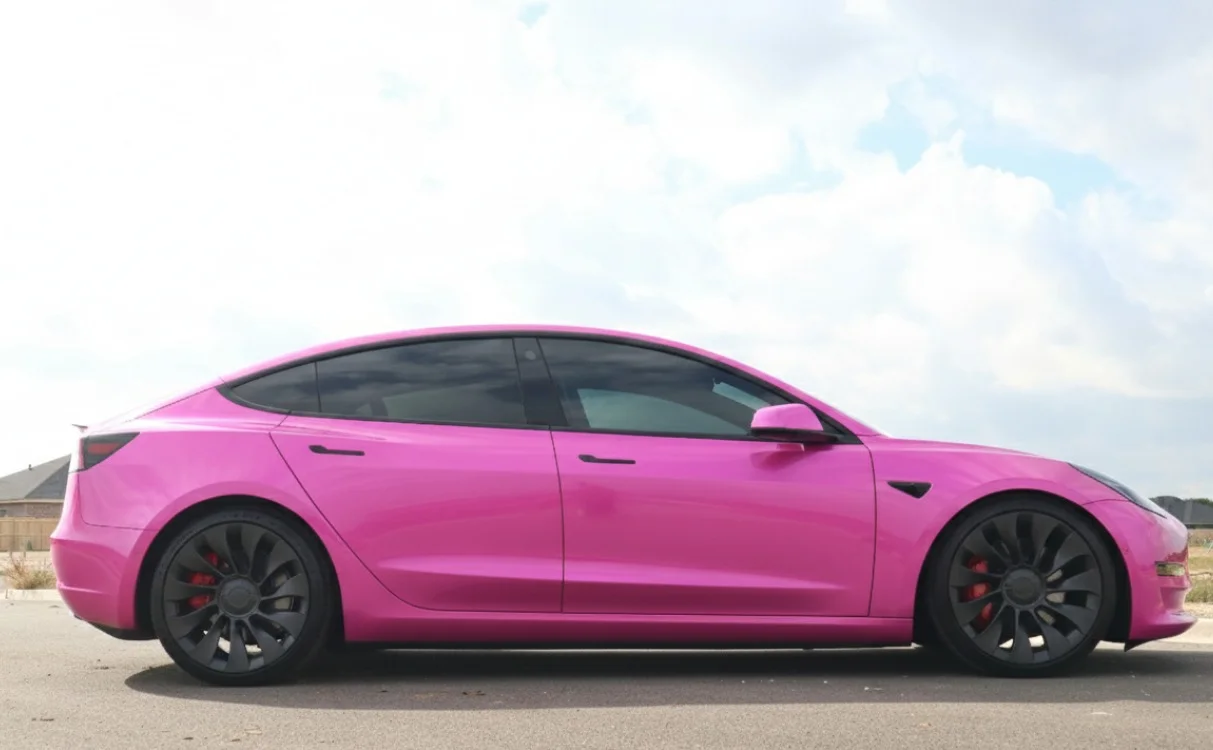

A woman in Las Vegas added yet more key data to the EV versus gas debate after realizing something about her Tesla Model 3.
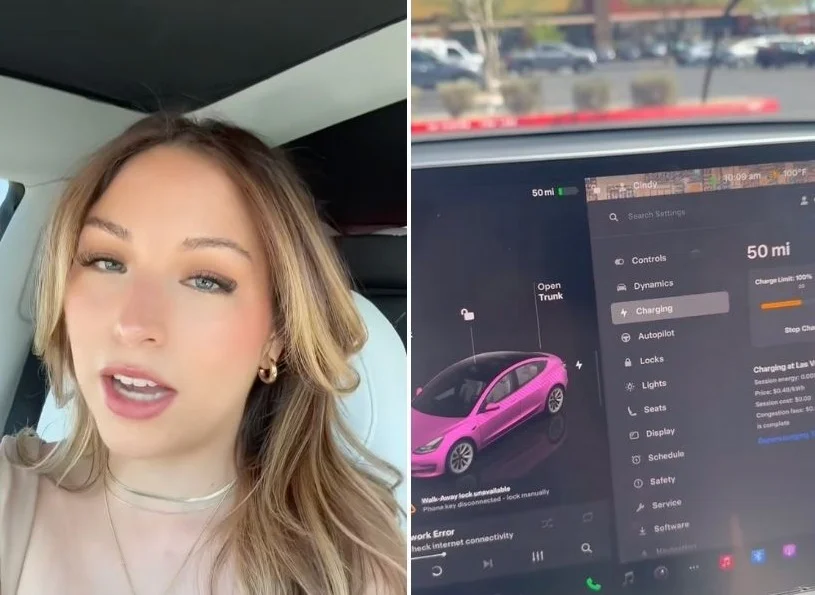
TikToker Cindy Mae and her husband own two Model 3s that they both charge at home.
They used to have gas cars not long ago, and the amount of money they’re now saving is incredible.
But there’s a huge catch.
DISCOVER SBX CARS: The global premium car auction platform powered by Supercar Blondie
This is how much she’s saving with her new Tesla Model 3
Mae explained to her followers on TikTok that both she and her husband recently switched to a Tesla Model 3 after getting rid of their old gas cars.
She now owns a ‘regular’ Model 3, whereas her husband owns the Performance model.
The Performance variant is faster, but they cost roughly the same in terms of charging and, according to Mae, $100 a month is generally enough to cover the cost for both.
On top of that, you’ve got no oil changes and maintenance is cheaper because it basically just boils down to tire rotations.
Back when they owned gas cars, they’d spend $400 a month on fuel, but now they’re only spending $100 and that’s definitely what you’d call progress.
So far so great, but there’s a huge catch we should bear in mind.
Related

This is further proof that EVs are cheaper to run, but with a big ‘if’
Mae made it clear that ’95 percent of the time’ they’re charging at home.
This makes a huge difference.
Home charging is generally the cheapest way to charge your EV, but not everybody can do that.
Obviously you’ll need a home charger, which will cost money, but more importantly, you need a physical infrastructure that allows you to do so.
Translated, you need to have access to something like a garage or a driveway.
Not everyone can do that.
Some people need to park their car on the street, or just generally wherever they can find a parking spot near where they live.
And if that’s the case, home charging is out of the question, and public charging – especially at Tesla Superchargers – might end up costing nearly as much as filling up the tank of your car with gas.
Alessandro is an automotive journalist with 10 years of experience covering supercars, automotive history, emerging vehicle technology, and luxury transportation. He wrote the first article published on SupercarBlondie.com when the website launched in 2022 and has since built a reputation for insightful reporting across the automotive and transportation industries. His expertise is grounded in hands-on experience. Alessandro has driven every Tesla model ever produced, from the original Roadster to the Cybertruck, and regularly covers the latest developments in electric vehicles and automotive innovation. His passion for transportation extends beyond cars, he has even flown a Boeing 787 Dreamliner simulator in Addis Ababa, Ethiopia. His reporting spans everything from classic American muscle cars and rare automotive discoveries to luxury yachts, private aircraft, high-end watches, and cutting-edge vehicle technology. Known for his deep knowledge of automotive history and ability to uncover the stories behind iconic vehicles, Alessandro brings readers a blend of historical context, technical expertise, and first-hand experience.