Man tests what actually happens if Concorde loses its wing in flight
Published on Dec 08, 2025 at 11:12 AM (UTC+4)
by Jason Fan
Last updated on Dec 08, 2025 at 6:32 PM (UTC+4)
Edited by
Mason Jones

Wing failure in aircraft is obviously bad news, but can the legendary Concorde still fly without its wings?
YouTuber Swiss001 decided to put this to the test in his latest video, putting the supersonic jet through a series of flight simulator experiments.
Known for pushing virtual aircraft well beyond their comfort zones, the content creator showed no mercy to the Concorde.
The result was part physics lesson, part comedy, and all fun.
SBX CARS – View live supercar auctions powered by Supercar Blondie
Does Concorde need its wings to fly?
The video begins with praise for Concorde as one of aviation’s greatest engineering achievements.
From its Olympus afterburning engines to its drooping nose and extreme landing pitch, it was more fighter jet than commercial airliner.
The YouTuber then zoomed in on one of its most fascinating features: the ogival delta wing, a shape carefully designed to work at both low speeds during landing and supersonic speeds at altitude.
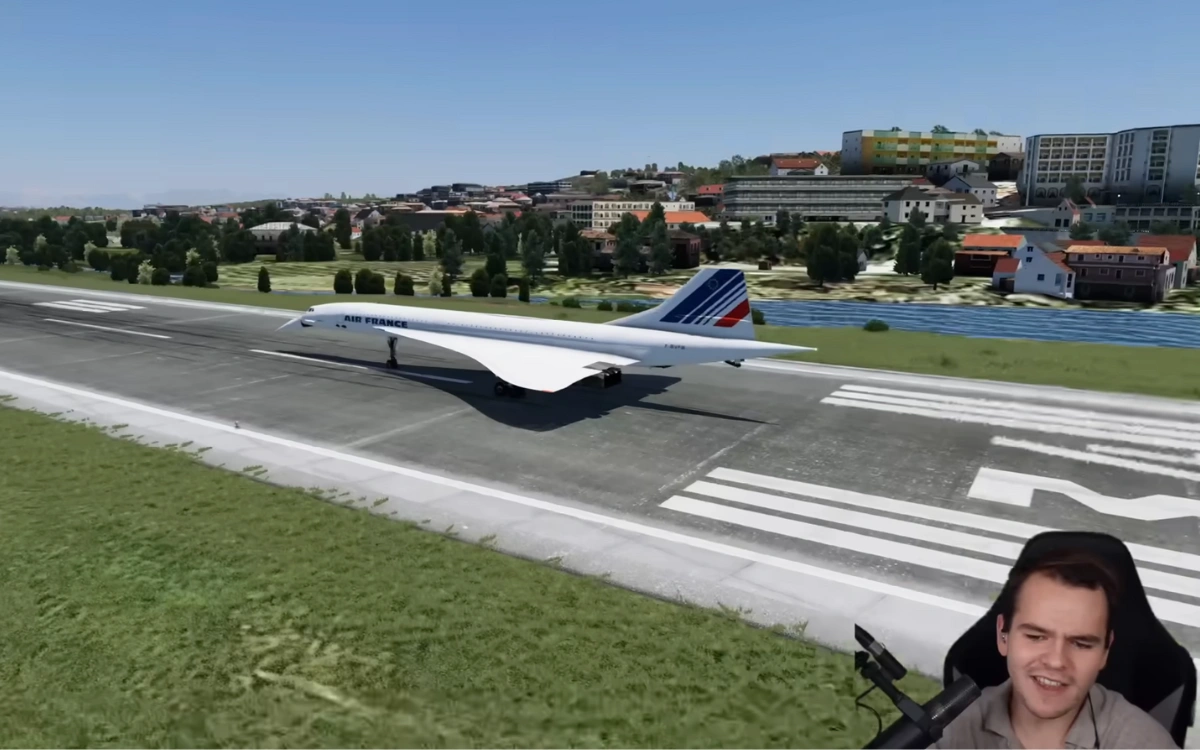
That unique wing, as it turns out, is absolutely essential.
Using a flight simulator’s ‘hot knife’ tool, he sliced away chunks of Concorde’s wing to see if brute force and afterburners can make up for missing lift.
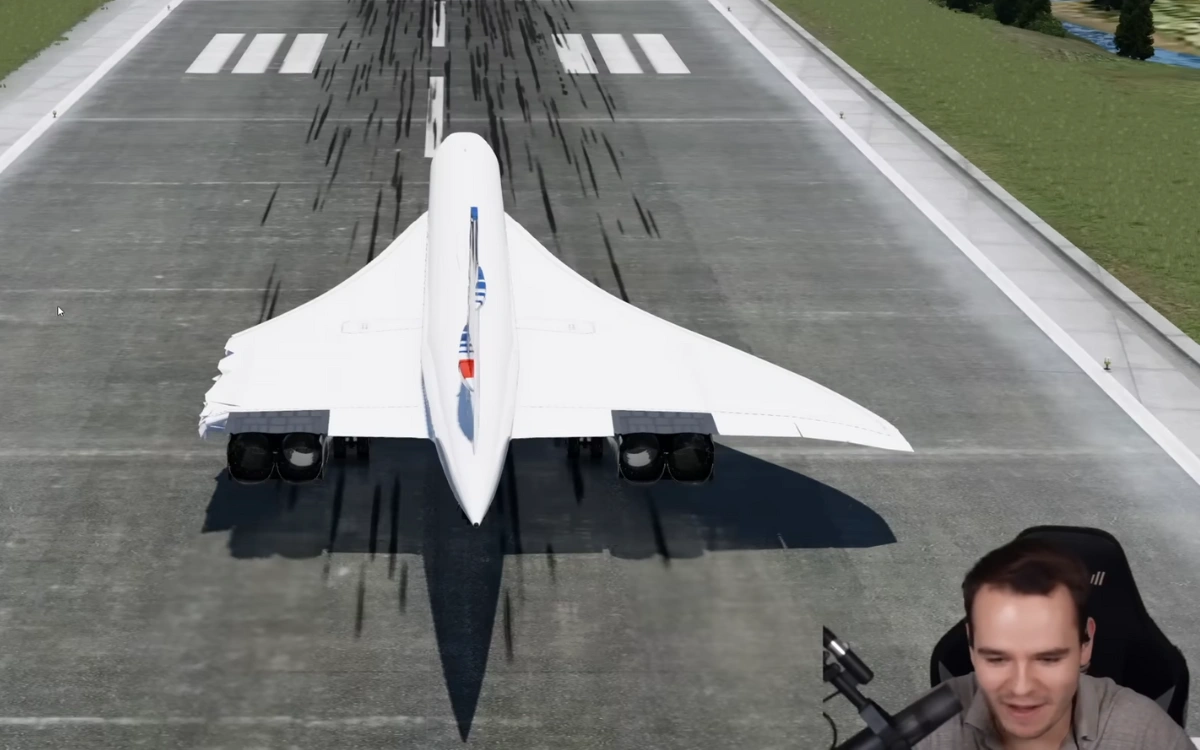
Fighter jets like the F-15 have famously survived with wing failure, so surely the supersonic jet will manage…right?
Not quite.
With catastrophic wing failure, the aircraft struggled to generate enough lift, even at eye-watering speeds over 200 knots.
Less wing equals less lift, and the simulator made that painfully obvious in spectacular runway-hogging failed takeoffs.
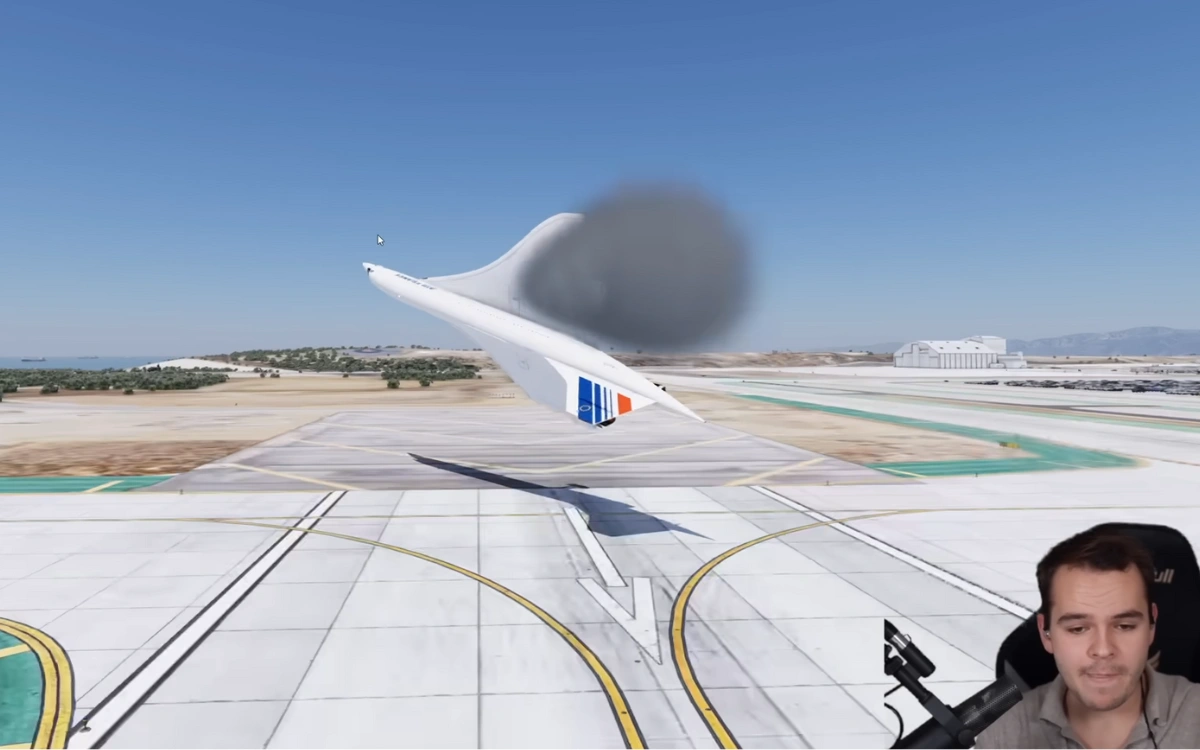
The plane flew surprisingly well with a damaged vertical stabilizer
After restoring some of the wing, Swiss001 moved on to another experiment: damaging the vertical stabilizer.
This produced a very different kind of chaos.
With part of the tail removed, it became unstable on the yaw axis, sliding and ‘snaking’ through the air like it’s flying in a permanent crosswind.
Amazingly, with partial damage, the aircraft is still flyable.
In fact, it even managed high-speed passes and landings that feel more like controlled accidents.

The final test removes the vertical stabilizer almost entirely, and things go downhill fast.
Without rudder authority, the plane can’t track straight even during takeoff, veering wildly before spinning out of control.
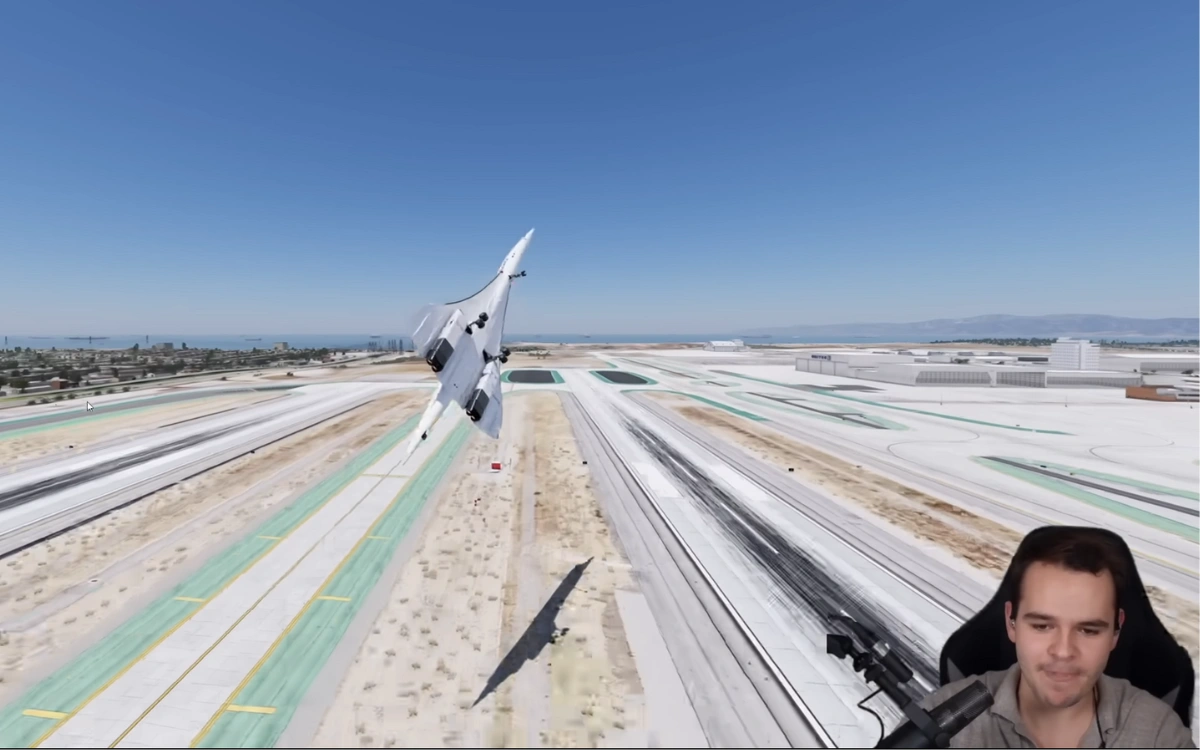
The verdict is clear: Concorde may be fast, powerful, and futuristic, but it very much needs its wings and tail to stay in the air.
As it turns out, even the world’s most advanced airliner can’t cheat physics.
Key milestones in Concorde’s supersonic story
1956: UK and France begin discussions for a supersonic passenger aircraft
1962: Official Anglo-French treaty signed to develop Concorde
1969: First Concorde prototype takes flight in Toulouse
1973: Concorde hits Mach 2 for the first time during testing
1976: First commercial flights launch with British Airways and Air France
1985: Concorde used for transatlantic VIP trips and iconic charters
1996: Fastest transatlantic crossing set—New York to London in 2h 52m
2003: Final commercial Concorde flight marks the end of supersonic travel
DISCOVER SBX CARS: The global premium car auction platform powered by Supercar Blondie