Man with incredible 3D-printed Porsche 992 GT3 RS tries to address some of its glaring issues
Published on Dec 31, 2025 at 12:00 AM (UTC+4)
by Daisy Edwards
Last updated on Dec 30, 2025 at 4:25 PM (UTC+4)
Edited by
Amelia Jean Hershman-Jones
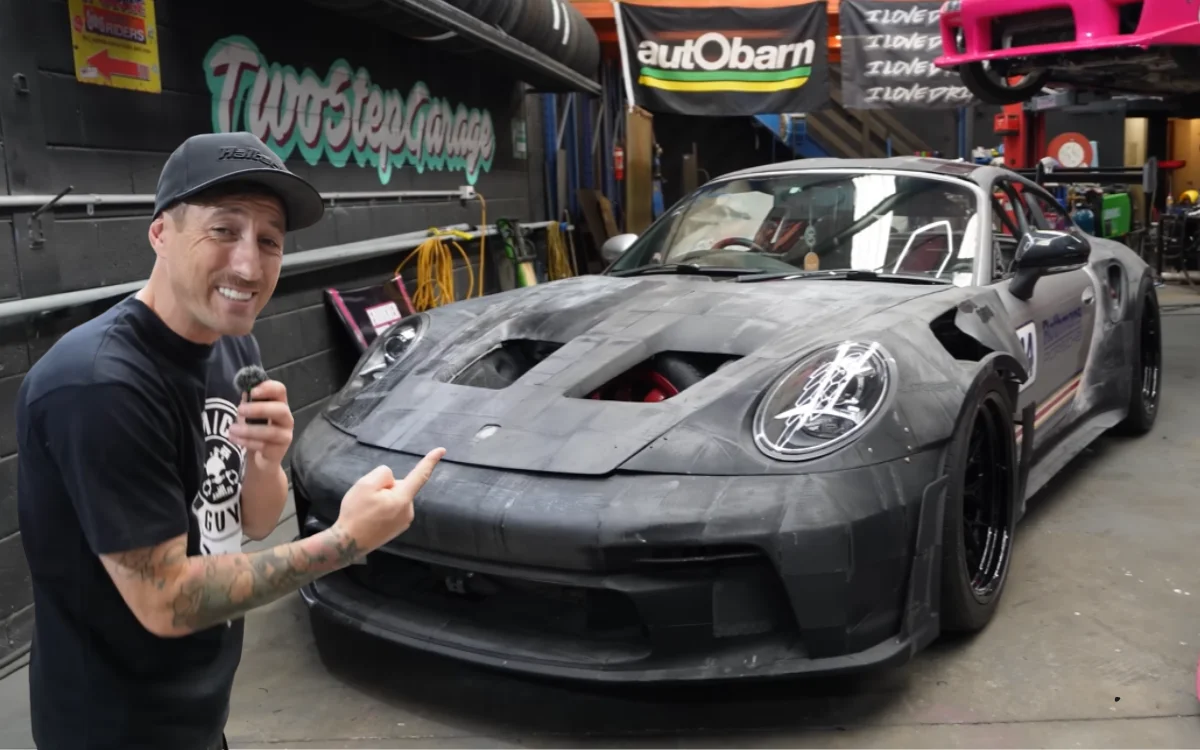

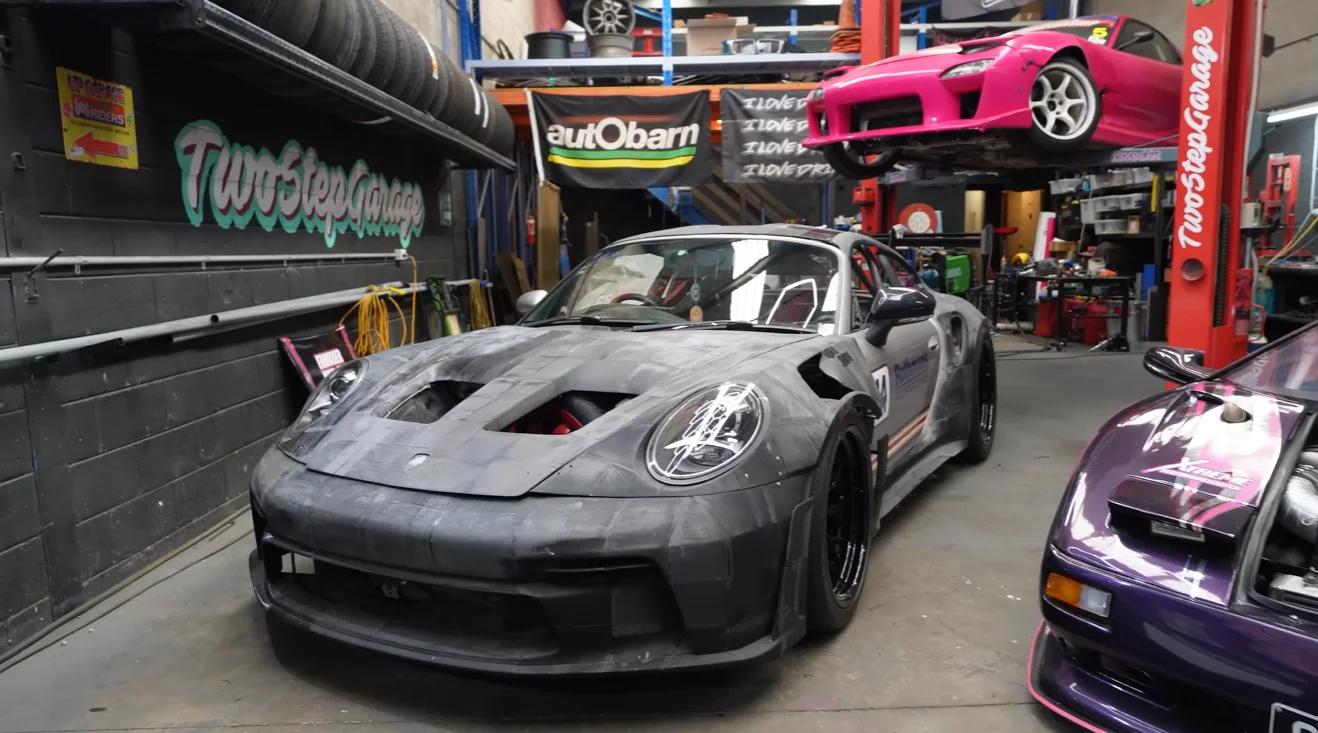
This man has embarked on a project to build an incredible 3D-printed Porsche 992 GT3 RS, but it seems that he has hit a frustrating stage of the process.
After three months of speedy progress, the car is finally starting to look like a proper GT3 RS from a distance.
But now, the build found itself getting slowed down by some glaring issues that can’t be ignored.
The next stage will definitely be less exciting, but it’s the part that decides whether the car ends up looking like it rolled straight out of the factory or like a cobbled-together kit car.
EXPLORE SBX CARS – Supercar auctions starting soon powered by Supercar Blondie
His 3D-printed Porsche 992 GT3 RS faces some glaring issues
This YouTuber has been doing something crazy: building a Porsche 992 GT3 RS supercar using parts he 3D printed rather than a kit.
After months of the project going swimmingly, the YouTuber revealed that he’s currently stuck waiting on the 3D-printed Porsche’s taillights, which are needed before the rear end can be properly built and aligned.
Without them, there’s no way to guarantee the mounts for the rear parts will sit correctly, and the last thing anyone wants is to fabricate everything only to find the lights don’t fit properly.
So instead, he shifted his focus to one of the biggest missing pieces: the windows and B-pillars.
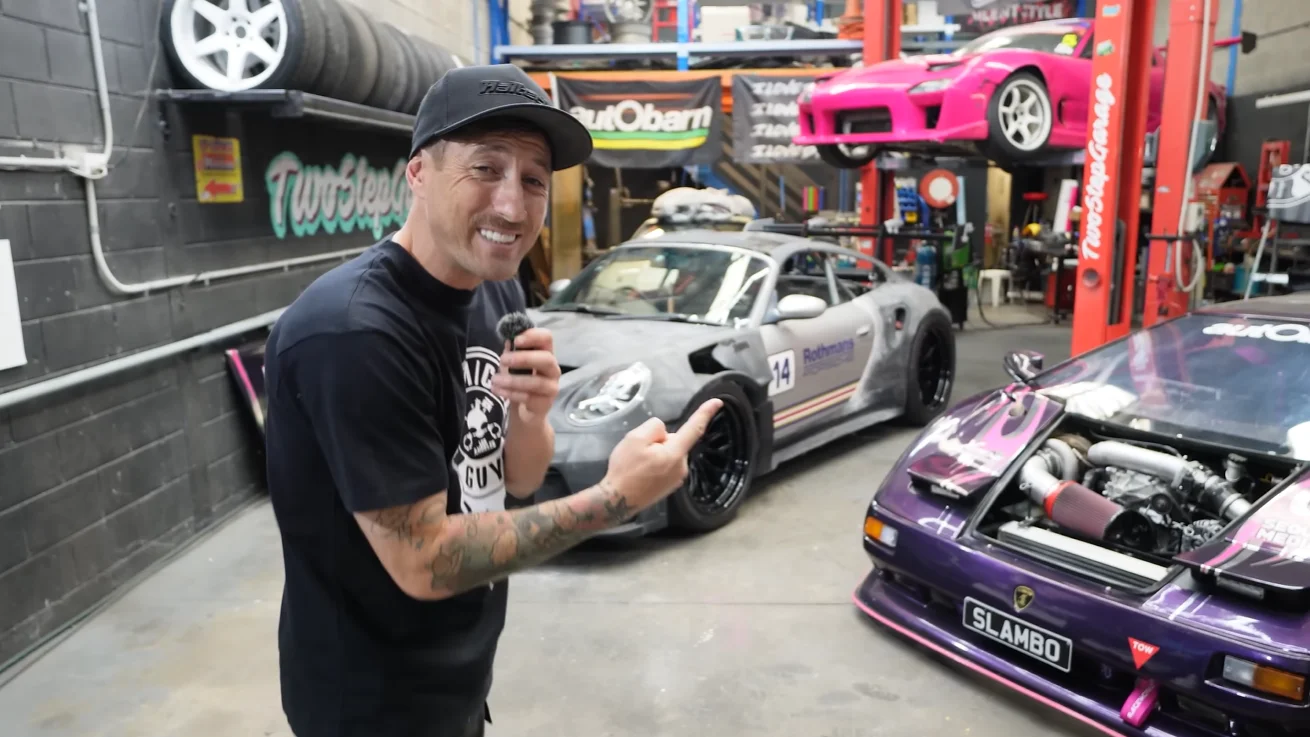
He ordered Porsche GT3 Lexan windows from a UK supplier, choosing them because they’re lighter, cheaper than expected, and still look great, even like stock parts once fitted.
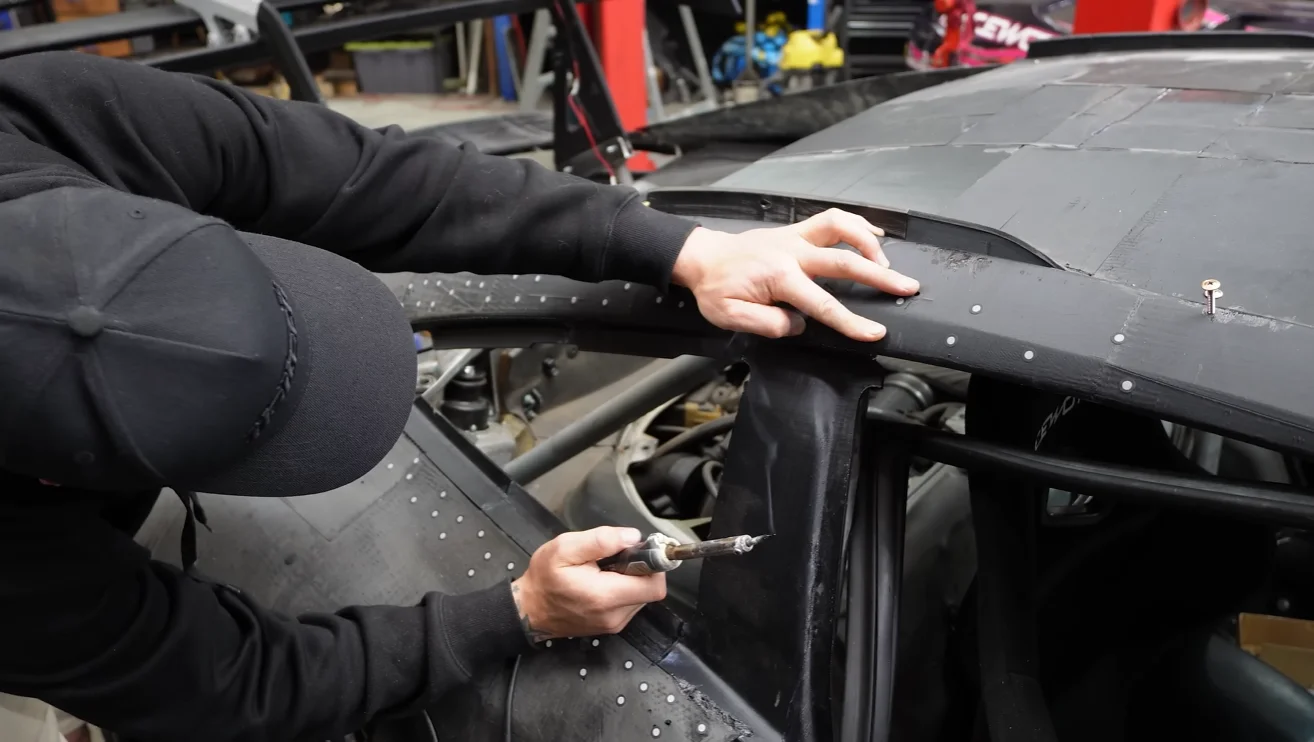
The issue is that his 3D printing files only work to the edge of the window openings, meaning there’s no inner lip for the windows to be fitted to and built into the body.
To solve that, he pulled out a 3D scanner and used it to capture the missing bits needed for a proper B-pillar design.
After learning the process and placing tracking dots across the supercar, he managed to generate a proper scan and turn it into a workable file.
He did a very smart fix with the mirror
Once the B-pillar files were complete, a friend helped him create printable parts, and once the sections were printed and assembled using plastic welding and superglue, they fitted into the car with surprising accuracy.
The parts were reinforced with fiberglass to make sure they hold up for a while, but the window issue wasn’t the only glaring problem he wanted to tackle.
The original mirrors on the car were Boxster mirrors, which don’t match the aggressive look of the real 992 GT3 RS.
Real GT3 RS mirrors are expensive, so he tried a surprisingly effective alternative instead: mirrors from a 2018 Toyota Camry.
After measuring carefully and drilling into the door, the mirror mounted shockingly and even sat in the right position to be properly seen from the driver’s seat.
It’s obviously chunkier than the real Porsche version, but once the 3D-printed Porsche 992 GT3 RS is painted and finished, it could end up being one of the best cost-saving and smart upgrades on the whole build.

Timeline of Porsche
1931: Ferdinand Porsche founded Dr. Ing. h.c. F. Porsche GmbH in Stuttgart as an engineering consultancy.
1945 – 1947: After WWII, the company relocated temporarily to Austria.
1948: The first car to bear the brand’s name is completed – the Porsche 356.
1950: Porsche returned to Stuttgart-Zuffenhausen, rolling out production of the 356.
1963: The Porsche 911 debuts at the Frankfurt Motor Show.
1964: 911 production begins, as it becomes the brand’s defining model.
Late 1960s: Models like the 908 and 917 dominate endurance racing.
1974: Introduction of the 911 Turbo (930) brings turbocharging to road cars.
1986: The company wins Le Mans with the 962.
1996: The Boxster (986) helps put the company back on steady ground after a few years of financial difficulties.
2001: Porsche enters the SUV market with the Cayenne.
2009: The Panamera is launched as the company’s first four-door sports sedan.
2020: The company’s first fully electric sports car, the Taycan, is launched
2021 – 2024: The hybrid and EV lineups are expanded.
DISCOVER SBX CARS: The global premium car auction platform powered by Supercar Blondie