Manual Mustang GT decides to drag race a Tesla Cybertruck and the gap ends up becoming ridiculous
Published on Jun 19, 2026 at 4:05 PM (UTC-4)
by Alessandro Renesis
Last updated on Jun 19, 2026 at 4:05 PM (UTC-4)
Edited by
Mason Jones
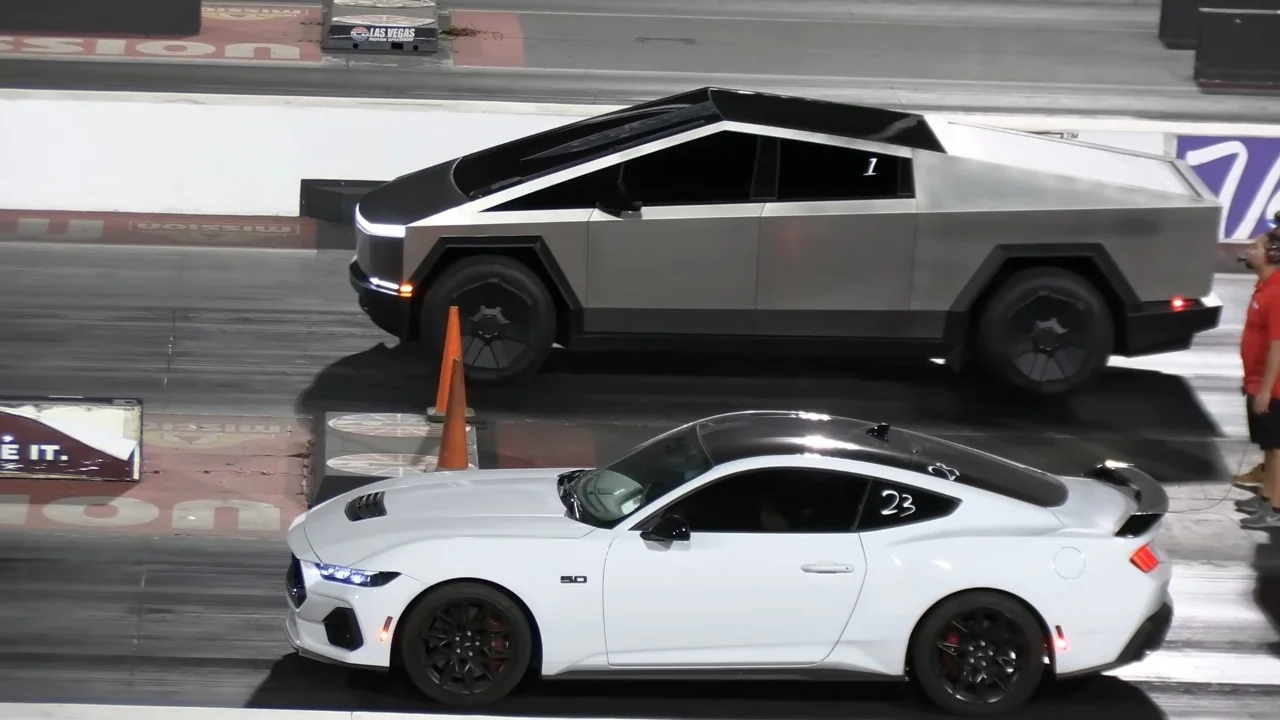

This manual Ford Mustang GT challenged a Tesla Cybertruck in a drag race but it was hopeless and the results were eye-opening.
They lined up for three runs, with the same pattern emerging each time.
There are several reasons why one vehicle had the advantage.
Including one factor that’s often overlooked.
This drag race wasn’t a fair fight at all
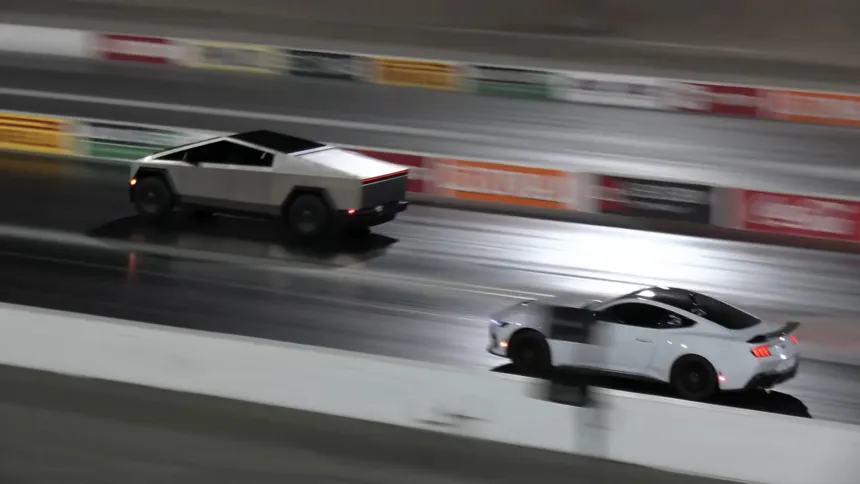
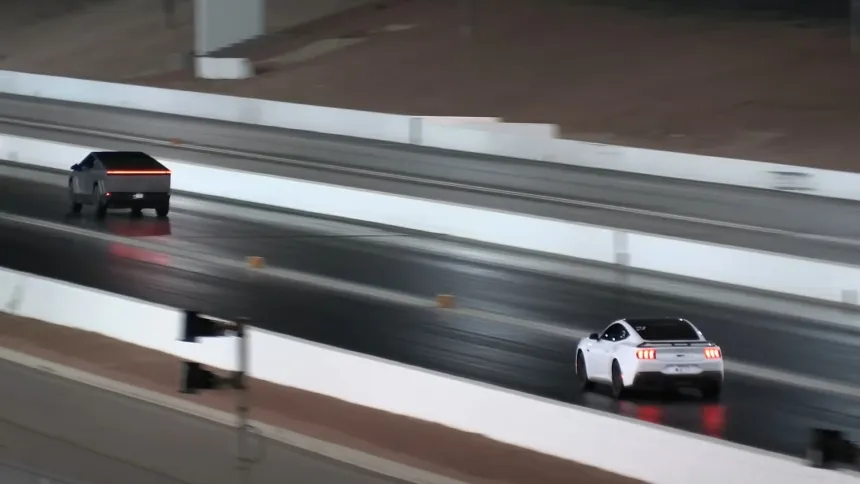
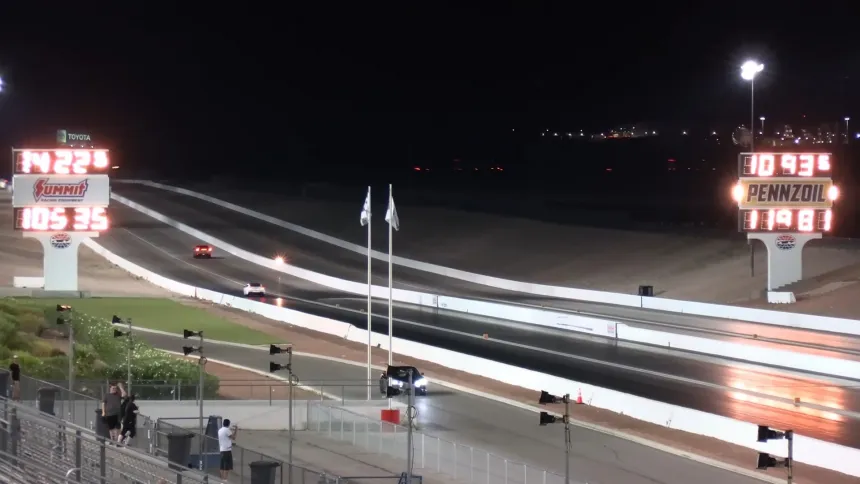
An S650 Ford Mustang GT lined up against a dual-motor Tesla Cybertruck at the Las Vegas Motor Speedway, but the gap between these two was mad.
On paper, the lightweight Mustang GT had a better power-to-weight ratio (249 bhp/ton) thanks to a 480-horsepower V8.
The Cybertruck ‘only’ has 181 bhp/ton, mainly because it’s incredibly heavy.
In practice, the Cybertruck’s torque made a difference.
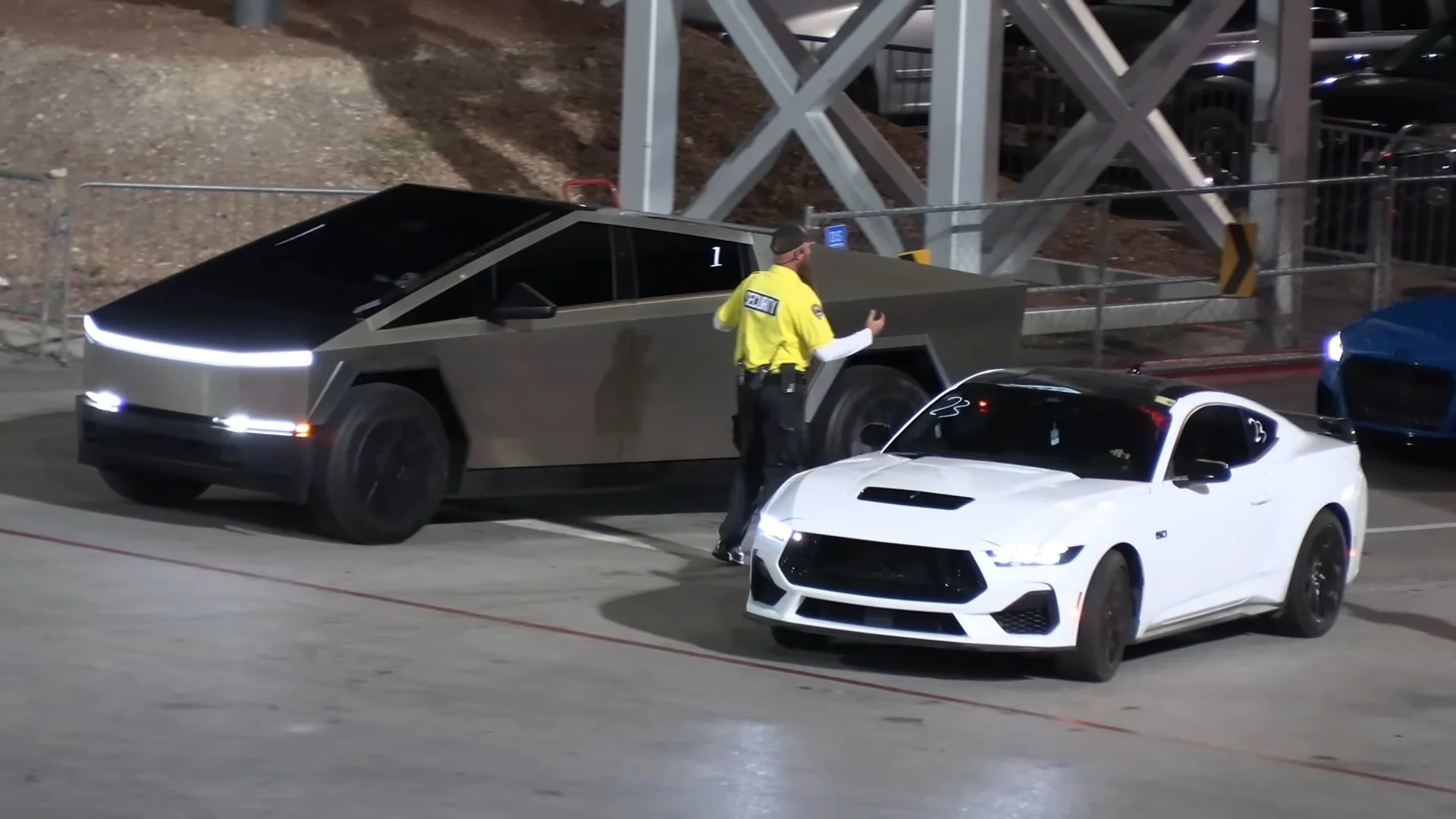
The dual-motor truck consistently rocketed down the strip to sweep all three races with incredibly uniform times: always under 11 seconds and always with an exit speed of around 120 mph.
By contrast, the Mustang took around 14 seconds to cover the same distance.
Related
It wouldn’t have mattered anyway but…
There are lots of reasons why a Ford Mustang GT can’t beat a Cybertruck in a drag race, including a tiny detail that’s overlooked: the gearbox.
The gap in power and torque between a Ford Mustang GT and a Cybertruck is so immense that this little detail wouldn’t have mattered anyway, but we should probably talk about it.
With no exceptions, all things being equal, an automatic transmission beats a manual transmission every time.
Obviously, a great driver with a great manual gearbox will be faster than a slow driver with a terrible transmission.
But if we take the best possible manual gearbox and the best possible auto, the auto wins 100 times out of 100.
A computer sending an electronic signal to a hydraulic actuator will always outpace a human brain signaling a foot to depress a clutch and a hand to physically move a mechanical linkage.
Two decades ago, VW pioneered the dual-clutch gearbox, which now everyone else uses, and the fact of the matter is an automated gear change in a dual-clutch is significantly faster than a human can manually shift gears.
A professional driver takes roughly 500 to 1,000 milliseconds (0.5 to 1.0 seconds) to shift a manual.
A modern dual-clutch gearbox can execute a shift in less than 40 milliseconds.
Sad but true.

Alessandro is an automotive journalist with 10 years of experience covering supercars, automotive history, emerging vehicle technology, and luxury transportation. He wrote the first article published on SupercarBlondie.com when the website launched in 2022 and has since built a reputation for insightful reporting across the automotive and transportation industries. His expertise is grounded in hands-on experience. Alessandro has driven every Tesla model ever produced, from the original Roadster to the Cybertruck, and regularly covers the latest developments in electric vehicles and automotive innovation. His passion for transportation extends beyond cars, he has even flown a Boeing 787 Dreamliner simulator in Addis Ababa, Ethiopia. His reporting spans everything from classic American muscle cars and rare automotive discoveries to luxury yachts, private aircraft, high-end watches, and cutting-edge vehicle technology. Known for his deep knowledge of automotive history and ability to uncover the stories behind iconic vehicles, Alessandro brings readers a blend of historical context, technical expertise, and first-hand experience.