America planned a massive man-made island airport outside LA to launch Boeing’s Mach 2.7 supersonic jet that never happened
Published on Dec 27, 2025 at 4:13 PM (UTC+4)
by Jason Fan
Last updated on Dec 09, 2025 at 10:24 PM (UTC+4)
Edited by
Emma Matthews

In the 1960s, Los Angeles almost built a man-made island airport called Santa Monica Island, purpose-built to launch the futuristic Boeing 2707 supersonic jet.
The plan was straight out of science fiction: a floating city-airport in the Pacific Ocean that would redefine air travel and urban life.
Basically, if the plan were successful, the city of Los Angeles would extend into the sea.
Unfortunately, the ambitious project never materialized, and we’re simply left with
SBX CARS – View live supercar auctions powered by Supercar Blondie
The man-made island airport would solve jet noise
The concept was equal parts dazzling and audacious.
Just a few miles off the coast between Santa Monica and Marina del Rey, planners envisioned a colossal island with two 15,000-foot runways stretching into the Pacific.
Subways would connect it to the mainland, with one tunnel linking to Los Angeles International Airport, and another to the Pacific Coast Highway near the Santa Monica Pier.
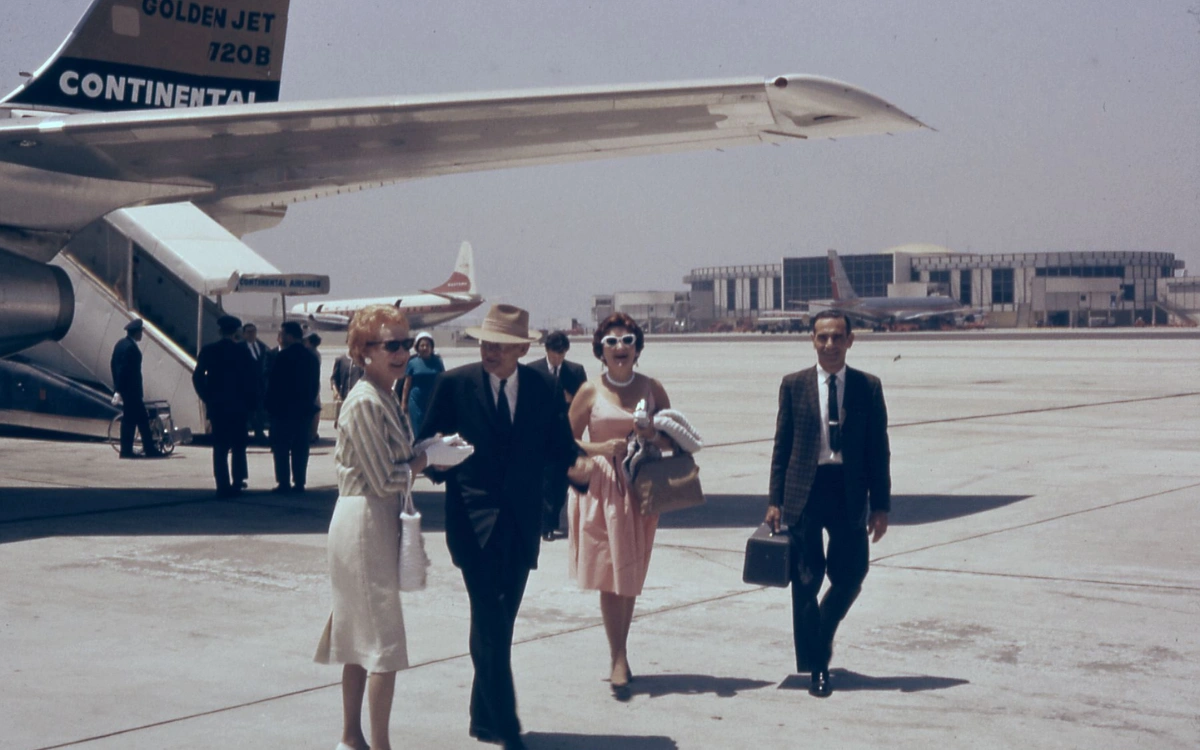
Supersonic jets would take off and land over water, keeping their thunderous engines away from sleeping locals.
It was an elegant solution to the growing headache of jet noise, especially from the emerging supersonic jets of the era.
Architect R. Donald Jaye’s 1968 renderings turned the idea into pure architectural fantasy.
The man-made island airport would be surrounded by skyscrapers, beaches, hotels, a sports complex, and even an aerospace university.
The vision captured everything the Jet Age stood for: confidence, style, and an unshakable belief that technology could solve anything, even geography.
The Boeing 2707 was supposed to overtake Concorde
At the time, the Boeing 2707, which was America’s answer to the Concorde, was the centerpiece of this dream.
The jet promised to cruise at Mach 2.7 while carrying 300 passengers, flying higher and faster than anything before it.
But as the years went on, the Supersonic Transport program hit turbulence.
Environmentalists sounded alarms over sonic booms and atmospheric damage, as well as the toll construction would take on the ocean, while costs ballooned out of control.
In 1971, Congress cut funding, and Boeing’s supersonic airplane, along with the offshore airport meant to serve it, never left the drawing board.

Today, the doomed Santa Monica Island is a symbol of an era when America’s ambitions sometimes outpaced its realities.
This isn’t limited to the aviation sector either.
There were plenty of wild concept cars back in the day, including Ford’s nuclear-power car in the 1950s.
DISCOVER SBX CARS: The global premium car auction platform powered by Supercar Blondie