Men put F1 tires on a road car to see if they make it faster
Published on Jan 05, 2026 at 9:58 PM (UTC+4)
by Jack Marsh
Last updated on Jan 06, 2026 at 3:41 PM (UTC+4)
Edited by
Emma Matthews
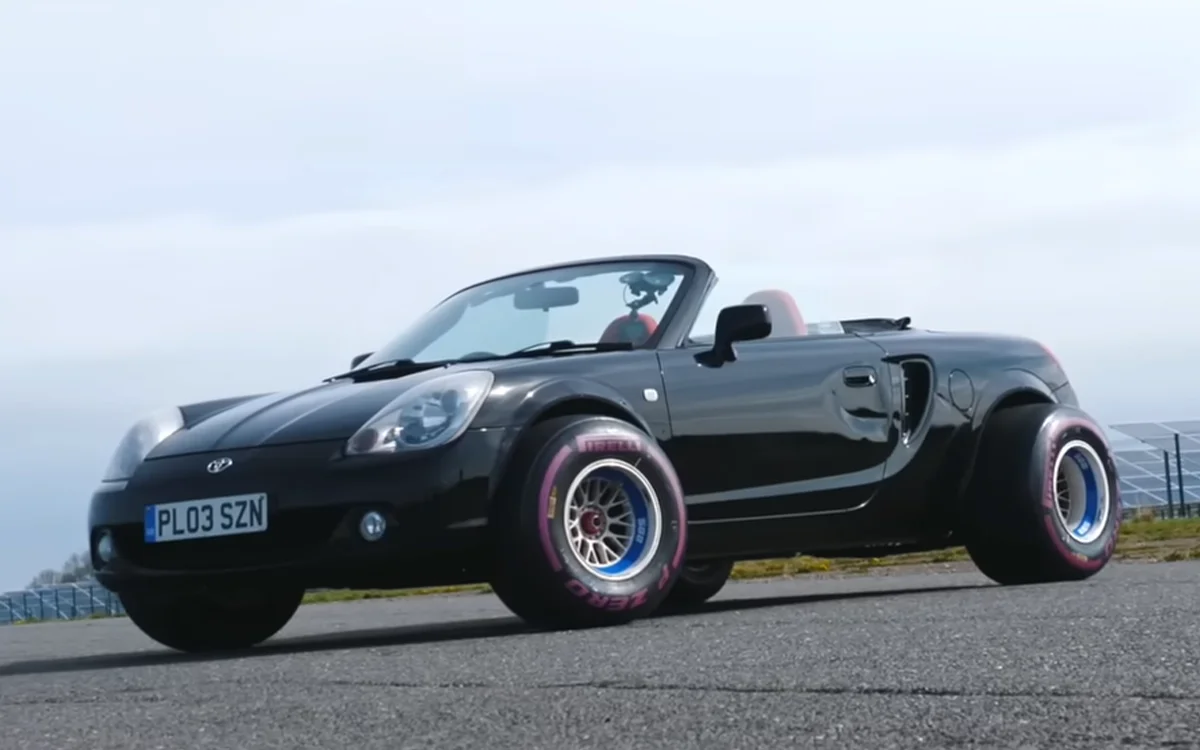

To see whether they can turn a standard road car into a buzzing race machine, these YouTubers bolted F1 tires on a Toyota MR2 and found that not everything is as straightforward when trying to increase your speed.
Formula 1 cars are some of the fastest machines on the planet; while they’re crushed in straight-line speed by some supercars, around a circuit, they are unmatched.
Every component of a Formula 1 car is crafted to handle the highest turning speeds possible, allowing drivers to get around corners at unparalleled speeds. But that’s all for nothing without tires that stick to the road like glue.
So, what happens when you put F1 tires on a road car?
VISIT SBX CARS – View live supercar auctions powered by Supercar Blondie
The difference between F1 tires and normal ones
Every car on the road has to adhere to strict tire regulations, ensuring that the vehicle is as safe as can be.
Whether they are normal road tires or all-weather wheels, even the most expensive sets of rubber in the world have to have deep treads to create grip.
However, F1 tires are completely different.
Instead of having tread marks, they are completely smooth, as the friction at high temperatures makes them stick to the ground like glue.
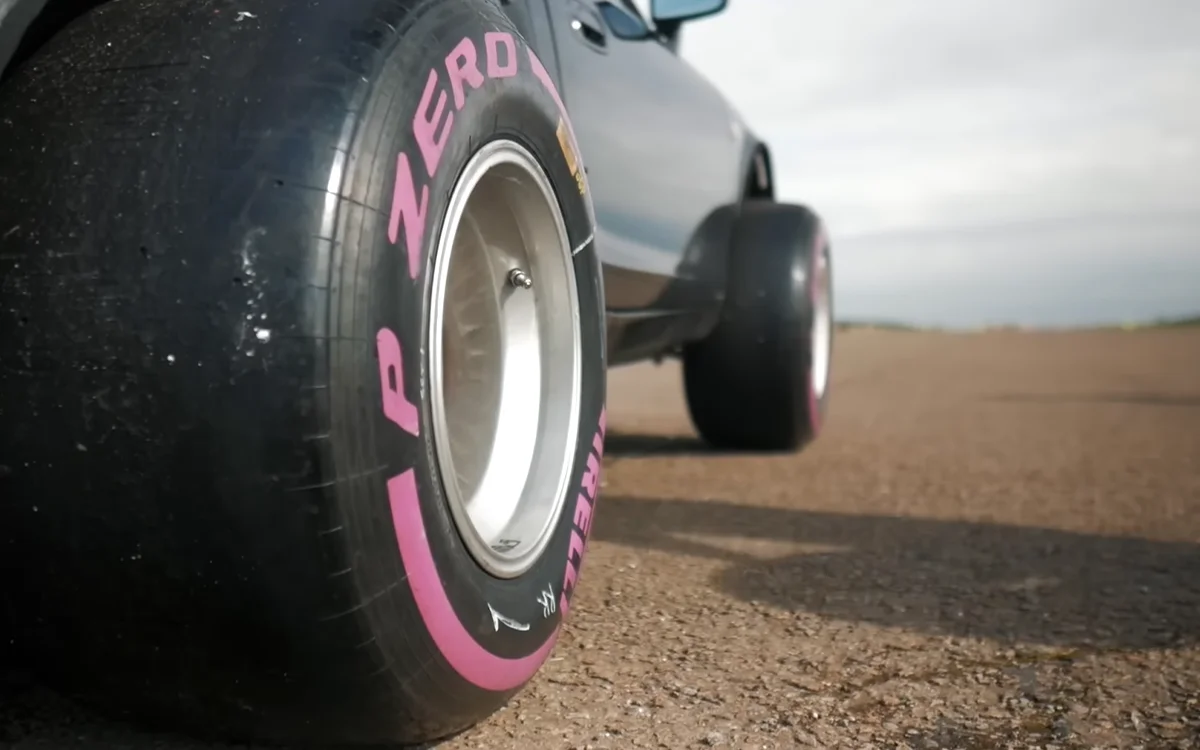
As any F1 fan or Gran Turismo driver will know, they come in five different forms – soft, medium, hard, intermediate, and wets – and each set excels in different conditions.
But, Formula 1 drivers have to ensure that their wheels are heated enough to create grip, and the F1 tires often reach temperatures of up to 110°C (230°F).
While they work for Lando Norris, one group of YouTubers has now tested whether the likes of a Toyota MR2 can use them to increase speed, and the results are quite surprising.
Can they make a Toyota MR2 quicker?
In a round of testing from the YouTube team at OVERDRIVE, they chose the Toyota MR2 as the car due to its tire size being the same as a regulation F1 vehicle.
But from a cold start, they were useless, and the car spun out on the first corner of a track.
However, after warming them up with a few blistering straight-line sprints, the F1 tires soon began to work, and the Toyota MR2 recorded quicker speeds than it had recorded prior to putting them on.
“It’s hardly practical. And yes, we cut up a perfectly good car. Oh, and it cost over £11,000. But I would do it all again for those three seconds gained.
“No regrets.”
The Formula 1 cars will be getting their biggest shakeups yet in 2026, but the tires will continue to be the biggest area of contention for each team, as they optimize their race cars to deal with the grip offered.
DISCOVER SBX CARS: The global premium car auction platform powered by Supercar Blondie
After beginning his career writing about all things gaming, Jack joined the Supercar Blondie team in November 2024 as a Content Writer. Since joining SB Media, in addition to a love for covering emerging tech, he has developed an admiration for vintage restorations, particularly old American brands like Dodge and Ford.